


Typhoid fever outbreak in the Democratic Republic of Congo: Case control and ecological study
- PMID: 30281598
- PMCID: PMC6188896
- DOI: 10.1371/journal.pntd.0006795
Typhoid fever outbreak in the Democratic Republic of Congo: Case control and ecological study
Abstract
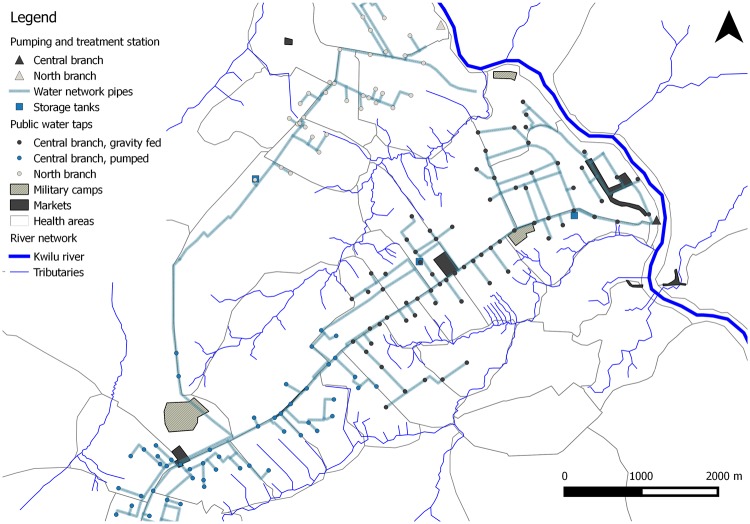
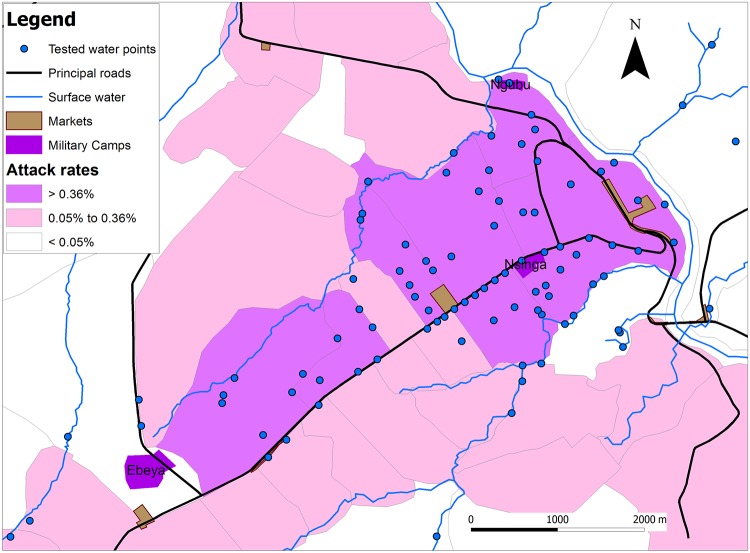
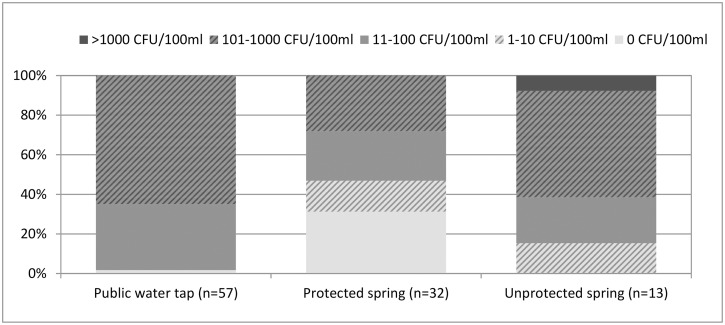
During 2011 a large outbreak of typhoid fever affected an estimated 1430 people in Kikwit, Democratic Republic of Congo. The outbreak started in military camps in the city but then spread to the general population. This paper reports the results of an ecological analysis and a case-control study undertaken to examine water and other possible transmission pathways. Attack rates were determined for health areas and risk ratios were estimated with respect to spatial exposures. Approximately 15 months after the outbreak, demographic, environmental and exposure data were collected for 320 cases and 640 controls residing in the worst affected areas, using a structured interview questionnaire. Unadjusted and adjusted odds ratios were estimated. Complete data were available for 956 respondents. Residents of areas with water supplied via gravity on the mains network were at much greater risk of disease acquisition (risk ratio = 6.20, 95%CI 3.39-11.35) than residents of areas not supplied by this mains network. In the case control study, typhoid was found to be associated with ever using tap water from the municipal supply (OR = 4.29, 95% CI 2.20-8.38). Visible urine or faeces in the latrine was also associated with increased risk of typhoid and having chosen a water source because it is protected was negatively associated. Knowledge that washing hands can prevent typhoid fever, and stated habit of handwashing habits before cooking or after toileting was associated with increased risk of disease. However, observed associations between handwashing or plate-sharing with disease risk could very likely be due to recall bias. This outbreak of typhoid fever was strongly associated with drinking water from the municipal drinking water supply, based on the descriptive and analytic epidemiology and the finding of high levels of faecal contamination of drinking water. Future outbreaks of potentially waterborne disease need an integrated response that includes epidemiology and environmental microbiology during early stages of the outbreak.
Conflict of interest statement
The authors declare that no competing interests exist.
Figures
References
Publication types
MeSH terms
Substances
LinkOut - more resources
Full Text Sources
Medical
Miscellaneous
