


Langerhans cell histiocytosis in adults: Advances in pathophysiology and treatment
- PMID: 30281871
- PMCID: PMC6272080
- DOI: 10.1111/cas.13817
Langerhans cell histiocytosis in adults: Advances in pathophysiology and treatment
Abstract
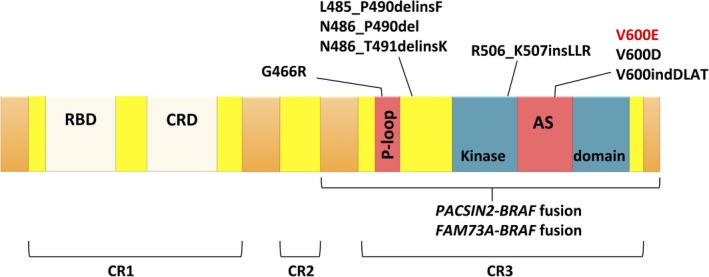
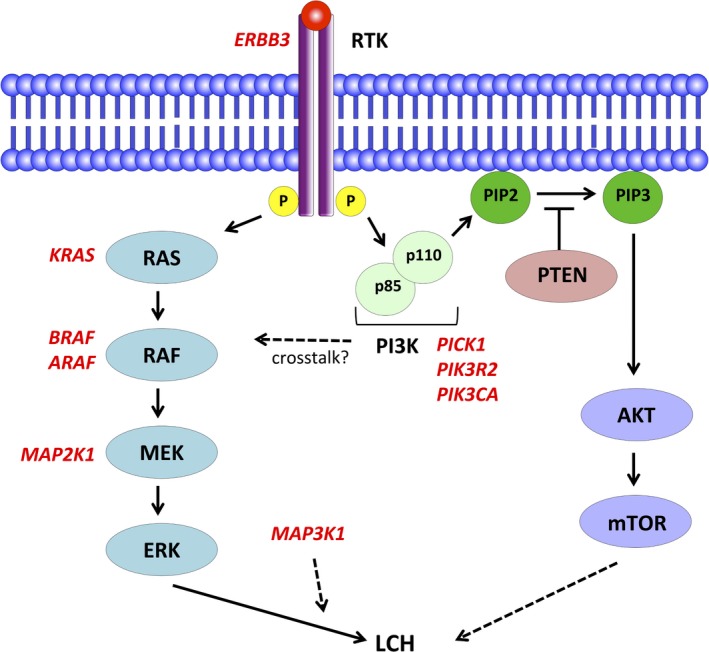
Langerhans cell histiocytosis (LCH) is a rare systemic disorder characterized by the accumulation of CD1a+/Langerin+ LCH cells and wide-ranging organ involvement. Langerhans cell histiocytosis was formerly referred to as histiocytosis X, until it was renamed in 1987. Langerhans cell histiocytosis β was named for its morphological similarity to skin Langerhans cells. Studies have shown that LCH cells originate from myeloid dendritic cells rather than skin Langerhans cells. There has been significant debate regarding whether LCH should be defined as an immune disorder or a neoplasm. A breakthrough in understanding the pathogenesis of LCH occurred in 2010 when a gain-of-function mutation in BRAF (V600E) was identified in more than half of LCH patient samples. Studies have since reported that 100% of LCH cases show ERK phosphorylation, indicating that LCH is likely to be a clonally expanding myeloid neoplasm. Langerhans cell histiocytosis is now defined as an inflammatory myeloid neoplasm in the revised 2016 Histiocyte Society classification. Randomized trials and novel approaches have led to improved outcomes for pediatric patients, but no well-defined treatments for adult patients have been developed to date. Although LCH is not fatal in all cases, delayed diagnosis or treatment can result in serious impairment of organ function and decreased quality of life. This study summarizes recent advances in the pathophysiology and treatment of adult LCH, to raise awareness of this "orphan disease".
Keywords: Langerhans cell; adult; histiocytosis; mitogen-activated protein kinase; proto-oncogene protein BRAF.
© 2018 The Authors. Cancer Science published by John Wiley & Sons Australia, Ltd on behalf of Japanese Cancer Association.
Figures
References
-
- Langerhans P. Über die Nerven der menschlichen Haut. Arch Abl B Pathol. 1868;44:325‐337.
-
- Hand AR. Polyuria and tuberculosis. Arch Pediatr. 1893;10:673‐675.
-
- Schuller A. Uber eigenartige Schadeldefekte im Jugendalter. Fortschr Roentgenstr. 1915;23:12‐18.
-
- Christian HA. Defects in membraneous bones, exophthalmos and diabetes insipidus: an unusual syndrome of dyspituitarism. Med Clin N Am. 1919;3:849‐871.
-
- The Writing Group of the Histiocyte Society . Histiocytosis syndromes in children. Writing Group of the Histiocyte Society. Lancet. 1987;1(8526):208‐209. - PubMed
Publication types
MeSH terms
Substances
LinkOut - more resources
Full Text Sources
Other Literature Sources
Research Materials
Miscellaneous
