. 2018 Oct 3;9(10):1017.
doi: 10.1038/s41419-018-1064-1.

Long noncoding RNA MEG3 regulates LATS2 by promoting the ubiquitination of EZH2 and inhibits proliferation and invasion in gallbladder cancer

Affiliations

Long noncoding RNA MEG3 regulates LATS2 by promoting the ubiquitination of EZH2 and inhibits proliferation and invasion in gallbladder cancer

Longyang Jin et al. Cell Death Dis. .

Abstract

Gallbladder cancer (GBC) is the most common type of biliary tract cancer worldwide. Long noncoding RNAs (lncRNAs) play essential roles in physiological and pathological development. LncRNA MEG3, a tumor suppressor, has been reported to play important roles in some cancers, but the role of MEG3 in GBC remains largely unknown. The purpose of the present study was to explore the role of MEG3 in proliferation and invasion and the potential molecular mechanism in GBC. We found that MEG3 was downregulated in GBC tissues and cells, and low expression of MEG3 was correlated with poor prognostic outcomes in patients. Overexpression of MEG3 inhibited GBC cell proliferation and invasion, induced cell apoptosis and decreased tumorigenicity in nude mice. Moreover, we found that MEG3 was associated with EZH2 and attenuated EZH2 by promoting its ubiquitination. Furthermore, MEG3 executed its functions via EZH2 to regulate the downstream target gene LATS2. Taken together, these findings suggest that MEG3 is an effective target for GBC therapy and may facilitate the development of lncRNA-directed diagnostics and therapeutics against GBC.


Conflict of interest statement

Conflict of interest

The authors declare that they have no conflict of interest.

Ethics approval and consent to participate

The present study was approved by the Human Ethics Committee of Xinhua Hospital. Informed consent was obtained from every patient. The animal experiments were approved by the Animal Care and Use committee of Xinhua Hospital.

Figures
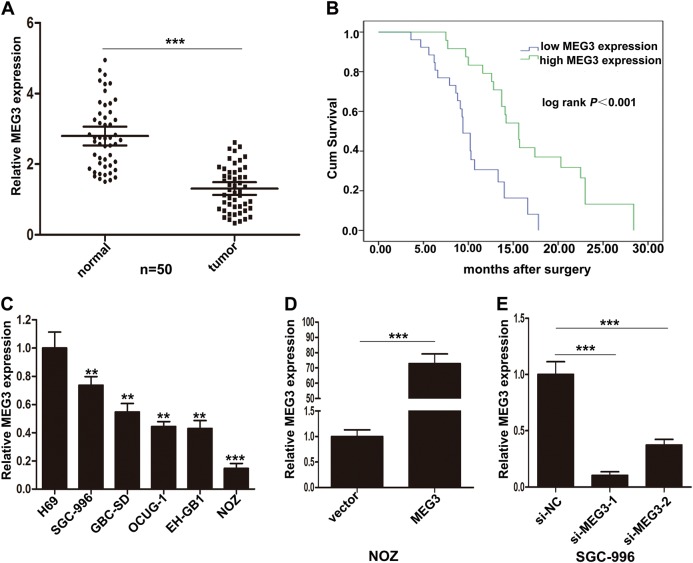
Fig. 1
Fig. 1. Relative expression of MEG3 in GBC tissues, cells and its clinical significance.
a Relative expression of MEG3 in GBC tissues and paired neighboring nontumor tissues (n = 50). MEG3 expression was examined by qRT-PCR assays. b Kaplan–Meier analysis of overall survival according to MEG3 expression levels. c Relative expression of MEG3 in GBC cell lines and human biliary epithelium cell line H69 was detected by qRT-PCR. d Relative expression of MEG3 in NOZ cells transfected with MEG3 plasmid. e Relative expression of MEG3 in SGC-996 cells transfected with siRNAs. **p < 0.01, ***p < 0.001
Fig. 2
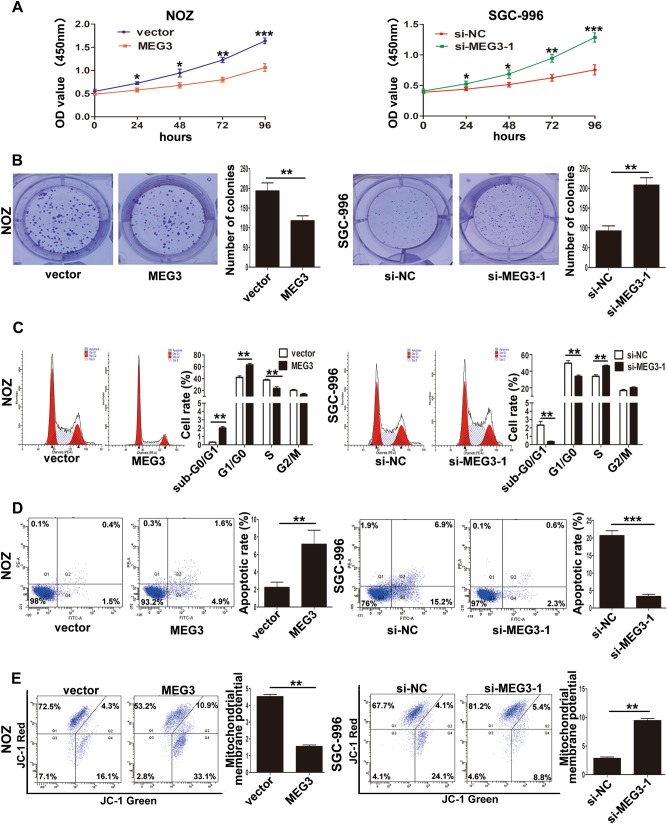
Fig. 2. Effect of MEG3 on GBC cells growth in vitro.
a The proliferation ability of NOZ cells transfected with MEG3 plasmid and SGC-996 cells transfected with si-MEG3-1 was determined by CCK8 assays. b The cloning ability of transfected NOZ and SGC-996 cells. c The cell cycle of transfected NOZ and SGC-996 cells. d The apoptosis of transfected NOZ and SGC-996 cells (Q1: AnnexinV-/PI+, Q2: AnnexinV+/PI+, Q3: AnnexinV−/PI−, Q4: AnnexinV+/PI−). e The mitochondrial membrane potential (mtΔΨ) analysis of transfected NOZ and SGC-996 cells. *p < 0.05, **p < 0.01, ***p < 0.001
Fig. 3
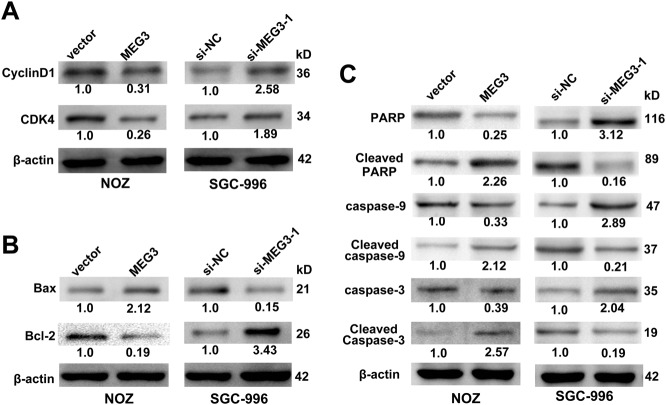
Fig. 3. The proteins related with cell cycle and apoptosis induced by MEG3 were detected by western blotting assays.
a The levels of CDK4, CyclinD1 protein in NOZ cells transfected with MEG3 plasmid and SGC-996 cells transfected with si-MEG3-1. b, c The expression levels of Bax, Bcl-2, Cleaved caspase-3, Cleaved caspase-9, and Cleaved PARP in transfected NOZ and SGC-996 cells
Fig. 4
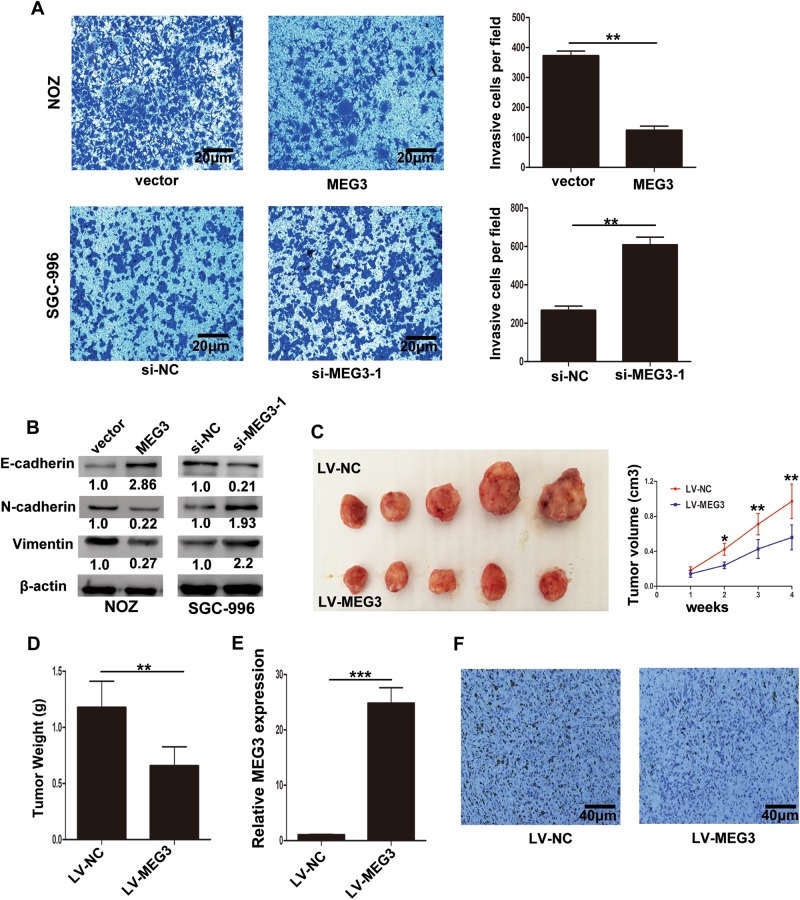
Fig. 4. Effect of MEG3 on GBC cells invasion ability and tumor growth in vivo.
a The invasion ability of transfected NOZ and SGC-996 cells was determined by transwell invasion assays. b The protein levels of E-cadherin, N-cadherin, and Vimentin in transfected NOZ and SGC-996 cells were determined. c The stable MEG3 overexpression NOZ cells were used for the in vivo study. The tumor volumes were measured per week until 4 weeks. d Tumor weight from LV-MEG3 and LV-NC groups was shown. e Relative expression of MEG3 in tumors from LV-MEG3 and LV-NC groups was detected by qRT-PCR. f The Ki67 expression of tumors from LV-MEG3 and LV-NC groups was determined by immunohistochemical staining. *p < 0.05, **p < 0.01, ***p < 0.001
Fig. 5
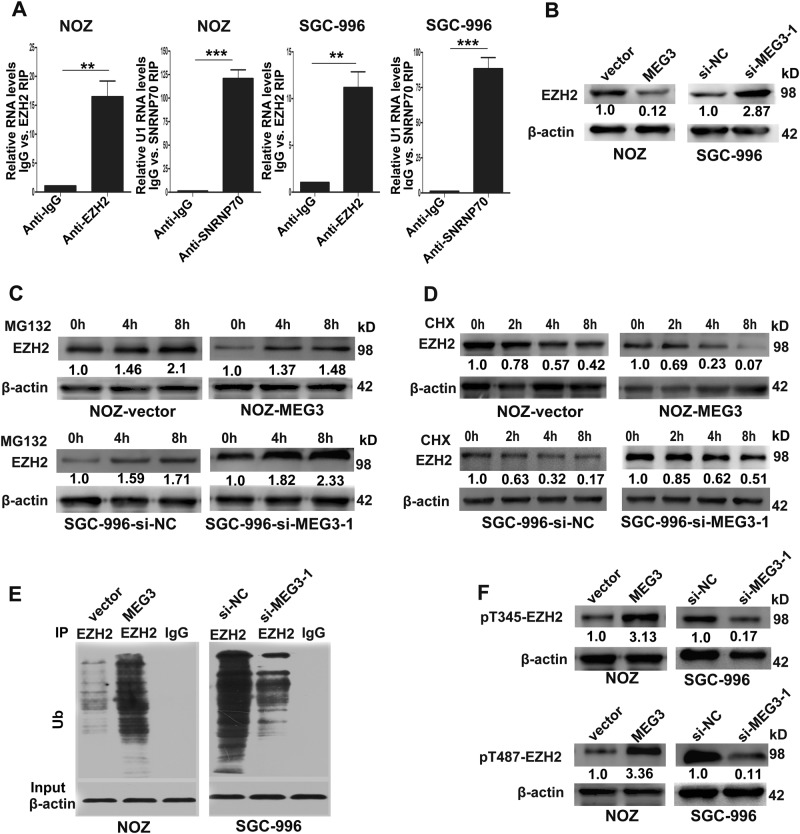
Fig. 5. MEG3 was associated with EZH2 and promoted its ubiquitination and degradation by increasing EZH2 Thr-345 and Thr-487 phosphorylation.
a Relative RIP assays detecting the binding of MEG3 with EZH2 in NOZ and SGC-996 cells by qRT-PCR. b The levels of EZH2 protein in NOZ cells transfected with MEG3 plasmid and SGC-996 cells transfected with si-MEG3-1. c The EZH2 protein expression was detected by western blotting in transfected NOZ and SGC-996 cells after treatment with MG132. d The EZH2 expression was detected in transfected NOZ and SGC-996 cells treated with CHX. e Western blotting of endogenous EZH2-associated ubiquitination in transfected NOZ and SGC-996 cells. f Western blotting of EZH2-Thr-345 and EZH2-Thr-487 phosphorylation in transfected NOZ and SGC-996 cells. **p < 0.01, ***p < 0.001
Fig. 6
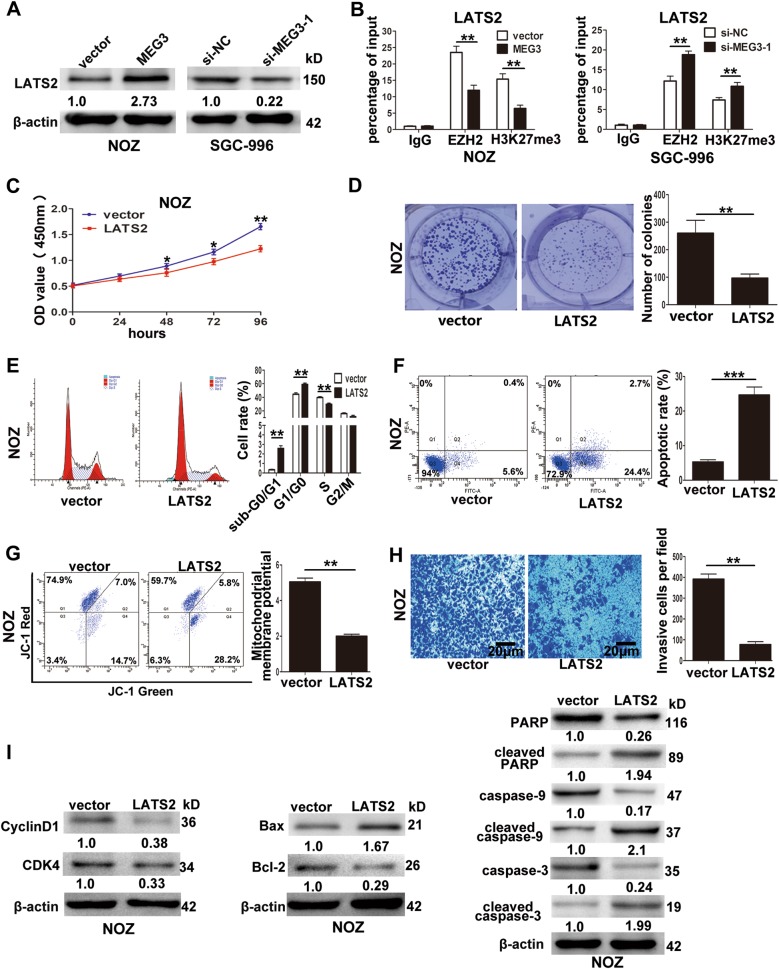
Fig. 6. The association of LATS2 with MEG3, EZH2 and the effect of LATS2 on GBC cells growth in vitro.
a The levels of LATS2 protein in NOZ cells transfected with MEG3 plasmid and SGC-996 cells transfected with si-MEG3-1. b ChIP-qRT-PCR analysis of EZH2 occupancy, H3K27me3 binding to the LATS2 promoter regions in NOZ and SGC-996 cells. c The proliferation ability of NOZ cells transfected with LATS2 plasmid determined by CCK8 assays. d The cloning ability of NOZ cells transfected with LATS2 plasmid. e The cell cycle of NOZ cells transfected with LATS2 plasmid. f The apoptosis of NOZ cells transfected with LATS2 plasmid. (Q1: AnnexinV−/PI+, Q2: AnnexinV+/PI+, Q3: AnnexinV−/PI−, Q4: AnnexinV+/PI−). g The mitochondrial membrane potential (mtΔΨ) analysis of transfected NOZ cells. h The invasion ability of transfected NOZ cells determined by transwell invasion assays. i The proteins related with cell cycle and apoptosis in NOZ cells transfected with LATS2 plasmid were detected by western blotting assays. *p < 0.05, **p < 0.01, ***p < 0.001
Fig. 7
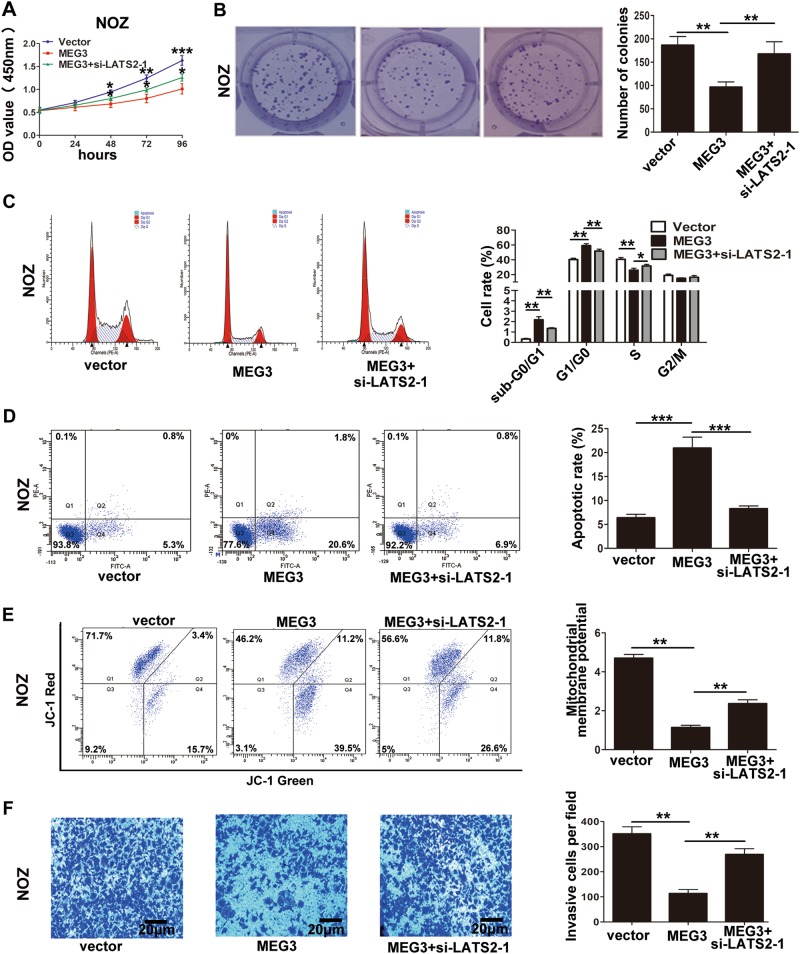
Fig. 7. The proliferation and invasion results of NOZ cells cotransfected with MEG3 plasmid and si-LATS2.
a The proliferation ability of NOZ cells cotransfected with MEG3 and si-LATS2 determined by CCK8 assays. b The cloning ability of NOZ cells cotransfected with MEG3 and si-LATS2. c The cell cycle of cotransfected NOZ cells. d The apoptosis of cotransfected NOZ cells (Q1: AnnexinV−/PI+, Q2: AnnexinV+/PI+, Q3: AnnexinV−/PI−, Q4: AnnexinV+/PI−). e The mitochondrial membrane potential (mtΔΨ) analysis of cotransfected NOZ cells. f The invasion ability of cotransfected NOZ cells was determined by transwell invasion assays. *p < 0.05, **p < 0.01, ***p < 0.001

References

    1. Zhu AX, Hong TS, Hezel AF, Kooby DA. Current management of gallbladder carcinoma. Oncologist. 2010;15:168–181. doi: 10.1634/theoncologist.2009-0302. - DOI - PMC - PubMed
    1. Duffy A, et al. Gallbladder cancer (GBC): 10-year experience at Memorial Sloan-Kettering Cancer Centre (MSKCC) J. Surg. Oncol. 2008;98:485–489. doi: 10.1002/jso.21141. - DOI - PubMed
    1. Sheth S, Bedford A, Chopra S. Primary gallbladder cancer: recognition of risk factors and the role of prophylactic cholecystectomy. Am. J. Gastroenterol. 2000;95:1402–1410. doi: 10.1111/j.1572-0241.2000.02070.x. - DOI - PubMed
    1. Kanthan R, Senger JL, Ahmed S, Kanthan SC. Gallbladder cancer in the 21st century. J. Oncol. 2015;2015:967472. doi: 10.1155/2015/967472. - DOI - PMC - PubMed
    1. Djebali S, et al. Landscape of transcription in human cells. Nature. 2012;489:101–108. doi: 10.1038/nature11233. - DOI - PMC - PubMed

Publication types

MeSH terms

Substances