Review
. 2018 Sep 19:9:2147.
doi: 10.3389/fmicb.2018.02147. eCollection 2018.

Diet, Microbiota and Gut-Lung Connection

Affiliations
Review

Diet, Microbiota and Gut-Lung Connection

Swadha Anand et al. Front Microbiol. .

Abstract

The gut microbial community (Gut microbiota) is known to impact metabolic functions as well as immune responses in our body. Diet plays an important role in determining the composition of the gut microbiota. Gut microbes help in assimilating dietary nutrients which are indigestible by humans. The metabolites produced by them not only modulate gastro-intestinal immunity, but also impact distal organs like lung and brain. Micro-aspiration of gut bacteria or movement of sensitized immune cells through lymph or bloodstream can also influence immune response of other organs. Dysbiosis in gut microbiota has been implicated in several lung diseases, including allergy, asthma and cystic fibrosis. The bi-directional cross-talk between gut and lung (termed as Gut-Lung axis) is best exemplified by intestinal disturbances observed in lung diseases. Some of the existing probiotics show beneficial effects on lung health. A deeper understanding of the gut microbiome which comprises of all the genetic material within the gut microbiota and its role in respiratory disorders is likely to help in designing appropriate probiotic cocktails for therapeutic applications.

Keywords: SCFA; diet; gut microbiota; gut-lung axis; lung immunity; lung microbiota; microbiome; short chain fatty acids.


Figures
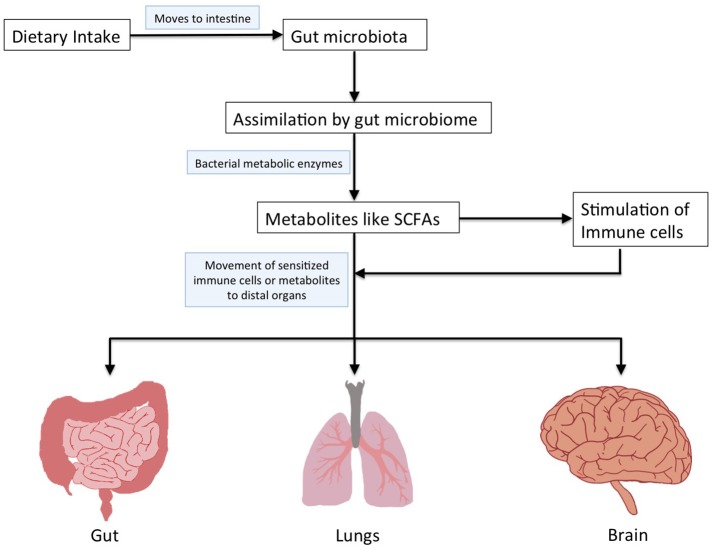
Figure 1
Figure 1
Schematic representation to depict assimilation of dietary nutrients by gut microbiome and their impact on distal organs.
Figure 2
Figure 2
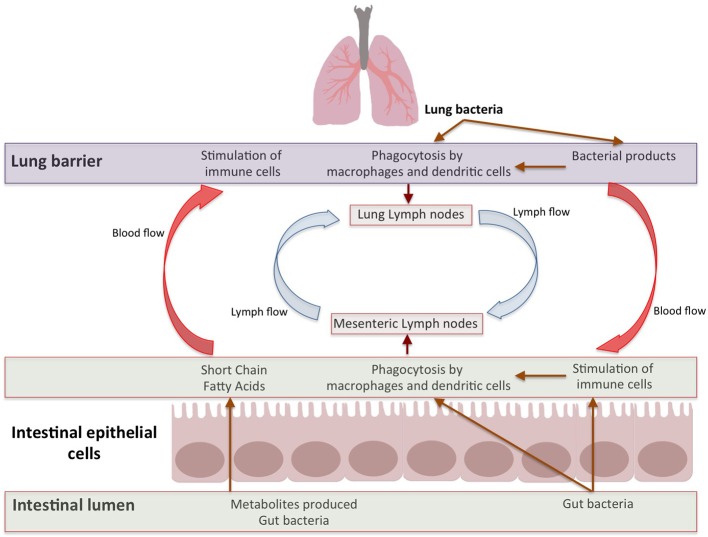
Bidirectional Gut-Lung axis. The metabolites like SCFAs produced by gut bacteria move through blood stream to stimulate immune response in lung and different factors from lung effect gut immune response. Apart from metabolites, the immune cells induced by multitude of antigens move through lymphatic duct between both these organs which leads to modulation of immune response in both organs.

References

    1. Albenberg L. G., Wu G. D. (2014). Diet and the intestinal microbiome: associations, functions, and implications for health and disease. Gastroenterology 146, 1564–1572. 10.1053/j.gastro.2014.01.058 - DOI - PMC - PubMed
    1. Anand S., Kaur H., Mande S. S. (2016). Comparative in silico analysis of butyrate production pathways in gut commensals and pathogens. Front. Microbiol. 7:1945. 10.3389/fmicb.2016.01945 - DOI - PMC - PubMed
    1. Ananthan A., Balasubramanian H., Rao S., Patole S. (2016). Probiotic supplementation in children with cystic fibrosis-a systematic review. Eur. J. Pediatr. 175, 1255–1266. 10.1007/s00431-016-2769-8 - DOI - PubMed
    1. Anderson J. L., Miles C., Tierney A. C. (2017). Effect of probiotics on respiratory, gastrointestinal and nutritional outcomes in patients with cystic fibrosis: a systematic review. J. Cyst. Fibros. 16, 186–197. 10.1016/j.jcf.2016.09.004 - DOI - PubMed
    1. Arrieta M. C., Stiemsma L. T., Dimitriu P. A., Thorson L., Russell S., Yurist-Doutsch S., et al. (2015). Early infancy microbial and metabolic alterations affect risk of childhood asthma. Sci. Transl. Med. 7, 307ra152. 10.1126/scitranslmed.aab2271 - DOI - PubMed

LinkOut - more resources