


Sperm storage by males causes changes in sperm phenotype and influences the reproductive fitness of males and their sons
- PMID: 30283635
- PMCID: PMC6121797
- DOI: 10.1002/evl3.2
Sperm storage by males causes changes in sperm phenotype and influences the reproductive fitness of males and their sons
Abstract
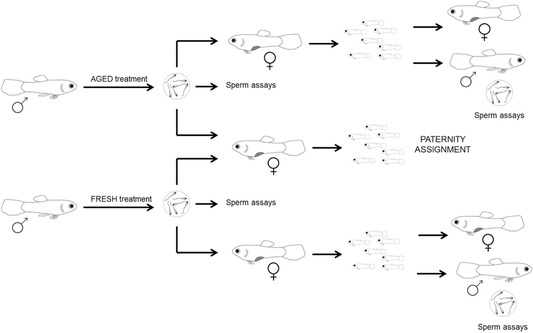
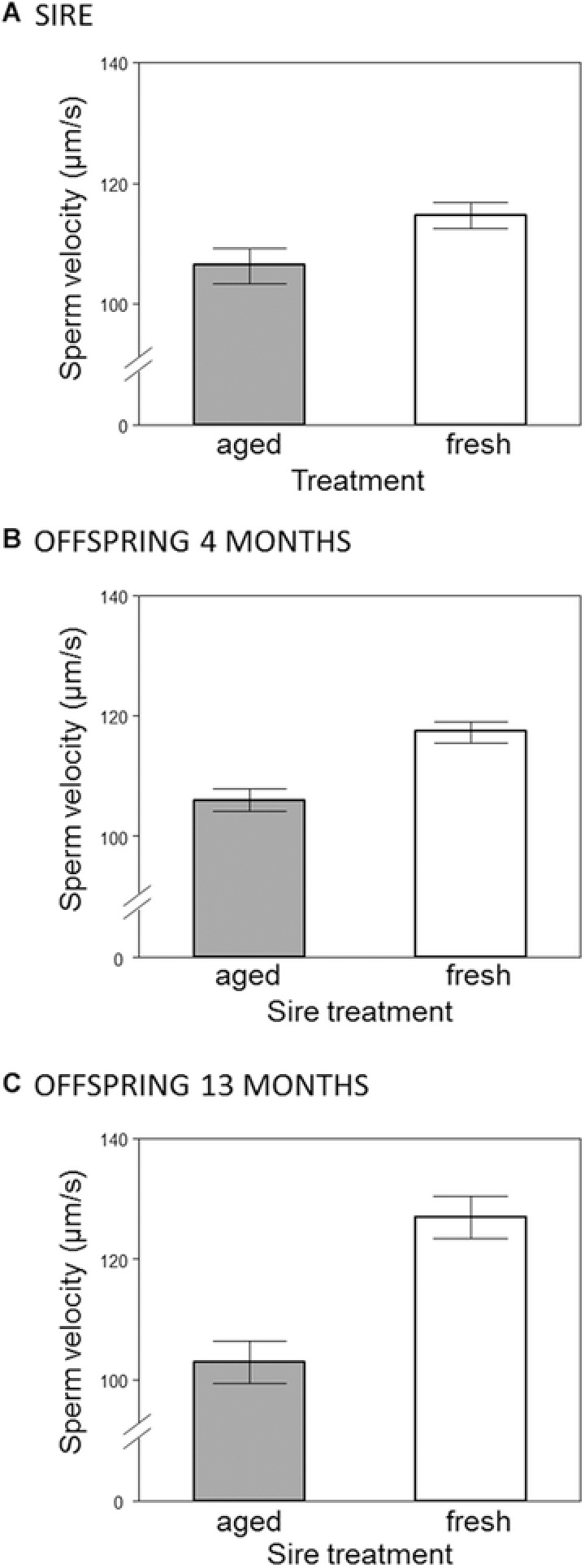
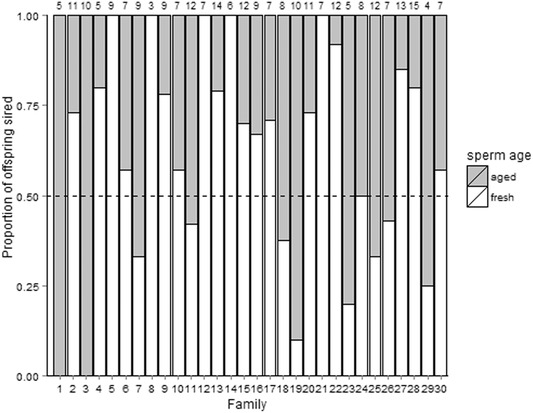
Recent studies suggest that environmentally induced effects on sperm phenotype can influence offspring phenotype beyond the classic Mendelian inheritance mechanism. However, establishing whether such effects are conveyed purely through ejaculates, independently of maternal environmental effects, remains a significant challenge. Here, we assess whether environmentally induced effects on sperm phenotype affects male reproductive success and offspring fitness. We experimentally manipulated the duration of sperm storage by males, and thus sperm age, in the internally fertilizing fish Poecilia reticulata. We first confirm that sperm ageing influences sperm quality and consequently males reproductive success. Specifically, we show that aged sperm exhibit impaired velocity and are competitively inferior to fresh sperm when ejaculates compete to fertilize eggs. We then used homospermic (noncompetitive) artificial insemination to inseminate females with old or fresh sperm and found that male offspring arising from fertilizations by experimentally aged sperm suffered consistently impaired sperm quality when just sexually mature (four months old) and subsequently as adults (13 months old). Although we have yet to determine whether these effects have a genetic or epigenetic basis, our analyses provide evidence that environmentally induced variation in sperm phenotype constitutes an important source of variation in male reproductive fitness that has far reaching implications for offspring fitness.
Keywords: Epigenetics; male sperm storage; paternal effects; sperm ageing; sperm competition; sperm velocity.
Figures
References
-
- Adriaenssens, B. , van Damme R., Seebacher F., and Wilson R. S.. 2012. Sex cells in changing environments: can organisms adjust the physiological function of gametes to different temperatures? Glob. Change Biol. 18:1797–1803.
-
- Aitken, R. J. , and Krausz C.. 2001. Oxidative stress, DNA damage and the Y chromosome. Reproduction 122:497–506. - PubMed
-
- Almbro, M. , Dowling D. K., and Simmons L. W.. 2011. Effects of vitamin E and beta‐carotene on sperm competitiveness. Ecol. Lett. 14:891–895. - PubMed
-
- Billard, R. , and Puissant C.. 1969. La spermatogenèse de Poecilia reticulata. II.—La production spermatogénétique. Annales de biologie animale, biochimie, biophysique 9:307–313.
-
- Bonduriansky, R. , and Day T.. 2009. Nongenetic inheritance and its evolutionary implications. Annu. Rev. Ecol. Evol. Syst. 40:103–125.
Associated data
LinkOut - more resources
Full Text Sources
Other Literature Sources
