


A toolkit for rapid CRISPR-SpCas9 assisted construction of hexose-transport-deficient Saccharomyces cerevisiae strains
- PMID: 30285096
- PMCID: PMC6217715
- DOI: 10.1093/femsyr/foy107
A toolkit for rapid CRISPR-SpCas9 assisted construction of hexose-transport-deficient Saccharomyces cerevisiae strains
Abstract
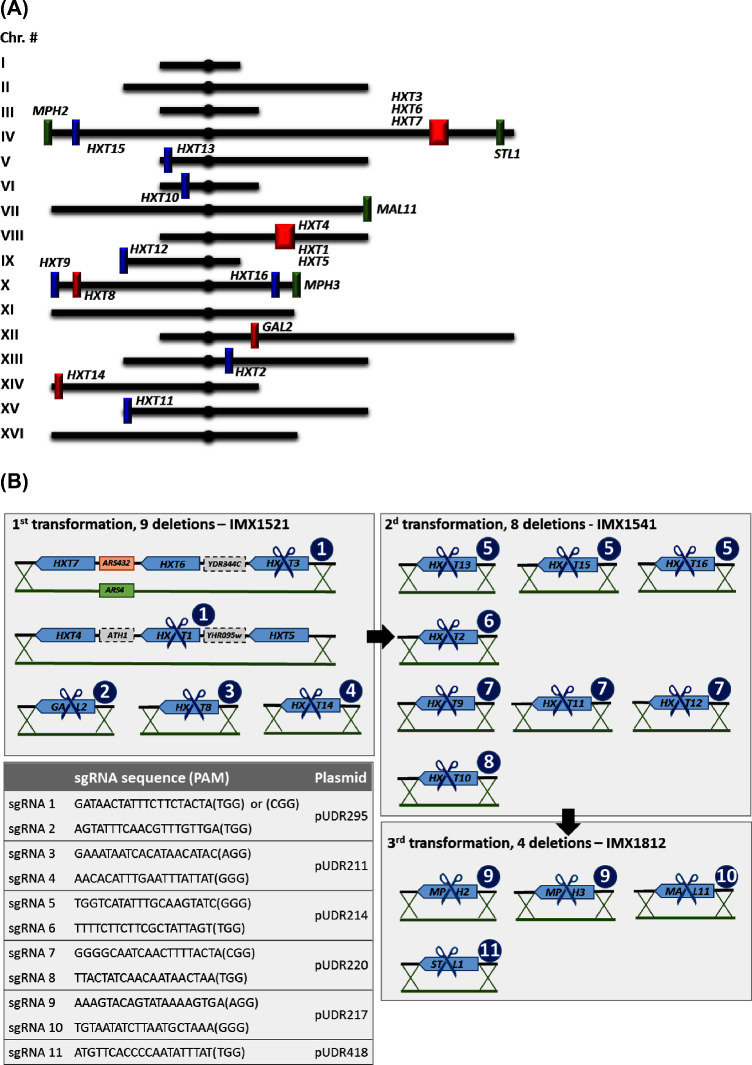
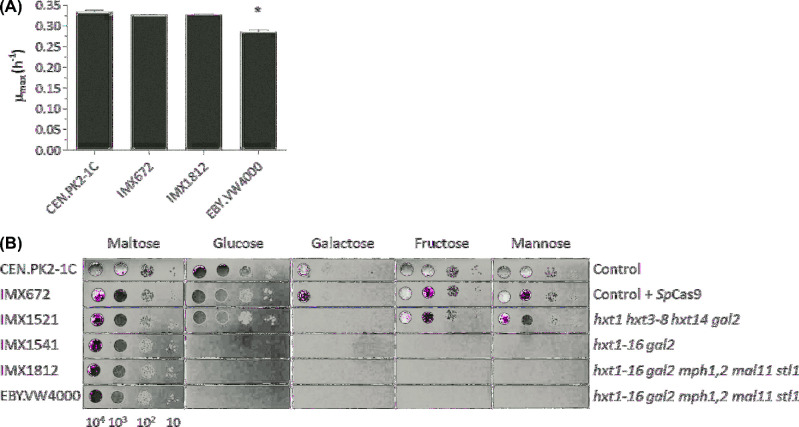
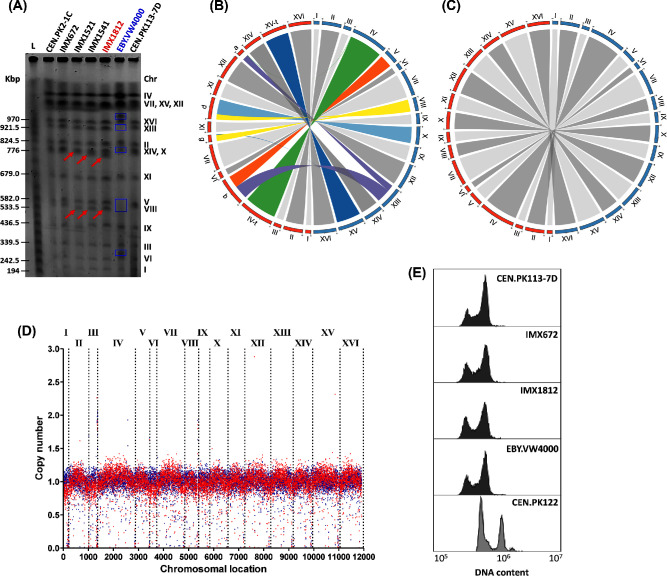
Hexose transporter-deficient yeast strains are valuable testbeds for the study of sugar transport by native and heterologous transporters. In the popular Saccharomyces cerevisiae strain EBY.VW4000, deletion of 21 transporters completely abolished hexose transport. However, repeated use of the LoxP/Cre system in successive deletion rounds also resulted in major chromosomal rearrangements, gene loss and phenotypic changes. In the present study, CRISPR/SpCas9 was used to delete the 21 hexose transporters in an S. cerevisiae strain from the CEN.PK family in only three deletion rounds, using 11 unique guide RNAs. Even upon prolonged cultivation, the resulting strain IMX1812 (CRISPR-Hxt0) was unable to consume glucose, while its growth rate on maltose was the same as that of a strain equipped with a full set of hexose transporters. Karyotyping and whole-genome sequencing of the CRISPR-Hxt0 strain with Illumina and Oxford Nanopore technologies did not reveal chromosomal rearrangements or other unintended mutations besides a few SNPs. This study provides a new, 'genetically unaltered' hexose transporter-deficient strain and supplies a CRISPR toolkit for removing all hexose transporter genes from most S. cerevisiae laboratory strains in only three transformation rounds.
Figures
References
-
- Bao Z, Xiao H, Liang J et al. . Homology-Integrated CRISPR-Cas (HI-CRISPR) system for one-step multigene disruption in Saccharomyces cerevisiae. ACS Synth Biol 2015;4:585–94. - PubMed
-
- Bisson LF, Fan Q, Walker GA. Sugar and glycerol transport in Saccharomyces cerevisiae. Adv Exp Med Biol 2016;892:125–68. - PubMed
-
- Boles E, Hollenberg CP. The molecular genetics of hexose transport in yeasts. FEMS Microbiol Rev 1997;21:85–111. - PubMed
-
- Boles E, Oreb M. A growth-based screening system for hexose transporters in yeast. Methods Mol Biol 2018;1713:123–35. - PubMed
-
- Botstein D, Falco SC, Stewart SE et al. . Sterile host yeasts (SHY): a eukaryotic system of biological containment for recombinant DNA experiments. Gene 1979;8:17–24. - PubMed
Publication types
MeSH terms
Substances
LinkOut - more resources
Full Text Sources
Other Literature Sources
Molecular Biology Databases
Research Materials
