. 2018 Oct 3;19(1):726.
doi: 10.1186/s12864-018-5113-z.

Genome-wide survey of potato MADS-box genes reveals that StMADS1 and StMADS13 are putative downstream targets of tuberigen StSP6A

Affiliations

Genome-wide survey of potato MADS-box genes reveals that StMADS1 and StMADS13 are putative downstream targets of tuberigen StSP6A

Huhu Gao et al. BMC Genomics. .

Abstract

Background: MADS-box genes encode transcription factors that are known to be involved in several aspects of plant growth and development, especially in floral organ specification. To date, the comprehensive analysis of potato MADS-box gene family is still lacking after the completion of potato genome sequencing. A genome-wide characterization, classification, and expression analysis of MADS-box transcription factor gene family was performed in this study.

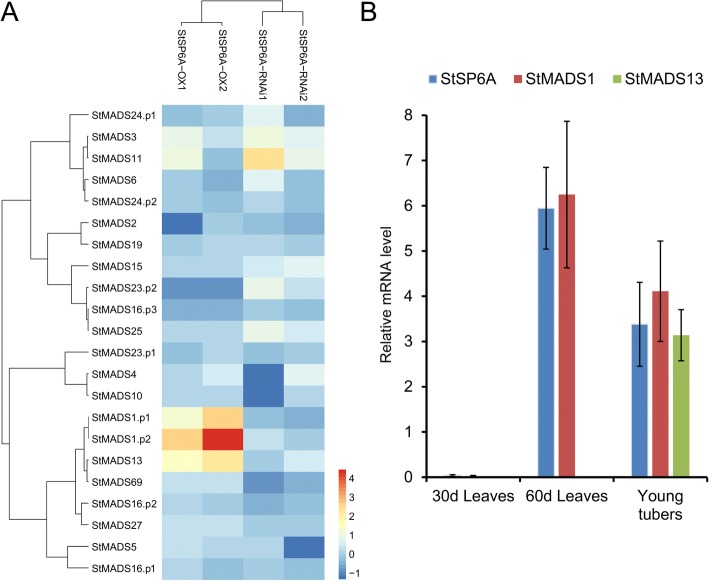
Results: A total of 153 MADS-box genes were identified and categorized into MIKC subfamily (MIKCC and MIKC*) and M-type subfamily (Mα, Mβ, and Mγ) based on their phylogenetic relationships to the Arabidopsis and rice MADS-box genes. The potato M-type subfamily had 114 members, which is almost three times of the MIKC members (39), indicating that M-type MADS-box genes have a higher duplication rate and/or a lower loss rate during potato genome evolution. Potato MADS-box genes were present on all 12 potato chromosomes with substantial clustering that mainly contributed by the M-type members. Chromosomal localization of potato MADS-box genes revealed that MADS-box genes, mostly MIKC, were located on the duplicated segments of the potato genome whereas tandem duplications mainly contributed to the M-type gene expansion. The potato MIKC subfamily could be further classified into 11 subgroups and the TT16-like, AGL17-like, and FLC-like subgroups found in Arabidopsis were absent in potato. Moreover, the expressions of potato MADS-box genes in various tissues were analyzed by using RNA-seq data and verified by quantitative real-time PCR, revealing that the MIKCC genes were mainly expressed in flower organs and several of them were highly expressed in stolon and tubers. StMADS1 and StMADS13 were up-regulated in the StSP6A-overexpression plants and down-regulated in the StSP6A-RNAi plant, and their expression in leaves and/or young tubers were associated with high level expression of StSP6A.

Conclusion: Our study identifies the family members of potato MADS-box genes and investigate the evolution history and functional divergence of MADS-box gene family. Moreover, we analyze the MIKCC expression patterns and screen for genes involved in tuberization. Finally, the StMADS1 and StMADS13 are most likely to be downstream target of StSP6A and involved in tuber development.

Keywords: MADS-box; Potato; StSP6A; Tuberigen; Tuberization.


Conflict of interest statement

Ethics approval and consent to participate

Not applicable.

Consent for publication

Not applicable.

Competing interests

The authors declare that they have no competing interests.

Publisher’s Note

Springer Nature remains neutral with regard to jurisdictional claims in published maps and institutional affiliations.

Figures
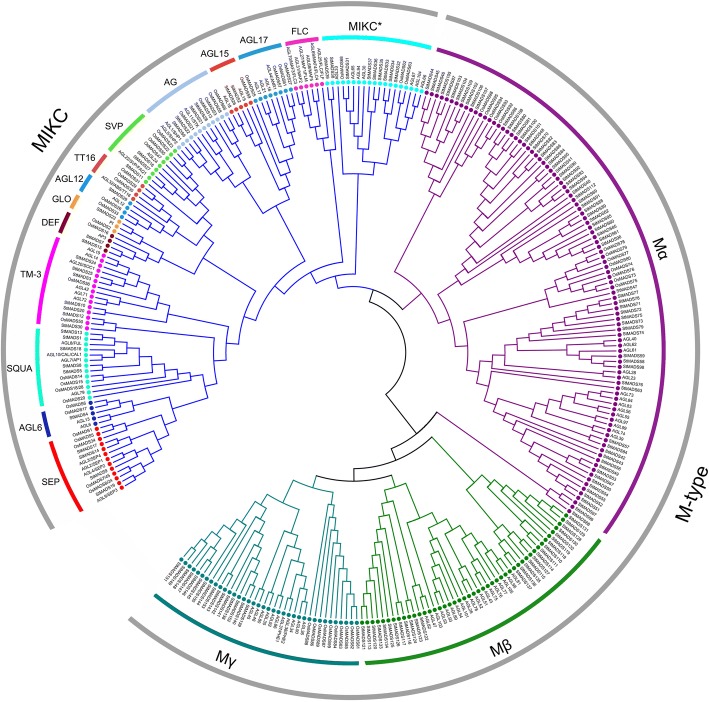
Fig. 1
Fig. 1
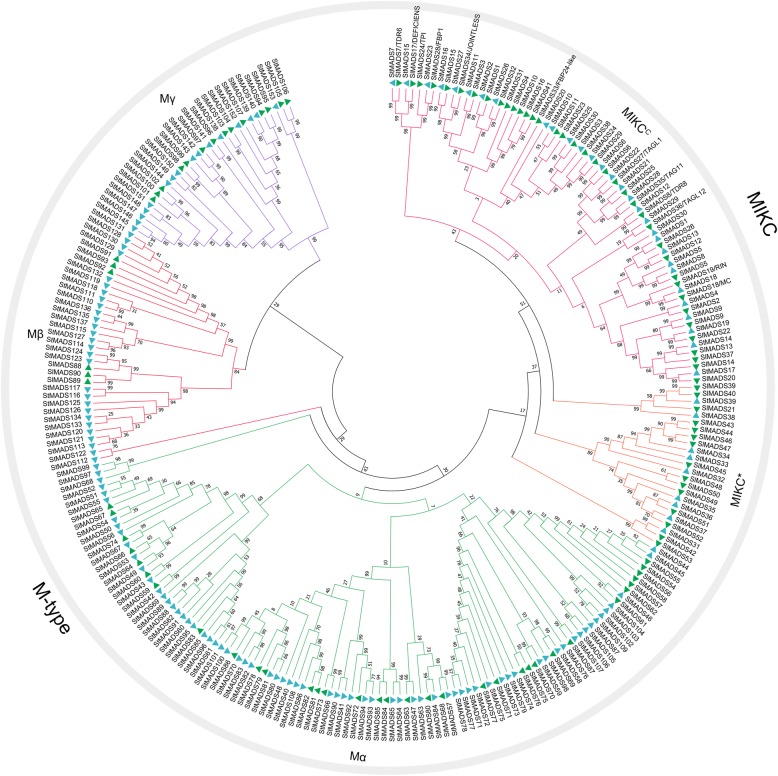
Phylogenetic tree of Arabidopsis, rice and potato MADS-box proteins. A total of 153 protein sequences of potato MADS-box genes, 89 of rice and 60 of Arabidopsis were pre-aligned by ClustalX (1.83) and used for constructing a NJ-tree in Mega 7 with 1000 replicates in bootstrap values. As is shown above, all clades are colored and arced to make it clear
Fig. 2
Fig. 2
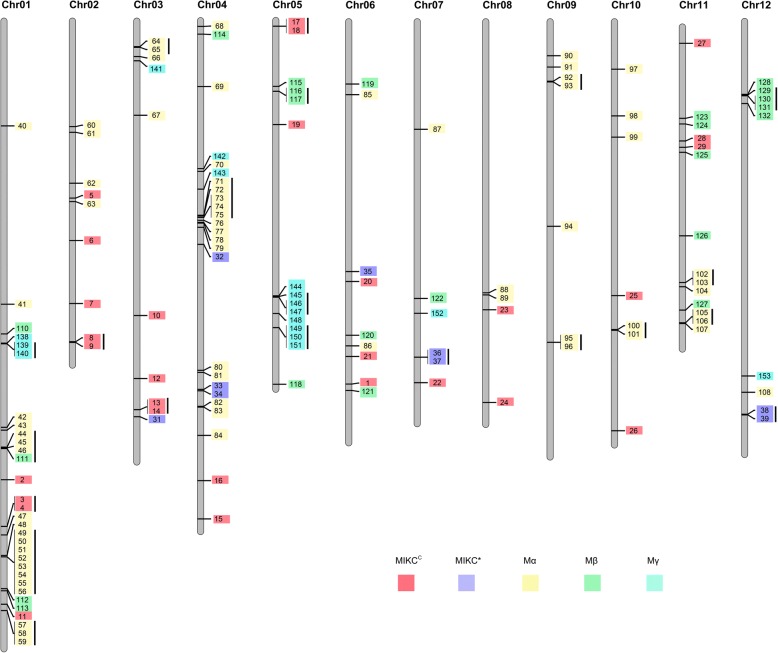
Physical map of 153 MADS-box genes at 12 potato chromosomes. Different subfamilies are shown in different colors. Genes covered with a single line means a tandem duplication gene group
Fig. 3
Fig. 3
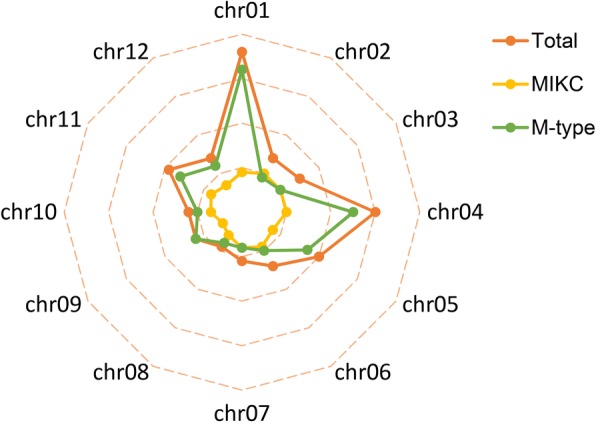
Number of MAD-box genes at 12 potato chromosomes. Different color represents different group
Fig. 4
Fig. 4
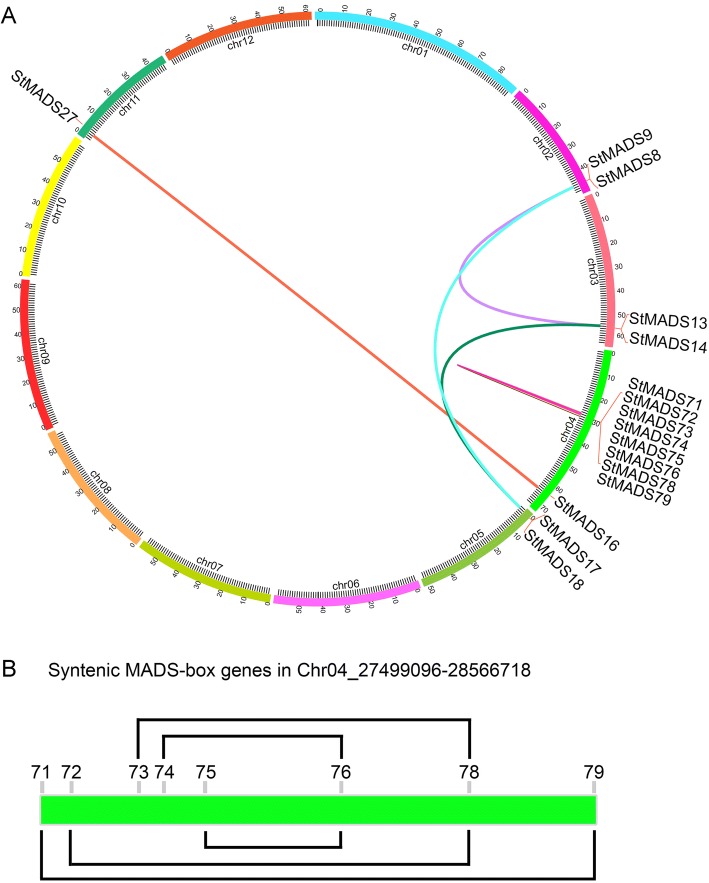
Segmental duplication genes in 12 potato chromosomes. Genes linked with a line shows a pair of segmental duplicated genes. a Segmental gene pairs between 12 chromosomes. b Micro-syntenic map in Chr04_27,499,096–28,566,718
Fig. 5
Fig. 5
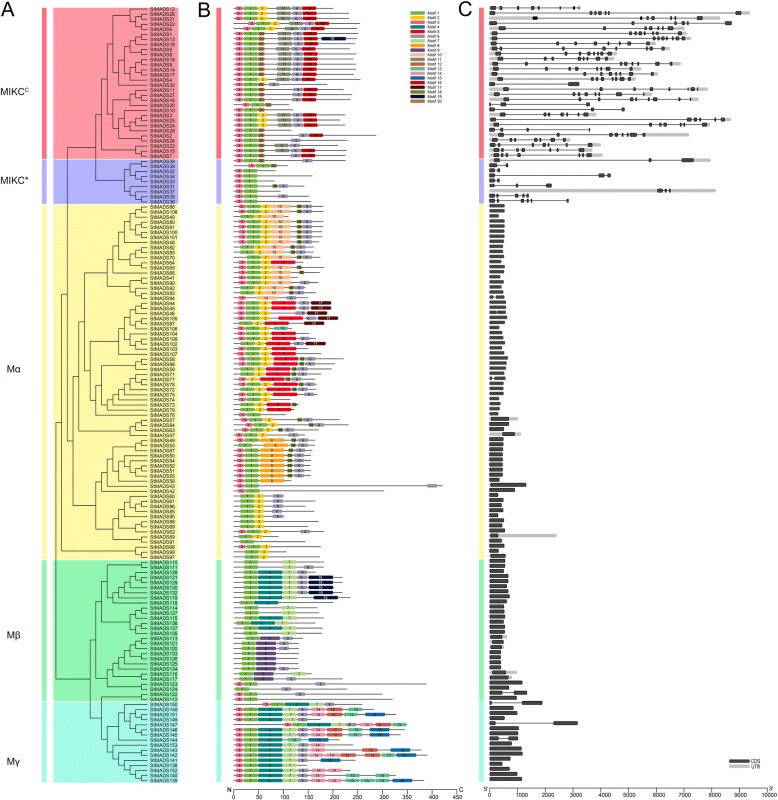
Phylogenetic relationships, conserved motif and gene structure of potato MADS genes. a The NJ-tree of 153 potato MADS-box genes, constructed with the same method mentioned above. b Conserved motif analysis of 153 MADS-box genes. Rounded rectangle with different colors represent different motif. c Gene structure of MADS-box genes. Exon and UTR are box colored with black and grey respectively, among which the black line represent introns
Fig. 6
Fig. 6
Phylogenetic analyses of MADS-box genes between Solanum tuberosum and Solanum lycopersicum. The NJ-tree was generated using the method mentioned above
Fig. 7
Fig. 7
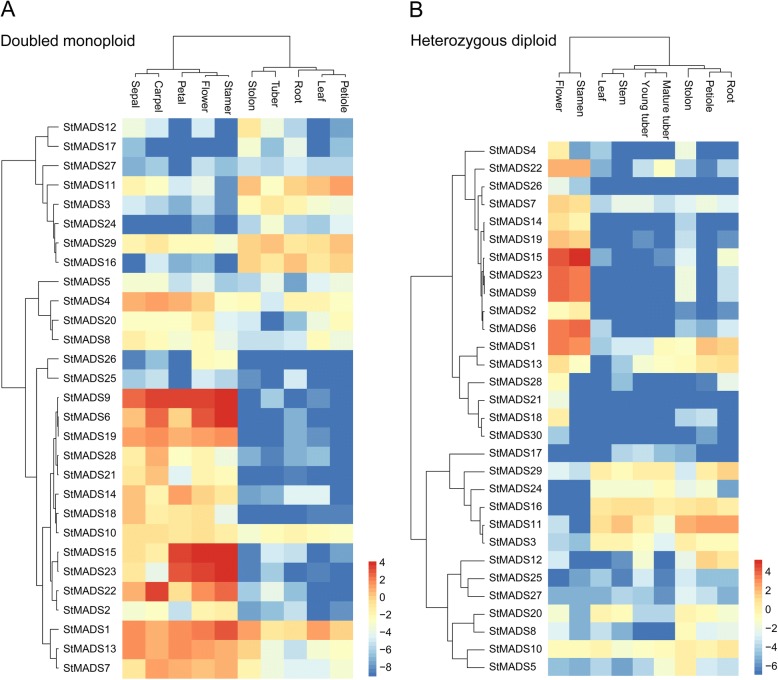
Expression profiles of MADS-box genes in double monoploid and heterozygous. The RNA-seq data is retrieved from PGSC. FPKM values of MADS genes are normalized and the heatmap is drawn with Pretty Heatmap at ImageGP. a Expression profiles of the StMADS genes in DM (doubled monoploid S. tuberosum Group PhurejaDM1-3). b Expression profiles of the StMADS genes in RH (heterozygous diploid S. tuberosum Group Tuberosum RH89-039-16)
Fig. 8
Fig. 8
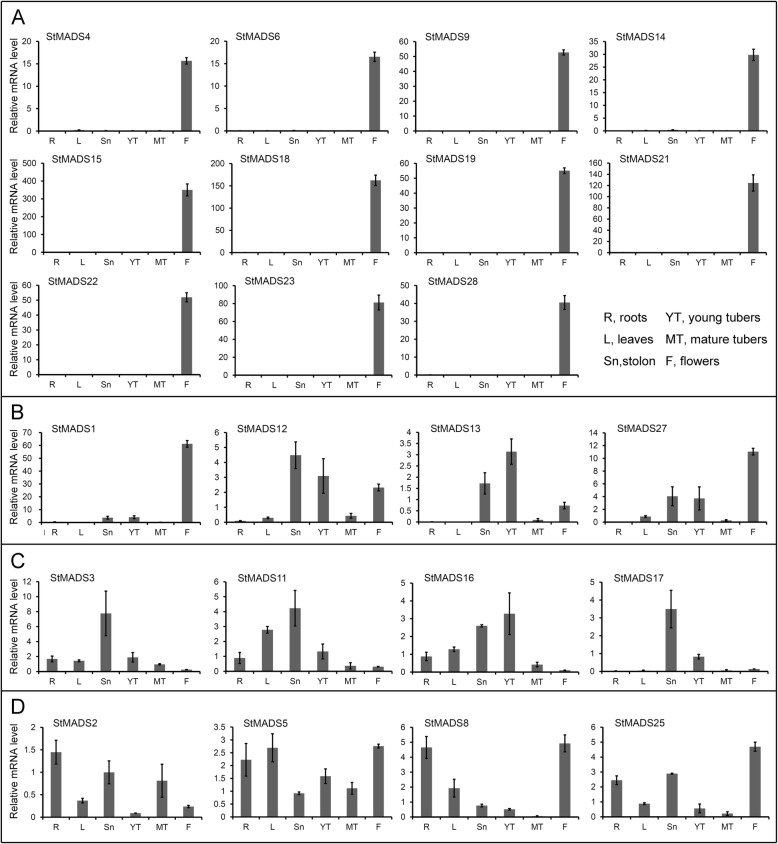
QRT-PCR verifications of representative StMADS genes in various potato tissues. a Genes are mainly expressed in flowers. b Genes preferentially show expression in flowers, stolons, and young tubers. c Genes are abundantly expressed in stolons. d Genes are expressed in nearly all examined tissues
Fig. 9
Fig. 9
Expression relationships between MADS-box genes and StSP6A. a Heatmap of the expression of 17 MADS-box genes in StSP6A-OX and StSP6A-RNAi plants. b Expressions of StSP6A, StMADS1, and StMADS13 in leaves of 30 days after sprouting, leaves of 60 days after sprouting, and young tubers, respectively

References

    1. Riechmann JL, Meyerowitz EM. MADS domain proteins in plant development. Biol Chem. 1997;378:1079–1101. - PubMed
    1. de Folter S, Angenent GC. trans meets cis in MADS science. Trends Plant Sci. 2006;11:224–231. doi: 10.1016/j.tplants.2006.03.008. - DOI - PubMed
    1. Gramzow L, Ritz MS, Theißen G. On the origin of MADS-domain transcription factors. Trends Genet. 2010;26:149–153. doi: 10.1016/j.tig.2010.01.004. - DOI - PubMed
    1. Passmore S, Maine GT, Elble R, Christ C, Tye BK. Saccharomyces cerevisiae protein involved in plasmid maintenance is necessary for mating of MATα cells. J Mol Biol. 1988;204:593–606. doi: 10.1016/0022-2836(88)90358-0. - DOI - PubMed
    1. Norman C, Runswick M, Pollock R, Treisman R, Almendral JM, Sommer D, et al. Isolation and properties of cDNA clones encoding SRF, a transcription factor that binds to the c-fos serum response element. Cell. 1988;55:989–1003. doi: 10.1016/0092-8674(88)90244-9. - DOI - PubMed

LinkOut - more resources