


Blocking CD248 molecules in perivascular stromal cells of patients with systemic sclerosis strongly inhibits their differentiation toward myofibroblasts and proliferation: a new potential target for antifibrotic therapy
- PMID: 30285896
- PMCID: PMC6235209
- DOI: 10.1186/s13075-018-1719-4
Blocking CD248 molecules in perivascular stromal cells of patients with systemic sclerosis strongly inhibits their differentiation toward myofibroblasts and proliferation: a new potential target for antifibrotic therapy
Abstract
Background: Fibrosis may be considered the hallmark of systemic sclerosis (SSc), the end stage triggered by different pathological events. Transforming growth factor-β (TGF-β) and platelet-derived growth factor BB (PDGF-BB) are profibrotic molecules modulating myofibroblast differentiation and proliferation, respectively. There is evidence linking CD248 with these two molecules, both highly expressed in patients with SSc, and suggesting that CD248 may be a therapeutic target for several diseases. The aim of this work was to evaluate the expression of CD248 in SSc skin and its ability to modulate SSc fibrotic process.
Methods: After ethical approval was obtained, skin biopsies were collected from 20 patients with SSc and 10 healthy control subjects (HC). CD248 expression was investigated in the skin, as well as in bone marrow mesenchymal stem cells (MSCs) treated with TGF-β or PDGF-BB, by immunofluorescence, qRT-PCR, and Western blotting. Finally, in SSc-MSCs, the CD248 gene was silenced by siRNA.
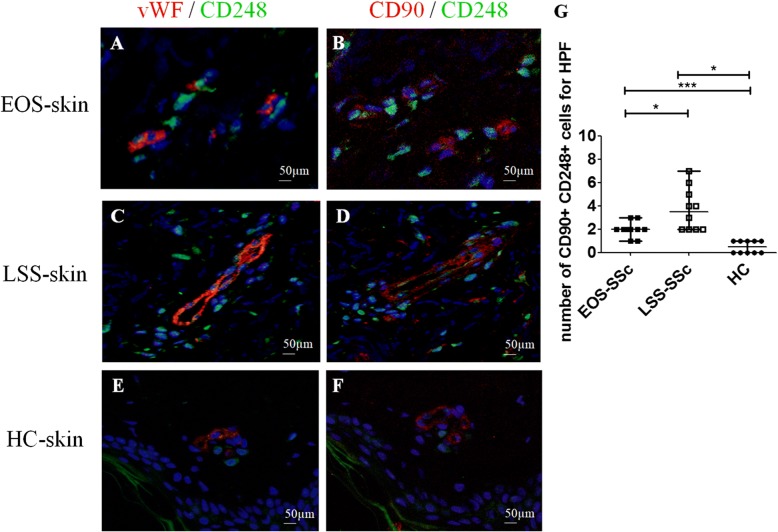
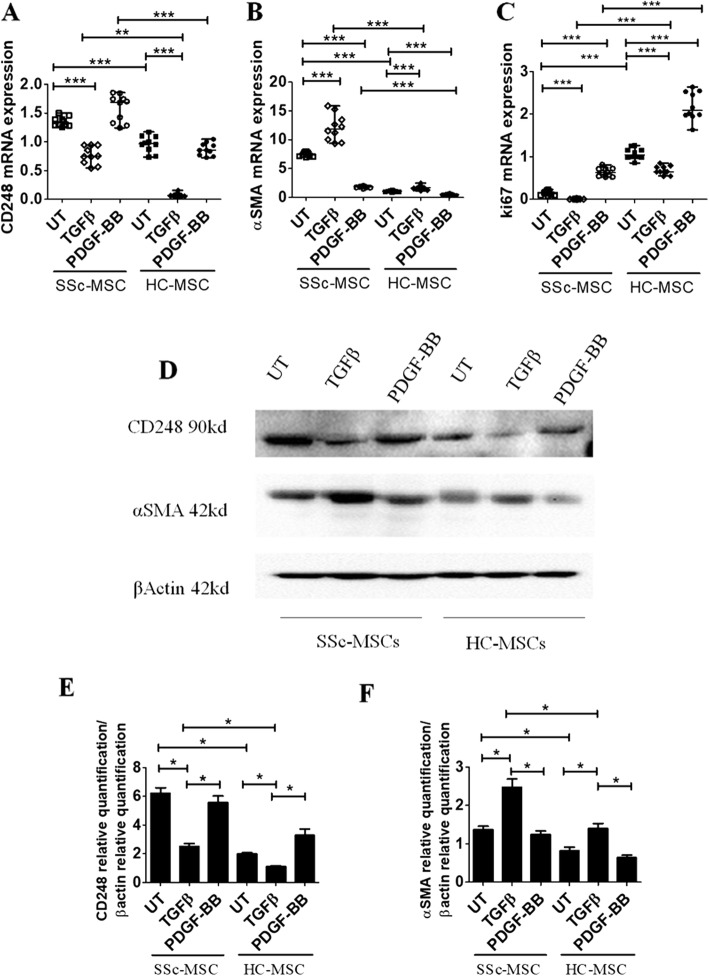
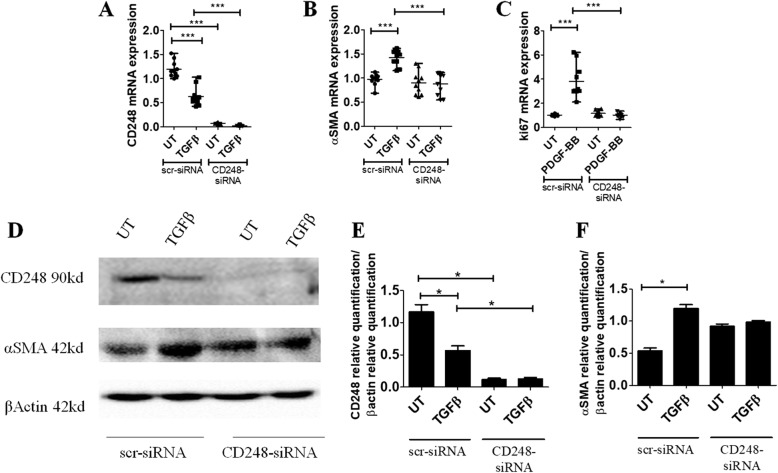
Results: Increased expression of CD248 was found in endothelial cells and perivascular stromal cells of SSc skin. In SSc-MSCs, the levels of CD248 and α-smooth muscle actin expression were significantly higher than in HC-MSCs. In both SSc- and HC-MSCs, PDGF-BB induced increased expression of Ki-67 when compared with untreated cells but was unable to modulate CD248 levels. After CD248 silencing, both TGF-β and PDGF-BB signaling were inhibited in SSc-MSCs.
Conclusions: CD248 overexpression may play an important role in the fibrotic process by modulating the molecular target, leading to perivascular cells differentiation toward myofibroblasts and interfering with its expression, and thus might open a new therapeutic strategy to inhibit myofibroblast generation during SSc.
Keywords: CD248; Fibrosis; Systemic sclerosis.
Conflict of interest statement
Ethics approval and consent to participate
The experiments reported in this article comply with the current ethical standard laws of Italy. All patients gave fully informed written consent approved by the institutional ethics committee.
Consent for publication
Not applicable.
Competing interests
The authors declare that they have no competing interests.
Publisher’s Note
Springer Nature remains neutral with regard to jurisdictional claims in published maps and institutional affiliations.
Figures

References
MeSH terms
Substances
LinkOut - more resources
Full Text Sources
Other Literature Sources
Medical
Miscellaneous
