


Adamantinoma-like Ewing Sarcoma of the Salivary Glands: A Newly Recognized Mimicker of Basaloid Salivary Carcinomas
- PMID: 30285997
- PMCID: PMC8115302
- DOI: 10.1097/PAS.0000000000001171
Adamantinoma-like Ewing Sarcoma of the Salivary Glands: A Newly Recognized Mimicker of Basaloid Salivary Carcinomas
Abstract
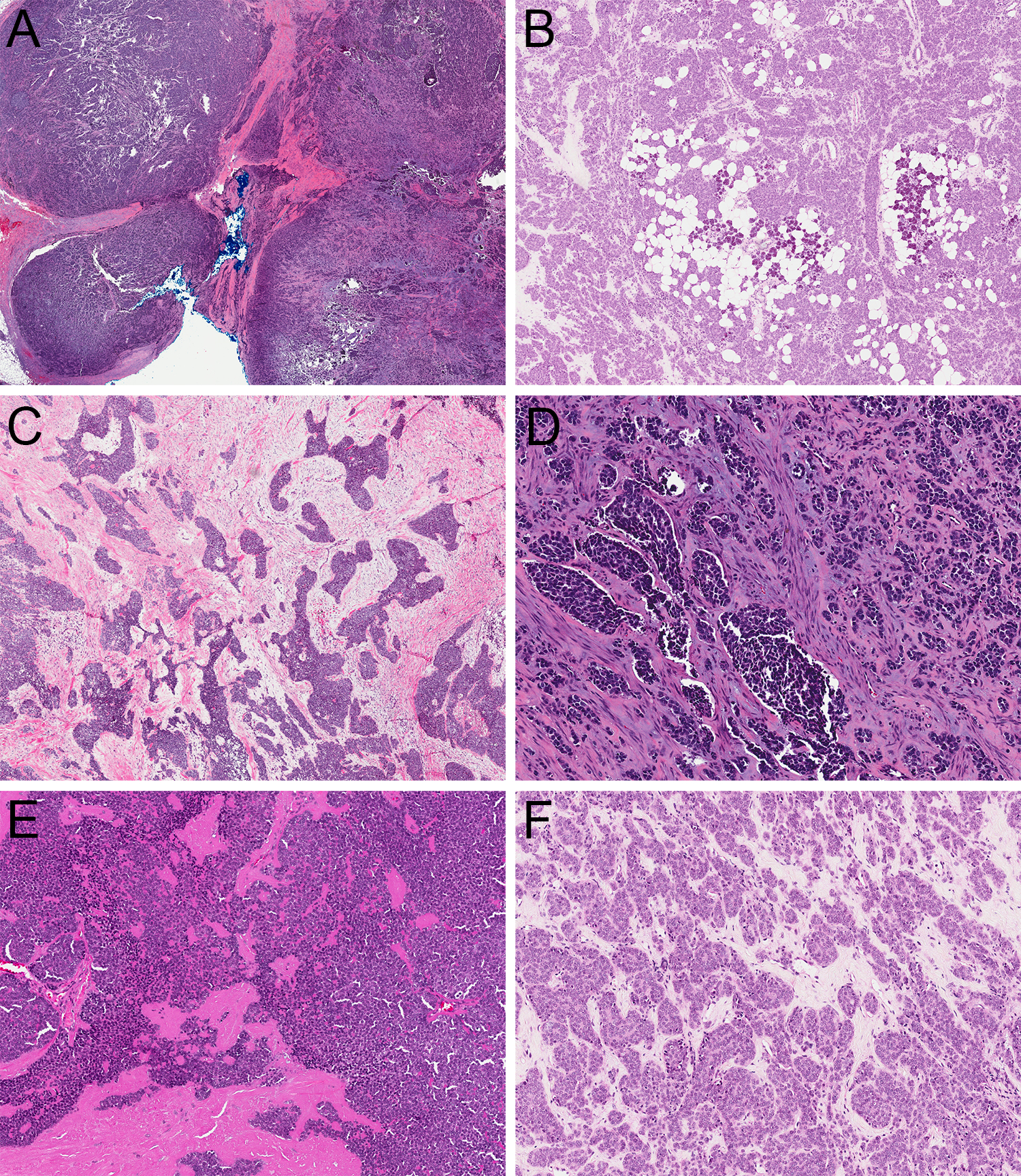
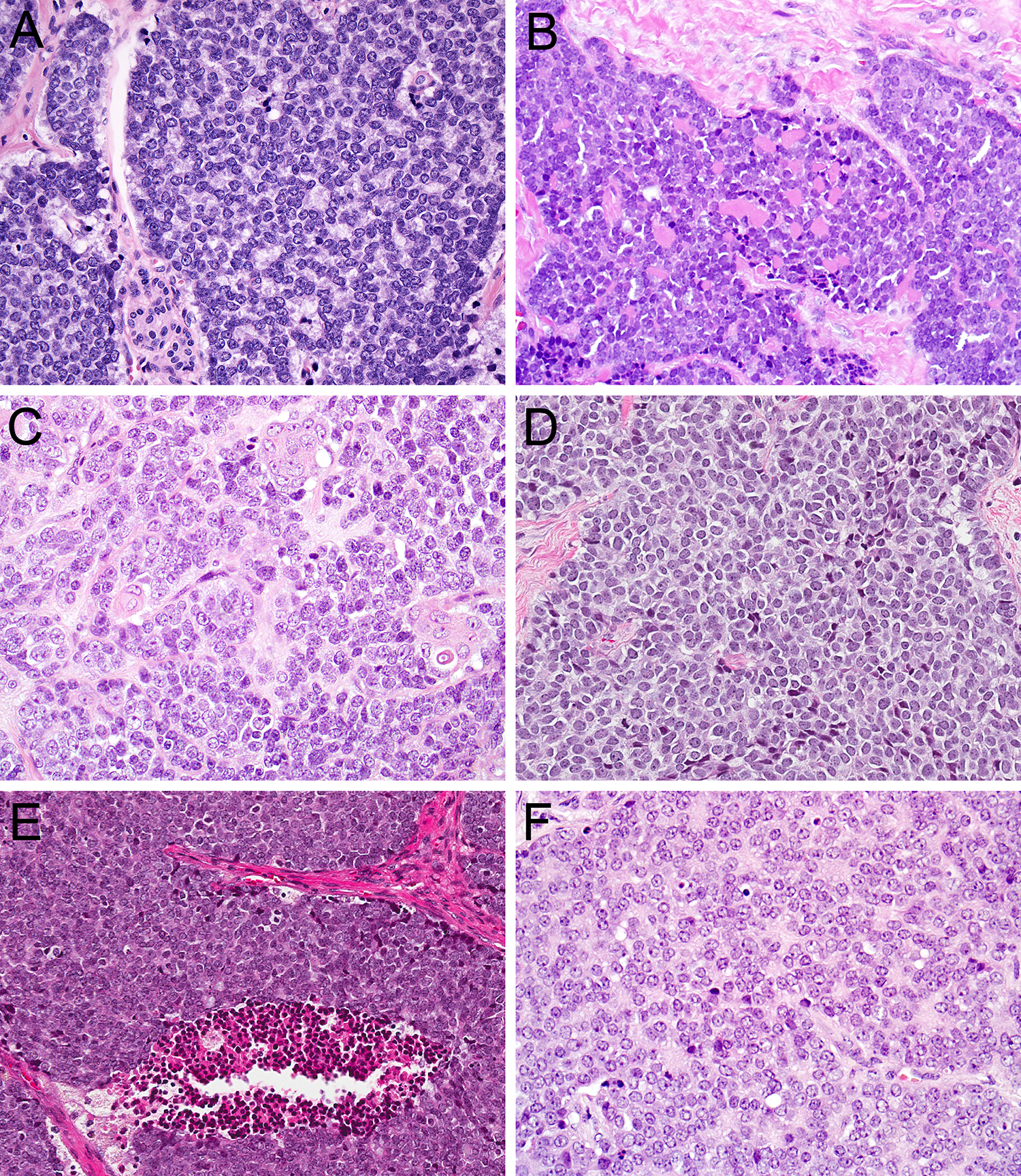
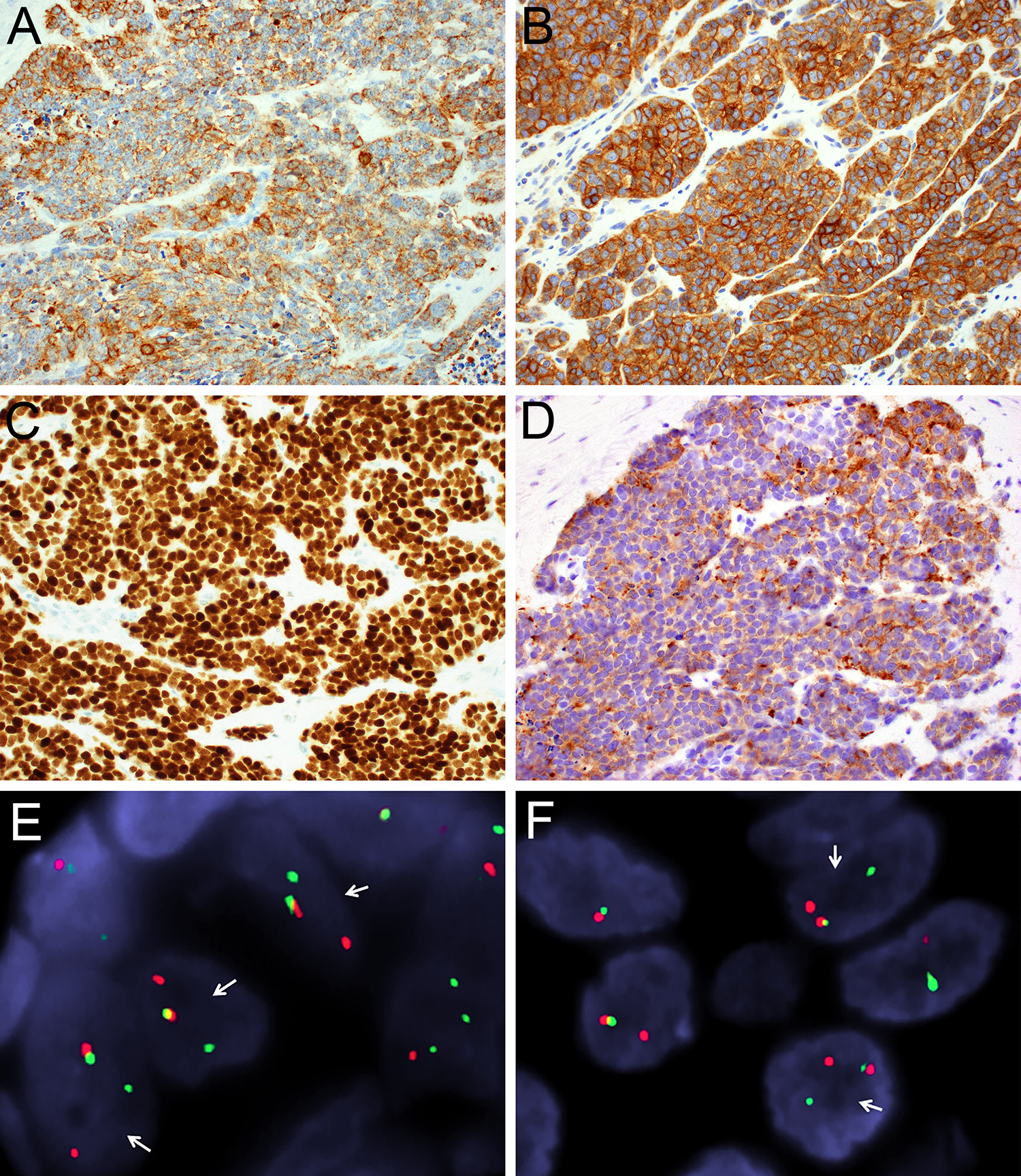
Adamantinoma-like Ewing sarcoma (ALES) is a rare tumor that demonstrates the EWSR1-FLI1 translocation characteristic of Ewing sarcoma despite overt epithelial differentiation including diffuse expression of cytokeratins and p40. Most cases of ALES described to date have occurred in the head and neck where they can mimic a wide range of small round blue cell tumors. Because distinguishing ALES from basaloid salivary gland carcinomas can be particularly difficult, we analyzed a series of 10 ALESs that occurred in the salivary glands with the aim of identifying features that allow for better recognition of this entity. The salivary ALESs included 8 parotid gland and 2 submandibular gland tumors in patients ranging from 32 to 77 years (mean: 52 y). Nine were initially misclassified as various epithelial neoplasms. Although these tumors displayed the basaloid cytology, rosette formation, infiltrative growth, and nuclear monotony characteristic of ALES, peripheral palisading and overt keratinization were relatively rare in this site. Salivary ALESs not only displayed positivity for AE1/AE3, p40, and CD99, but also demonstrated a higher proportion of synaptophysin reactivity than has been reported for nonsalivary ALESs. These morphologic and immunohistochemical findings make ALES susceptible to misclassification as various other tumors including basal cell adenocarcinoma, adenoid cystic carcinoma, squamous cell carcinoma, NUT carcinoma, large cell neuroendocrine carcinoma and myoepithelial carcinoma. Nevertheless, monotonous cytology despite highly infiltrative growth and concomitant positivity for p40 and synaptophysin can provide important clues for consideration of ALES, and identification of the defining EWSR1-FLI1 translocations can confirm the diagnosis.
Conflict of interest statement
Figures
References
-
- de Alava E, Lessnick SL, Sorenson PH. Ewing Sarcoma. In: Fletcher CD, Bridge JA, Hogendoorn PC, et al. , eds. WHO Classification of Tumours of Soft Tissue and Bone. Lyon, France: International Agency for Research on Cancer; 2013:306–309.
-
- Shibuya R, Matsuyama A, Nakamoto M, et al. The combination of CD99 and NKX2.2, a transcriptional target of EWSR1-FLI1, is highly specific for the diagnosis of Ewing sarcoma. Virchows Arch. 2014;465:599–605. - PubMed
-
- Smith R, Owen LA, Trem DJ, et al. Expression profiling of EWS/FLI identifies NKX2.2 as a critical target gene in Ewing’s sarcoma. Cancer Cell. 2006;9:405–416. - PubMed
-
- Bridge JA, Fidler ME, Neff JR, et al. Adamantinoma-like Ewing’s sarcoma: genomic confirmation, phenotypic drift. Am J Surg Pathol. 1999;23:159–165. - PubMed
MeSH terms
Substances
Grants and funding
LinkOut - more resources
Full Text Sources
Medical
Miscellaneous
