Delayed presentation of iatrogenic ventriculoperitoneal shunt transection following laparoscopic weight loss surgery in a patient with idiopathic intracranial hypertension
- PMID: 30286641
- PMCID: PMC6303825
- DOI: 10.1308/rcsann.2018.0147
Delayed presentation of iatrogenic ventriculoperitoneal shunt transection following laparoscopic weight loss surgery in a patient with idiopathic intracranial hypertension
Abstract
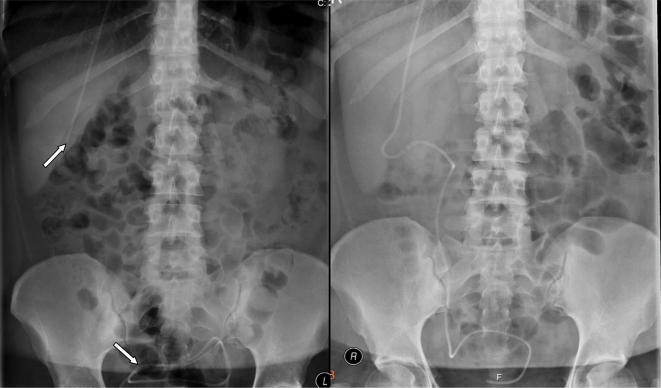
Idiopathic intracranial hypertension is strongly associated with central obesity and consequential raised intra-abdominal pressure. If left untreated it poses significant risk to vision and can eventually cause blindness. Owing to its pathophysiology, this condition is managed by both medical and surgical specialities. When medical management fails neurosurgeons commonly treat idiopathic intracranial hypertension by permanent cerebrospinal fluid peritoneal shunting. Weight reduction surgery provides patients who are obese with a multitude of benefits and it is not uncommon for the general surgeon to be presented with a patient with idiopathic intracranial hypertension and a cerebrospinal fluid peritoneal shunt in place. This provides a potential challenging situation in weight-loss surgical procedures. We describe an interesting case where laparoscopic bariatric surgery resulted in transection of the abdominal catheter with a delayed presentation of recurrent symptoms and an abdominal cerebrospinal fluid collection in a patient with idiopathic intracranial hypertension. We discuss how this could be avoided and its management.
Keywords: Idiopathic intracranial hypertension; Intracranial hypertension; Pseudotumor cerebri; Ventriculoperitoneal shunt; Weight reduction surgery.
Figures

References
-
- Sinclair AJ, Ball AK, Burdon MA et al. . Exploring the pathogenesis of IIH: an inflammatory perspective. J Neuroimmunol 2008; : 212–220. - PubMed
-
- Karahalios DG, Rekate HL, Khayata MH, Apostolides PJ. Elevated intracranial venous pressure as a universal mechanism in pseudotumor cerebri of varying etiologies. Neurology 1996; (1): 198–202. - PubMed
-
- Nadkarni T, Rekate HL, Wallace D. Resolution of pseudotumor cerebri after bariatric surgery for related obesity: case report. J Neurosurg 2004; (5): 878–880. - PubMed
-
- Curry WT, Jr., Butler WE, Barker FG, 2nd. Rapidly rising incidence of cerebrospinal fluid shunting procedures for idiopathic intracranial hypertension in the United States, 1988–2002. Neurosurgery 2005; (1): 97–108. - PubMed
-
- Antoniou SA, Antoniou GA, Koch OO et al. . Blunt versus bladed trocars in laparoscopic surgery: a systematic review and meta-analysis of randomized trials. Surg Endosc 2013; (7): 2,312–2,320. - PubMed
Publication types
MeSH terms
LinkOut - more resources
Full Text Sources