


Dynapenia could predict chemotherapy-induced dose-limiting neurotoxicity in digestive cancer patients
- PMID: 30286724
- PMCID: PMC6172807
- DOI: 10.1186/s12885-018-4860-1
Dynapenia could predict chemotherapy-induced dose-limiting neurotoxicity in digestive cancer patients
Abstract
Background: FIGHTDIGO study showed the feasibility and acceptability of handgrip strength (HGS) measure in routine in 201 consecutive patients with digestive cancer treated with ambulatory chemotherapy. The present study focuses on the second aim of FIGHTDIGO study: the relationships between pre-therapeutic dynapenia and chemotherapy-induced Dose-Limiting Toxicities (DLT).
Methods: In this ancillary prospective study, DLT were analyzed in a sub-group of 45 chemotherapy-naive patients. Two bilateral consecutive measures of HGS were performed with a Jamar dynamometer before the first cycle of chemotherapy. Dynapenia was defined as HGS < 30 kg (men) and < 20 kg (women). DLT and/or Dose-Limiting Neurotoxicity (DLN) were defined as any toxicity leading to dose reduction, treatment delays or permanent treatment discontinuation.
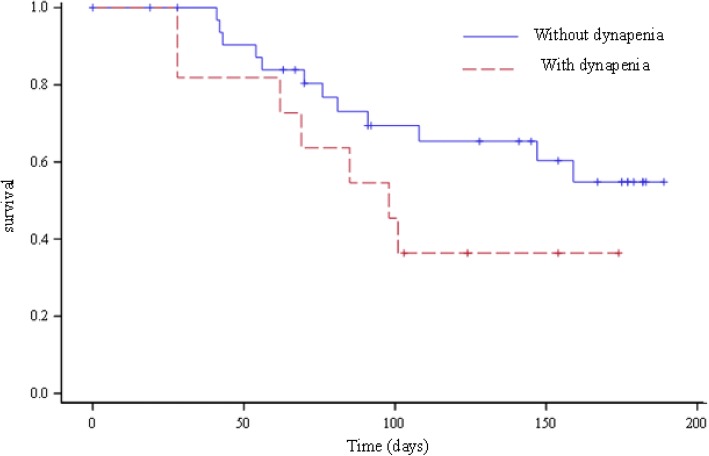
Results: Two-thirds of chemotherapies were potentially neurotoxic (n = 31 [68.7%]) and 22 patients (48.9%) received FOLFOX (5FU, leucovorin plus oxaliplatin) regimen chemotherapy. Eleven patients (24.4%) had pre-therapeutic dynapenia. The median number of chemotherapy cycles was 10 with a median follow-up of 167 days. Twenty-two patients experienced DLT (48.9%). There was no significant association between pre-therapeutic dynapenia and DLT (p = 0.62). Nineteen patients (42.2%) experienced DLN. In multivariate analysis, dynapenia and tumoral location (stomach, biliary tract or small intestine) were independent risk factors for DLN (HR = 3.5 [1.3; 9.8]; p = 0.02 and HR = 3.6 [1.3; 10.0]; p = 0.01, respectively).
Conclusions: Digestive cancer patients with pre-therapeutic dynapenia seemed to experience more DLN. HGS routine measurement may be a way to screen patients with frailty marker (dynapenia) who would require chemotherapy dose adjustment and adapted physical activity programs.
Trial registration: NCT02797197 June 13, 2016 retrospectively registered.
Keywords: Antineoplastic agents; Digestive system neoplasms; Dose-limiting toxicity; Dynapenia; Muscle strength; Sarcopenia.
Conflict of interest statement
Ethics approval and consent to participate
Informed written consent was obtained for each enrolled patient in the trial. The FIGHTDIGO study was approved by the ethics committee (Committee for the Protection of Person EST I DIJON, 25 March 2016) and was registered in
Consent for publication
none
Competing interests
Damien Botsen reports personal fees from Pierre Fabre and non-financial support from GlaxoSmithKline, Novartis, Chugai, and Amgen outside the submitted work.
Camille Mazza reports personal fees from Pierre Fabre outside the submitted work.
Mathilde Brasseur reports personal fees from Bayer and non-financial support from Pierre Fabre, Novartis, Amgen, Roche, and AbbVie outside the submitted work.
Olivier Bouche reports grants from Roche, personal fees from Roche, grants from Pierre Fabre, personal fees from Pierre Fabre, personal fees from Amgen, personal fees from Bayer, personal fees from Lilly, personal fees from Merck, personal fees from Novartis, outside the submitted work.
Yohann Renard reports grants from Bard and Allergan, outside the submitted work. Marie-Amélie Ordan, Marine Perrier, Johanna Moreau, Coralie Barbe, Florian Slimano, Barbara Taillière, Eric Bertin: The authors declare that they have no competing interests.
Publisher’s Note
Springer Nature remains neutral with regard to jurisdictional claims in published maps and institutional affiliations.
Figures
References
-
- World Health Organization. GLOBOCAN 2012: estimated cancer incidence, mortality and prevalence worldwide in 2012. http://globocan.iarc.fr/Pages/fact_sheets_cancer.aspx. Accessed 5 Feb 2017.
MeSH terms
Substances
Associated data
LinkOut - more resources
Full Text Sources
Medical
