


The Anticancer Properties of Cordycepin and Their Underlying Mechanisms
- PMID: 30287757
- PMCID: PMC6212910
- DOI: 10.3390/ijms19103027
The Anticancer Properties of Cordycepin and Their Underlying Mechanisms
Abstract
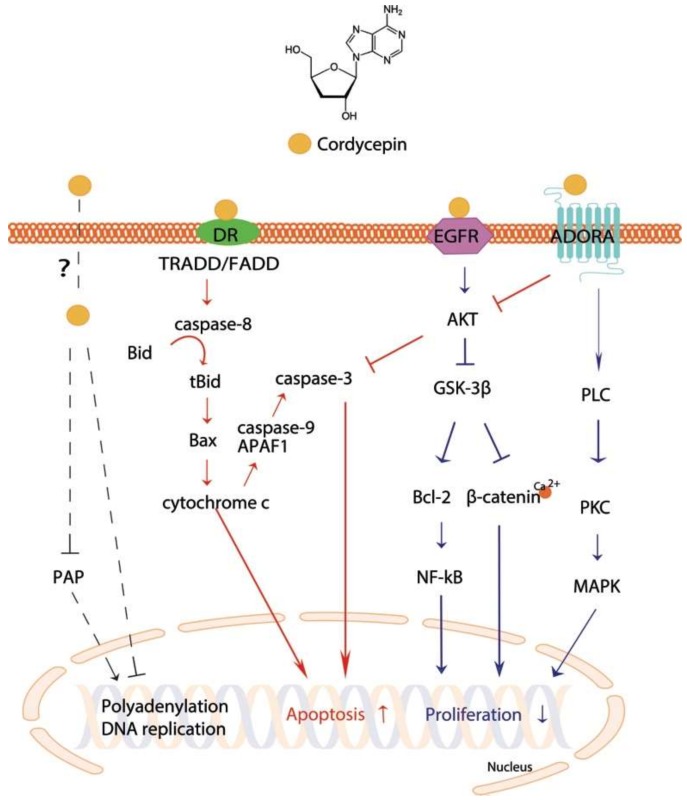
Cordyceps is a genus of ascomycete fungi that has been used for traditional herbal remedies. It contains various bioactive ingredients including cordycepin. Cordycepin, also known as 3-deoxyadenosine, is a major compound and has been suggested to have anticancer potential. The treatment of various cancer cells with cordycepin in effectively induces cell death and retards their cancerous properties. However, the underlying mechanism is not fully understood. Recent evidence has shed light on the molecular pathways involving cysteine-aspartic proteases (caspases), mitogen-activated protein kinases (MAPKs), and glycogen synthase kinase 3 beta (GSK-3β). Furthermore, the pathways are mediated by putative receptors, such as adenosine receptors (ADORAs), death receptors (DRs), and the epidermal growth factor receptor (EGFR). This review provides the molecular mechanisms by which cordycepin functions as a singular or combinational anticancer therapeutic agent.
Keywords: Cordyceps; adenosine receptors; anticancer; cordycepin; death receptors.
Conflict of interest statement
The authors declare no conflicts of interest.
Figures
References
-
- Cassileth B.R. Alternative and complementary cancer treatments. Oncologist. 1996;1:173–179. - PubMed
Publication types
MeSH terms
Substances
Grants and funding
LinkOut - more resources
Full Text Sources
Other Literature Sources
Research Materials
Miscellaneous
