


A Clinical Risk Prediction Tool for Peritonitis-Associated Treatment Failure in Peritoneal Dialysis Patients
- PMID: 30287920
- PMCID: PMC6172229
- DOI: 10.1038/s41598-018-33196-2
A Clinical Risk Prediction Tool for Peritonitis-Associated Treatment Failure in Peritoneal Dialysis Patients
Abstract
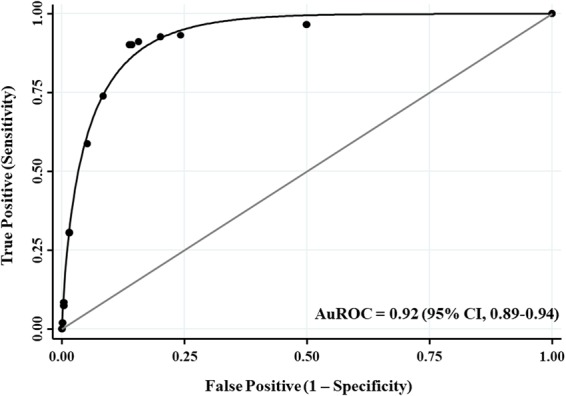
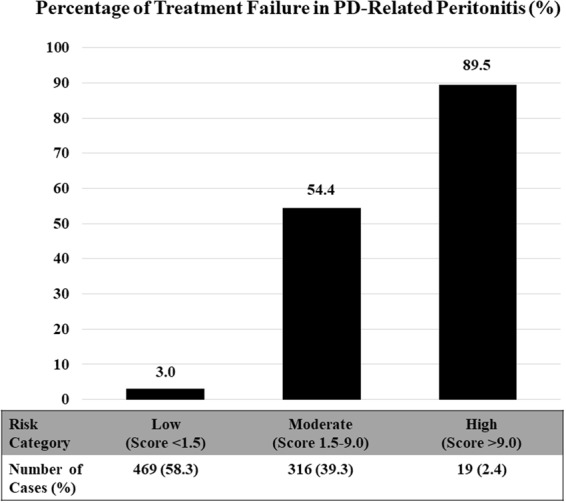
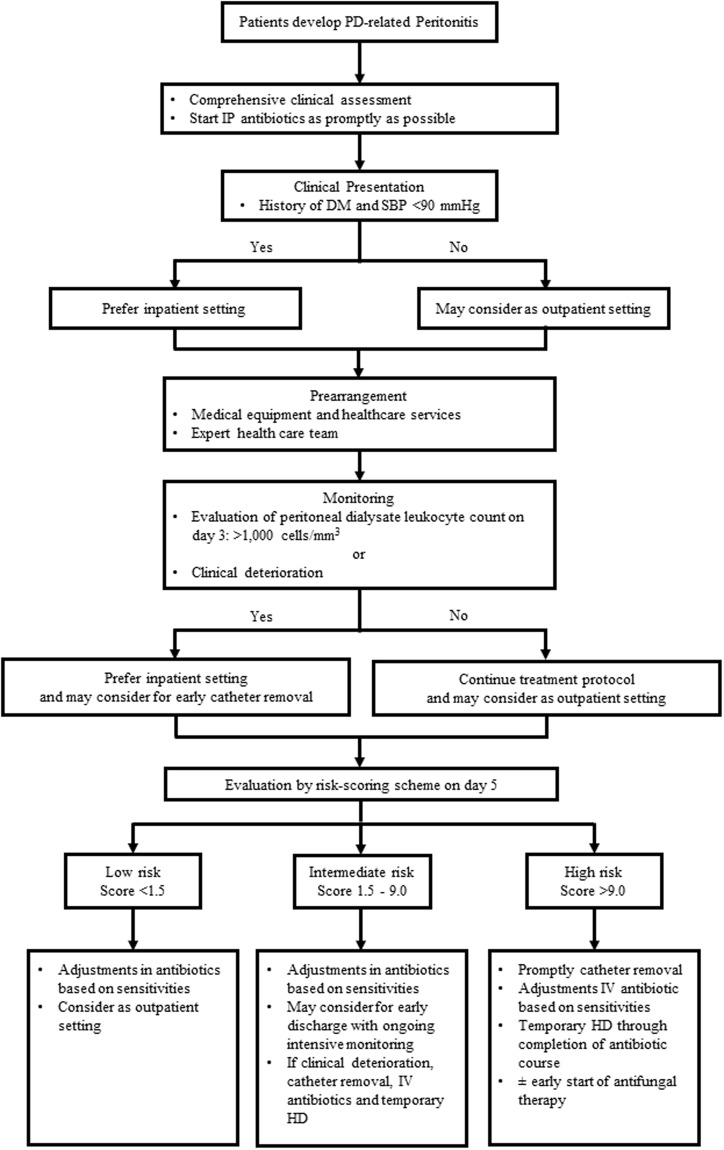
A tool to predict peritonitis-associated treatment failure among peritoneal dialysis (PD) patients has not yet been established. We conducted a multicentre, retrospective cohort study among 1,025 PD patients between 2006 and 2016 in Thailand to develop and internally validate such a tool. Treatment failure was defined as either a requirement for catheter removal, a switch to haemodialysis, or peritonitis-associated mortality. Prediction model performances were analysed using discrimination (C-statistics) and calibration (Hosmer-Lemeshow test) tests. Predictors were weighted to calculate a risk score. In total, 435 patients with 855 episodes of peritonitis were identified; 215 (25.2%) episodes resulted in treatment failure. A total risk score of 11.5 was developed including, diabetes, systolic blood pressure <90 mmHg, and dialysate leukocyte count >1,000/mm3 and >100/mm3 on days 3-4 and day 5, respectively. The discrimination (C-statistic = 0.92; 95%CI, 0.89-0.94) and calibration (P > 0.05) indicated an excellent performance. No significant difference was observed in the internal validation cohort. The rate of treatment failure in the different groups was 3.0% (low-risk, <1.5 points), 54.4% (moderate-risk, 1.5-9 points), and 89.5% (high-risk, >9 points). A simplified risk-scoring scheme to predict treatment failure may be useful for clinical decision making regarding PD patients with peritonitis. External validation studies are needed.
Conflict of interest statement
The authors declare no competing interests.
Figures
References
Publication types
MeSH terms
LinkOut - more resources
Full Text Sources
