


Hypnosis intervention for the management of pain perception during cataract surgery
- PMID: 30288086
- PMCID: PMC6160280
- DOI: 10.2147/JPR.S174490
Hypnosis intervention for the management of pain perception during cataract surgery
Erratum in
-
Erratum: Hypnosis intervention for the management of pain perception during cataract surgery [Erratum].J Pain Res. 2019 Jan 23;12:489. doi: 10.2147/JPR.S201749. eCollection 2019. J Pain Res. 2019. PMID: 30774418 Free PMC article.
Abstract
Objective: To investigate the effectiveness of hypnosis in pain management during cataract surgery.
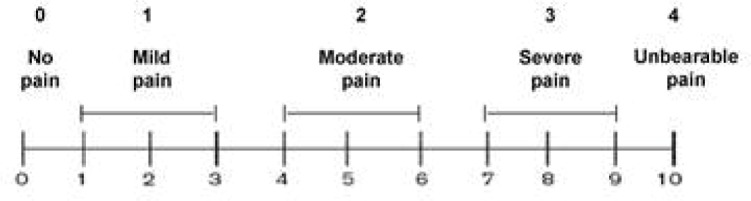
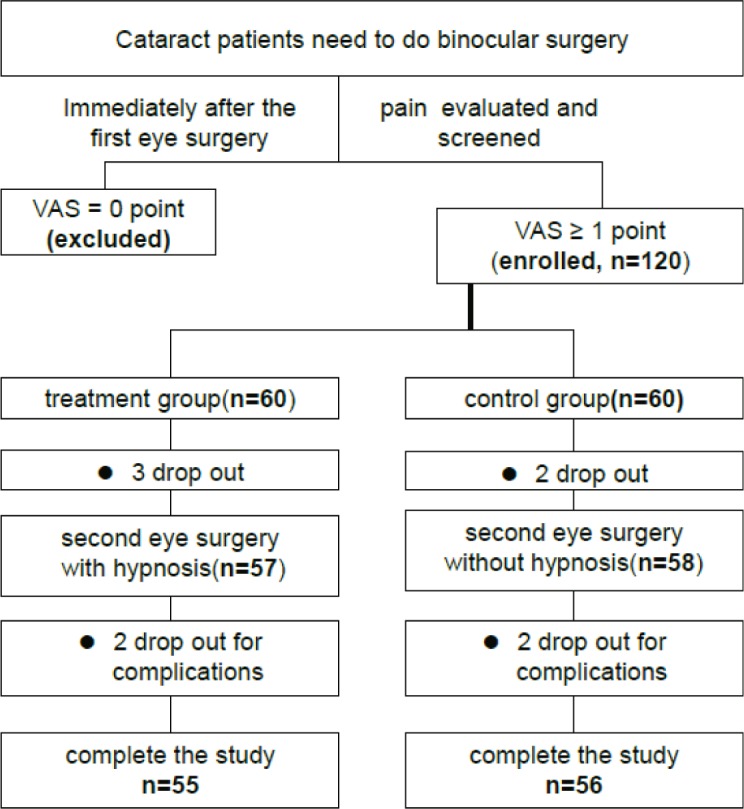
Methods: Male or female patients with bilateral age-related cataract who wished to have both eyes subjected to phacoemulsification surgery were preliminarily admitted. Immediately after the first-eye surgery, each patient was evaluated for pain using the visual analog scale (VAS), and patients with a VAS score >1 were enrolled. By using block randomization, the enrolled patients were allocated to either the treatment group, which received a hypnosis intervention before the scheduled second-eye surgery, or the control group, which did not undergo hypnosis. The levels of anxiety, pain, and cooperation were evaluated independently by the patients and the surgeon.
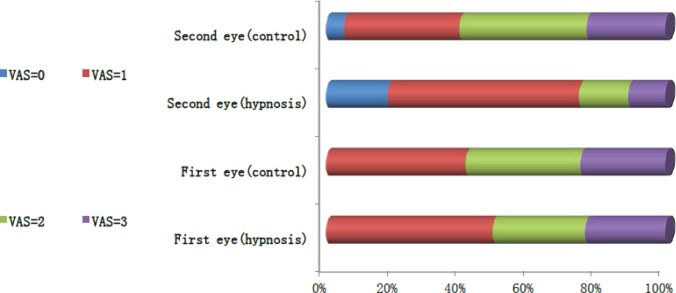
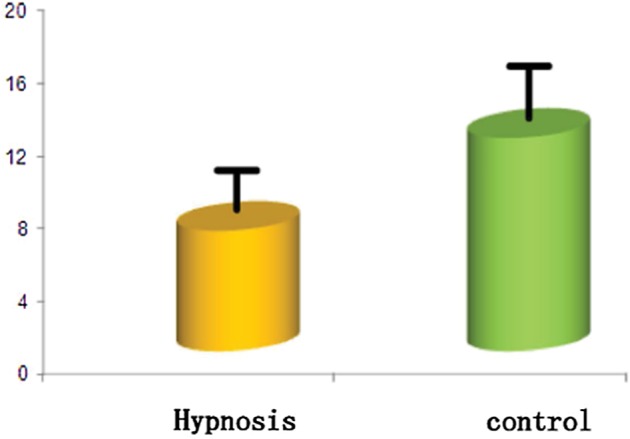
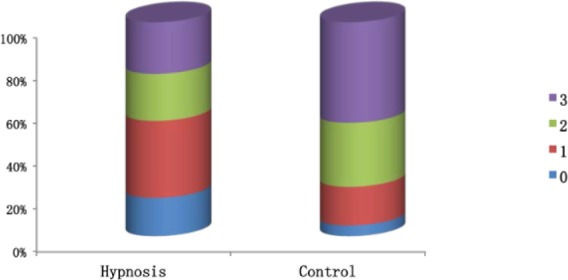
Results: During the intraoperative pain assessment, 5%, 34%, 38%, and 23% of patients in the control group reported experiencing no pain, mild pain, moderate pain, and severe pain, respectively. In contrast, in the hypnosis group, 18%, 56%, 15%, and 11% of patients reported experiencing no pain, mild pain, moderate pain, and severe pain, respectively, which showed significant differences between the groups (P<0.005). The evaluation of anxiety level showed that the mean score in the control group and hypnosis group was 11.77±0.32 and 6.64±0.21, respectively, revealing a highly significant difference between the two groups (P<0.005). The assessment of patient cooperation showed that only 5% and 18% of patients in the control group and 18% and 36% of patients in the hypnosis group showed excellent and good cooperation, respectively, while 47% of patients in the control group and only 24% of patients in the hypnosis group exhibited poor cooperation, revealing significant differences between the groups (P<0.005).
Conclusion: Hypnosis may be considered as an auxiliary measure in cataract surgery, especially for patients who experienced obvious pain during the first-eye surgery.
Keywords: cataract surgery; hypnosis; pain; patient satisfaction.
Conflict of interest statement
Disclosure The authors report no conflicts of interest in this work.
Figures
References
-
- Ezra DG, Allan BD. Topical anaesthesia alone versus topical anaesthesia with intracameral lidocaine for phacoemulsification. Cochrane Database Syst Rev. 2007;18(3):CD005276. - PubMed
-
- Nanji KC, Roberto SA, Morley MG, Bayes J. Preventing Adverse Events in Cataract Surgery: Recommendations From a Massachusetts Expert Panel. Anesth Analg. 2018;126(5):1537–1547. - PubMed
-
- Ezra DG, Nambiar A, Allan BD. Supplementary intracameral lidocaine for phacoemulsification under topical anesthesia. A meta-analysis of randomized controlled trials. Ophthalmology. 2008;115(3):455–487. - PubMed
LinkOut - more resources
Full Text Sources
