


Trends and patterns of analgesic prescribing in Malaysian public hospitals from 2010 to 2016: tramadol predominately used
- PMID: 30288090
- PMCID: PMC6160284
- DOI: 10.2147/JPR.S164774
Trends and patterns of analgesic prescribing in Malaysian public hospitals from 2010 to 2016: tramadol predominately used
Abstract
Purpose: To examine the trends of analgesic prescribing at public tertiary hospital outpatient settings and explore the patterns of their utilization in nonsteroidal anti-inflammatory drugs (NSAIDs), tramadol, and opioid patients.
Patients and methods: This cross-sectional study was conducted from 2010 to 2016 using the prescription databases of two tertiary hospitals in Malaysia. Prescriptions for nine NSAIDs (ketoprofen, diclofenac, celecoxib, etoricoxib, ibuprofen, indomethacin, meloxicam, mefenamic acid, and naproxen), tramadol, and five other opioids (morphine, fentanyl, oxycodone, dihydrocodeine, and buprenorphine) were included in this study. Annual number of patients and prescriptions were measured in repeat cross-sectional estimates. Descriptive statistics and linear trend analysis were performed using Stata version 13.
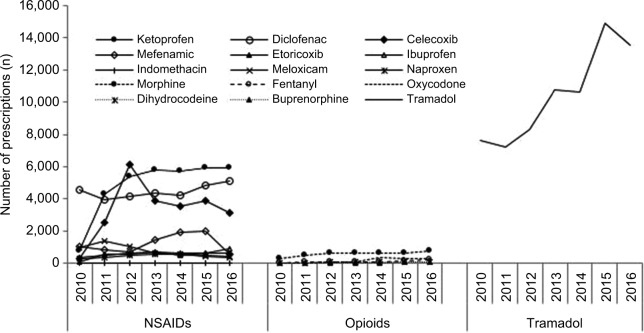
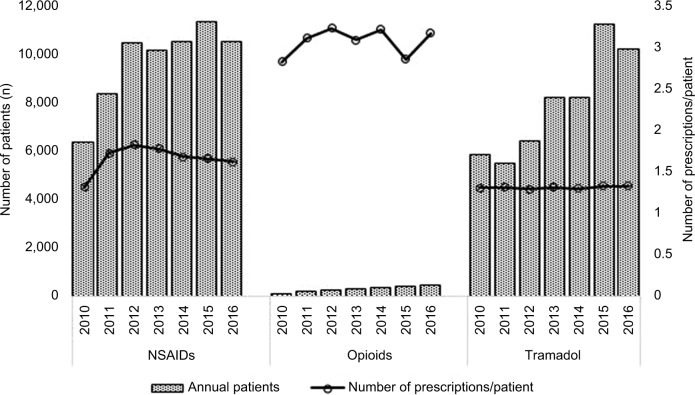
Results: A total of 192,747 analgesic prescriptions of the nine NSAIDs, tramadol, and five other opioids were given for 97,227 patients (51.8% NSAIDs patients, 46.6% tramadol patients, and 1.7% opioid patients) from 2010 to 2016. Tramadol (37.9%, n=72,999) was the most frequently prescribed analgesic, followed by ketoprofen (17.5%, n=33,793), diclofenac (16.2%, n=31,180), celecoxib (12.2%, n=23,487), and other NSAIDs (<4.5%). All the analgesics were increased over time except meloxicam, indomethacin, and mefenamic acid. Opioids, primarily morphine (2.2%, n=4,021) and oxycodone (0.5%, n=1,049), were prescribed the least, but the rate of increase was the highest.
Conclusion: Tramadol was the most frequently prescribed analgesic in hospital outpatient settings in Malaysia. Opioids were prescribed the least, but noted the highest increase in utilization.
Keywords: Malaysia; NSAIDs; analgesics; opioids; patterns; tramadol; trends of prescribing.
Conflict of interest statement
Disclosure CSZ was supported by a research grant from The Ministry of Education Malaysia (Fundamental Research Grant Scheme, FRGS 15-195-0436). The authors report no other conflicts of interest in this work.
Figures
References
-
- Jacob L, Kostev K. Prevalence of pain medication prescriptions in France, Germany, and the UK - a cross-sectional study including 4,270,142 patients. Postgrad Med. 2018;130(1):32–36. - PubMed
-
- Ungprasert P, Cheungpasitporn W, Crowson CS, Matteson EL. Individual non-steroidal anti-inflammatory drugs and risk of acute kidney injury: a systematic review and meta-analysis of observational studies. Eur J Intern Med. 2015;26(4):285–291. - PubMed
LinkOut - more resources
Full Text Sources
