Human genetic variation in GLS2 is associated with development of complicated Staphylococcus aureus bacteremia
- PMID: 30289878
- PMCID: PMC6192642
- DOI: 10.1371/journal.pgen.1007667
Human genetic variation in GLS2 is associated with development of complicated Staphylococcus aureus bacteremia
Abstract
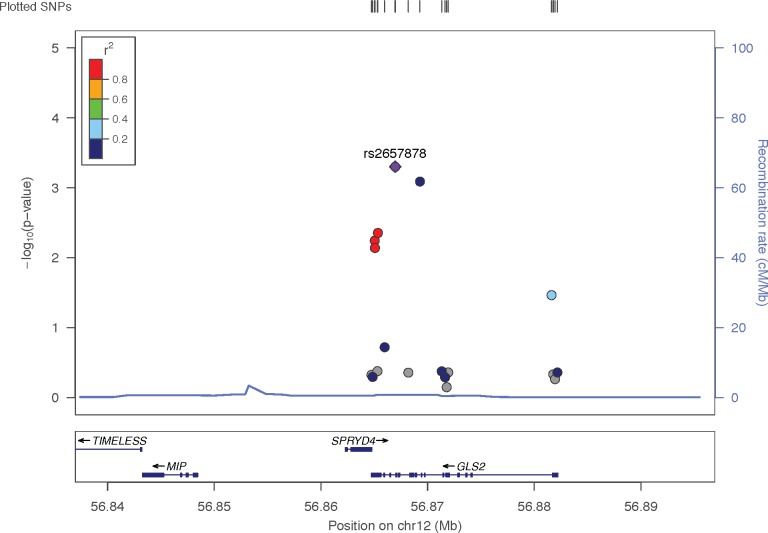
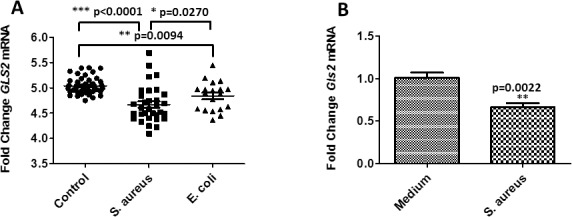
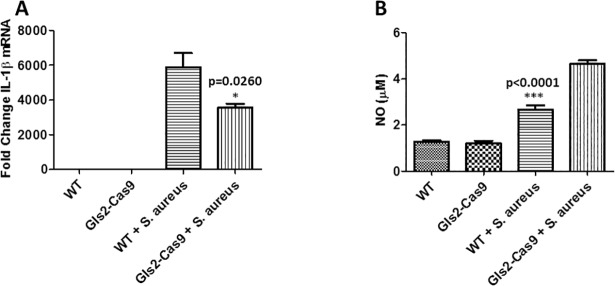
The role of host genetic variation in the development of complicated Staphylococcus aureus bacteremia (SAB) is poorly understood. We used whole exome sequencing (WES) to examine the cumulative effect of coding variants in each gene on risk of complicated SAB in a discovery sample of 168 SAB cases (84 complicated and 84 uncomplicated, frequency matched by age, sex, and bacterial clonal complex [CC]), and then evaluated the most significantly associated genes in a replication sample of 240 SAB cases (122 complicated and 118 uncomplicated, frequency matched for age, sex, and CC) using targeted sequence capture. In the discovery sample, gene-based analysis using the SKAT-O program identified 334 genes associated with complicated SAB at p<3.5 x 10⁻³. These, along with eight biologically relevant candidate genes were examined in the replication sample. Gene-based analysis of the 342 genes in the replication sample using SKAT-O identified one gene, GLS2, significantly associated with complicated SAB (p = 1.2 x 10⁻⁴) after Bonferroni correction. In Firth-bias corrected logistic regression analysis of individual variants, the strongest association across all 10,931 variants in the replication sample was with rs2657878 in GLS2 (p = 5 x 10⁻⁴). This variant is strongly correlated with a missense variant (rs2657879, p = 4.4 x 10⁻³) in which the minor allele (associated here with complicated SAB) has been previously associated with lower plasma concentration of glutamine. In a microarray-based gene-expression analysis, individuals with SAB exhibited significantly lower expression levels of GLS2 than healthy controls. Similarly, Gls2 expression is lower in response to S. aureus exposure in mouse RAW 264.7 macrophage cells. Compared to wild-type cells, RAW 264.7 cells with Gls2 silenced by CRISPR-Cas9 genome editing have decreased IL1-β transcription and increased nitric oxide production after S. aureus exposure. GLS2 is an interesting candidate gene for complicated SAB due to its role in regulating glutamine metabolism, a key factor in leukocyte activation.
Conflict of interest statement
We have read the journal's policy and the authors of this manuscript have the following competing interests: VGF served as Chair of V710 Scientific Advisory Committee (Merck); has received grant support from Cerexa/Actavis, Pfizer, Advanced Liquid Logics, NIH, MedImmune, Cubist/Merck, Karius, Contrafect, and Genentech. NIH STTR/SBIR grants pending: Affinergy, Locus, Medical Surface, Inc.; has been a paid consultant for Achaogen, Astellas, Arsanis, Affinergy, Basilea, Bayer, Cerexa, Contrafect, Cubist, Debiopharm, Durata, Grifols, Genentech, MedImmune, Merck, Medicines Co., Pfizer, Novartis, Novadigm, Theravance, xBiotech, and has received honoraria from Theravance, Green Cross, and has a patent pending in sepsis diagnostics.
Figures
References
-
- Tong SY, Davis JS, Eichenberger E, Holland TL, Fowler VG Jr. Staphylococcus aureus infections: epidemiology, pathophysiology, clinical manifestations, and management. Clin Microbiol Rev. 2015;28(3):603–61. Epub 2015/05/29. 10.1128/CMR.00134-14 ; PubMed Central PMCID: PMC4451395. - DOI - PMC - PubMed
-
- Ahn SH, Deshmukh H, Johnson N, Cowell LG, Rude TH, Scott WK, et al. Two genes on A/J chromosome 18 are associated with susceptibility to Staphylococcus aureus infection by combined microarray and QTL analyses. PLoS Pathog. 2010;6(9):e1001088 Epub 2010/09/09. 10.1371/journal.ppat.1001088 ; PubMed Central PMCID: PMC2932726. - DOI - PMC - PubMed
-
- Yan Q, Sharma-Kuinkel BK, Deshmukh H, Tsalik EL, Cyr DD, Lucas J, et al. Dusp3 and Psme3 are associated with murine susceptibility to Staphylococcus aureus infection and human sepsis. PLoS Pathog. 2014;10(6):e1004149 Epub 2014/06/06. 10.1371/journal.ppat.1004149 ; PubMed Central PMCID: PMC4047107. - DOI - PMC - PubMed
-
- Yan Q, Ahn SH, Medie FM, Sharma-Kuinkel BK, Park LP, Scott WK, et al. Candidate genes on murine chromosome 8 are associated with susceptibility to Staphylococcus aureus infection in mice and are involved with Staphylococcus aureus septicemia in humans. PLoS One. 2017;12(6):e0179033 Epub 2017/06/09. 10.1371/journal.pone.0179033 ; PubMed Central PMCID: PMC5464679. - DOI - PMC - PubMed
Publication types
MeSH terms
Substances
Grants and funding
LinkOut - more resources
Full Text Sources
Medical
Research Materials