


The emotional attentional blink is robust to divided attention
- PMID: 30291553
- PMCID: PMC7456179
- DOI: 10.3758/s13414-018-1601-0
The emotional attentional blink is robust to divided attention
Erratum in
-
Correction to: Attention, Perception, & Psychophysics, Volume 81, Number 1, January 2019.Atten Percept Psychophys. 2019 Jul;81(5):1741. doi: 10.3758/s13414-019-01690-y. Atten Percept Psychophys. 2019. PMID: 30790142 Free PMC article.
Abstract
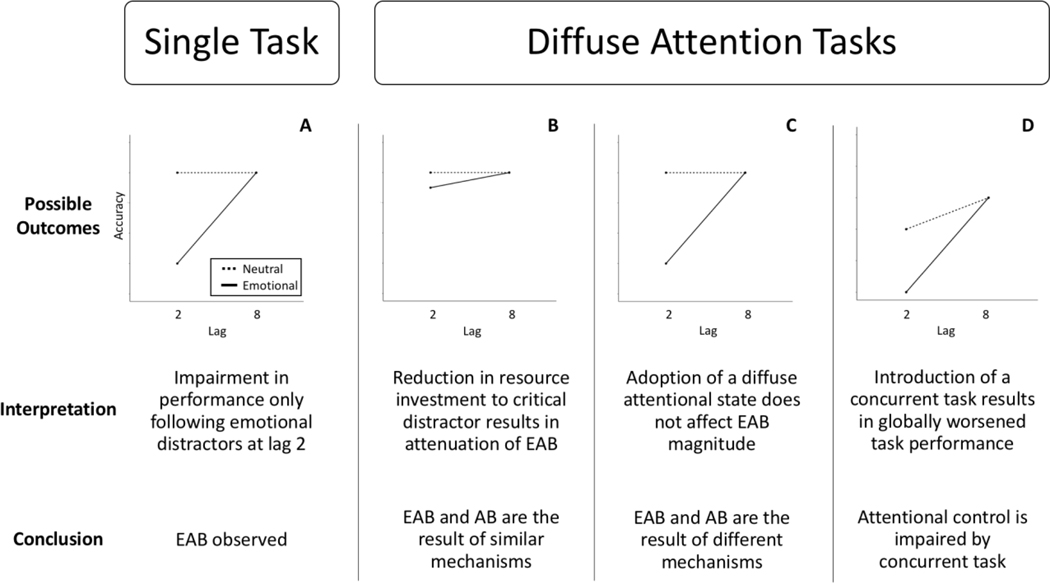
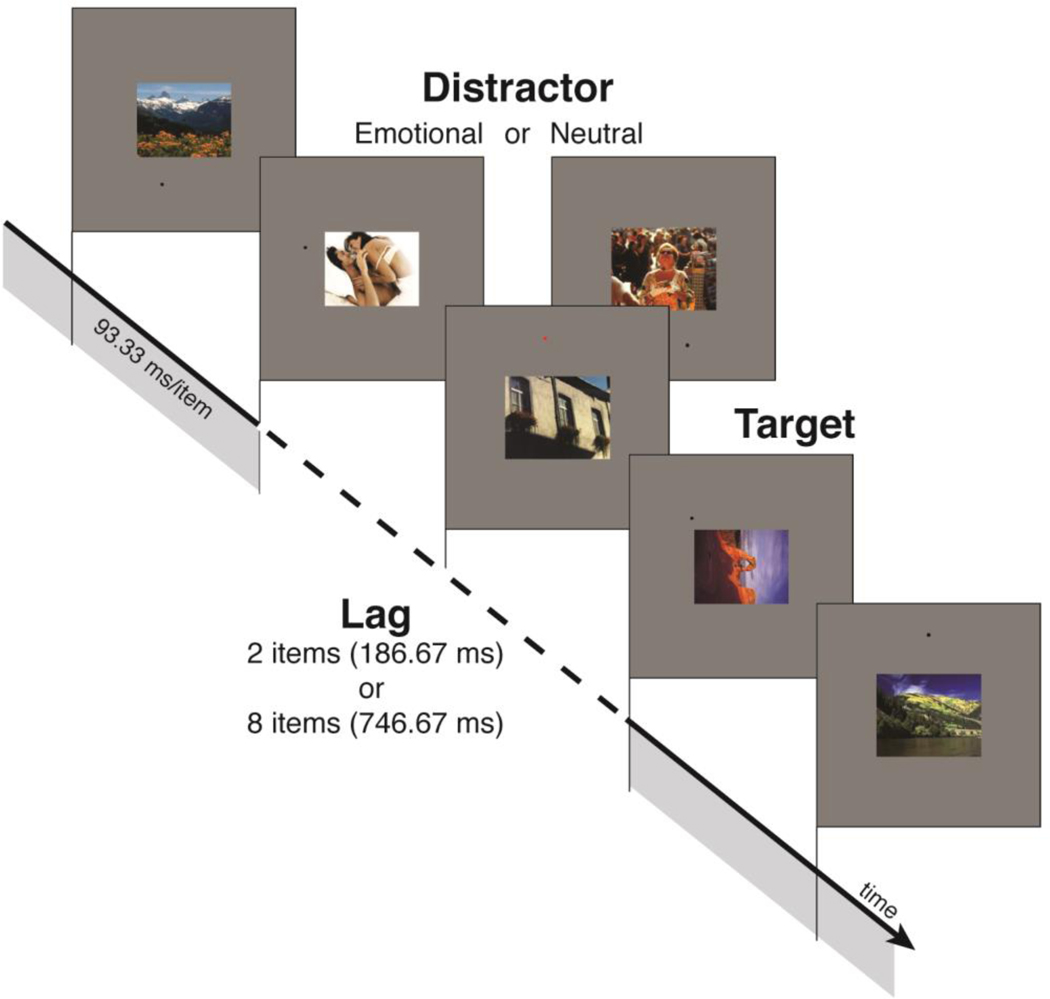
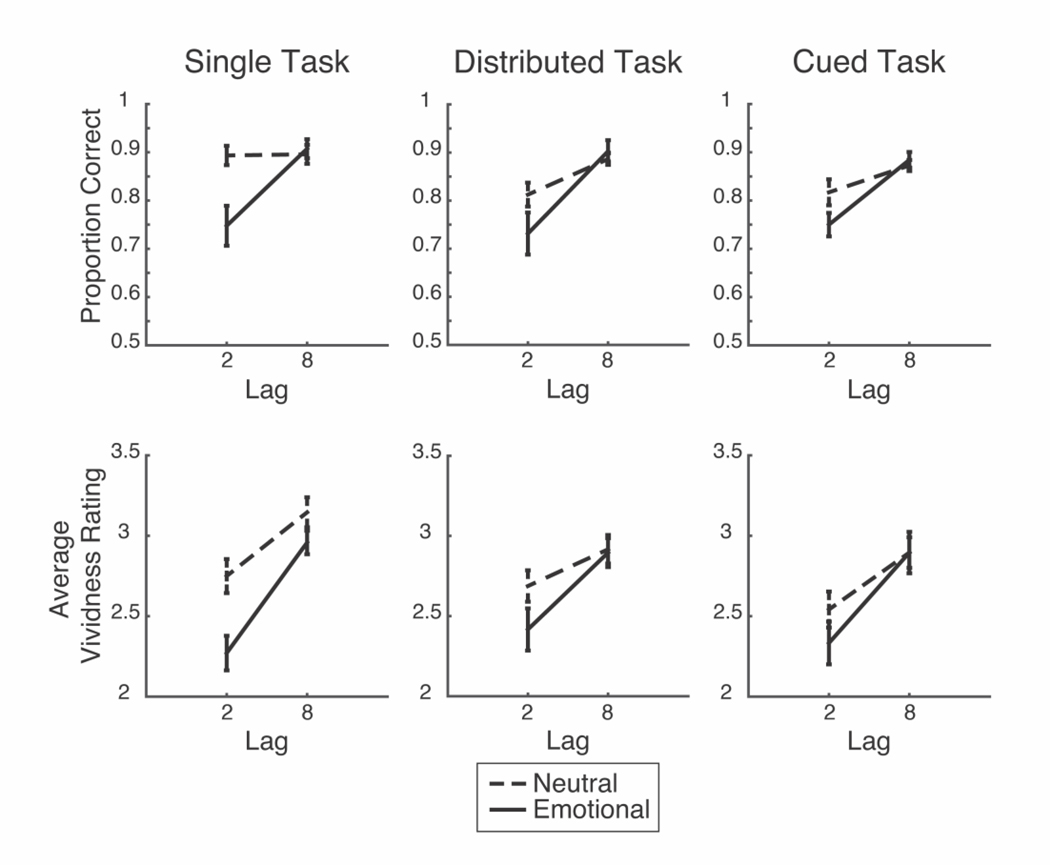
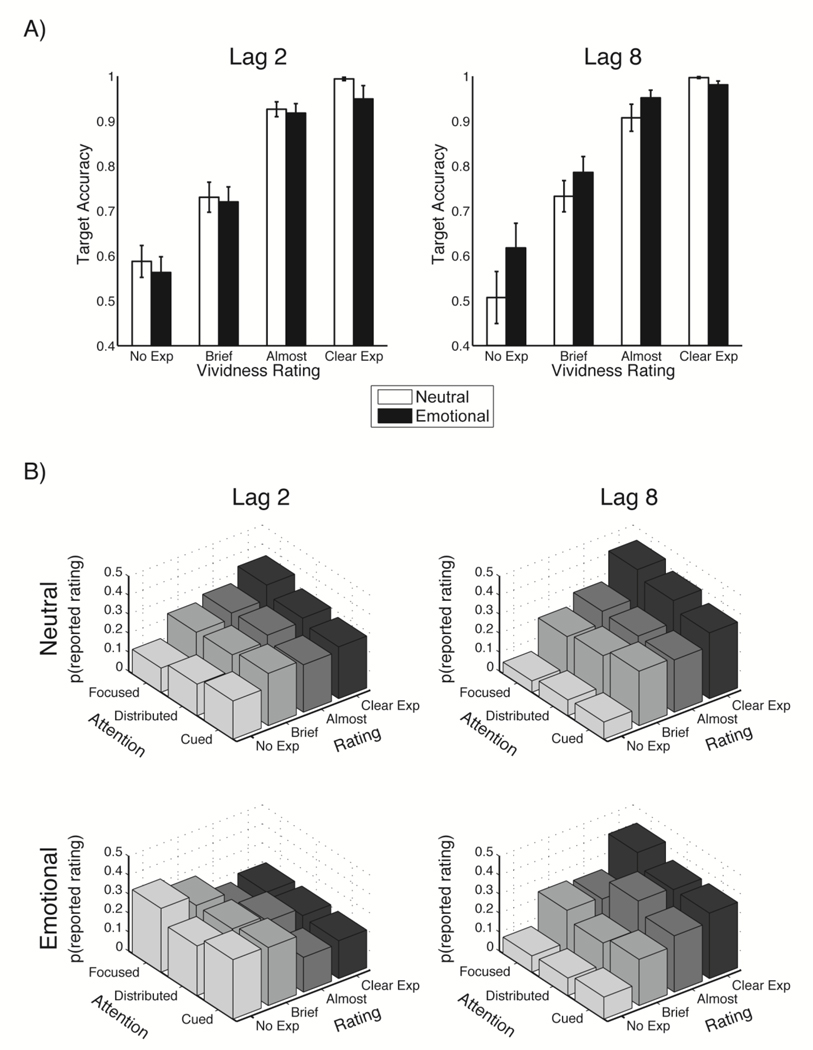
The emotional attentional blink (EAB) refers to a temporary impairment in the ability to identify a target when it is preceded by an emotional distractor. It is thought to occur because the emotional salience of the distractor exogenously captures attention for a brief duration, rendering the target unattended and preventing it from reaching awareness. Here we tested the extent to which the EAB can be attenuated by inducing a diffuse top-down attentional state, which has been shown to improve target identification in an analogous attentional phenomenon, the attentional blink. Rapid sequences of landscape images were presented centrally, and participants reported the orientation of a ± 90° rotation of a landscape target. To induce a diffuse state of attention, participants were given a secondary task of monitoring for the appearance of a colored dot in the periphery. We found that emotional distractors impaired target recognition performance to comparable extents, regardless of whether or not participants concurrently performed the peripheral-monitoring task. Moreover, we found that performance of the secondary task led to an impaired ability to ignore neutral distractors. Subjective ratings of target vividness mirrored the behavioral accuracy, with frequent reports of intermediate levels of vividness suggesting that the EAB might impair target visibility in a graded manner. Our results demonstrate that the EAB is robust to manipulations of top-down attention, suggesting that the temporary capture of attention by emotionally salient stimuli involves processes that are distinct from those that produce the attentional blink.
Keywords: Attentional blink; Attentional capture; Divided attention; Inattention.
Figures
References
-
- Akyürek EG, & Hommel B. (2005). Short-term memory and the attentional blink: Capacity versus content. Memory & Cognition, 33(4), 654–663. - PubMed
-
- Arend I, Johnston S, & Shapiro K. (2006). Task-irrelevant visual motion and flicker attenuate the attentional blink. Psychonomic Bulletin & Review, 13(4), 600–607. - PubMed
-
- Brainard DH (1997) The Psychophysics Toolbox, Spatial Vision 10:433–436. - PubMed
MeSH terms
Grants and funding
LinkOut - more resources
Full Text Sources
