Perspective review of what is needed for molecular-specific fluorescence-guided surgery
- PMID: 30291698
- PMCID: PMC6210787
- DOI: 10.1117/1.JBO.23.10.100601
Perspective review of what is needed for molecular-specific fluorescence-guided surgery
Abstract
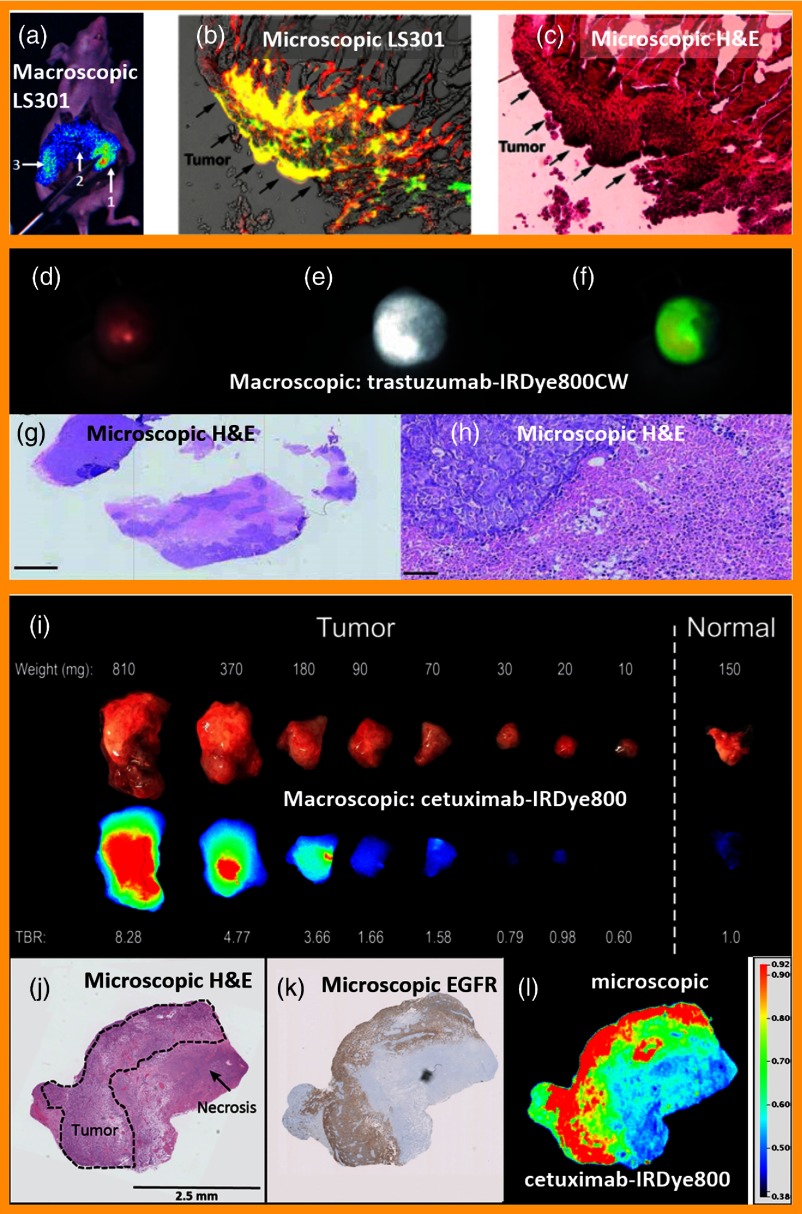
Molecular image-guided surgery has the potential for translating the tools of molecular pathology to real-time guidance in surgery. As a whole, there are incredibly positive indicators of growth, including the first United States Food and Drug Administration clearance of an enzyme-biosynthetic-activated probe for surgery guidance, and a growing number of companies producing agents and imaging systems. The strengths and opportunities must be continued but are hampered by important weaknesses and threats within the field. A key issue to solve is the inability of macroscopic imaging tools to resolve microscopic biological disease heterogeneity and the limitations in microscopic systems matching surgery workflow. A related issue is that parsing out true molecular-specific uptake from simple-enhanced permeability and retention is hard and requires extensive pathologic analysis or multiple in vivo tests, comparing fluorescence accumulation with standard histopathology and immunohistochemistry. A related concern in the field is the over-reliance on a finite number of chosen preclinical models, leading to early clinical translation when the probe might not be optimized for high intertumor variation or intratumor heterogeneity. The ultimate potential may require multiple probes, as are used in molecular pathology, and a combination with ultrahigh-resolution imaging and image recognition systems, which capture the data at a finer granularity than is possible by the surgeon. Alternatively, one might choose a more generalized approach by developing the tracer based on generic hallmarks of cancer to create a more "one-size-fits-all" concept, similar to metabolic aberrations as exploited in fluorodeoxyglucose - positron emission tomography (FDG-PET) (i.e., Warburg effect) or tumor acidity. Finally, methods to approach the problem of production cost minimization and regulatory approvals in a manner consistent with the potential revenue of the field will be important. In this area, some solid steps have been demonstrated in the use of fluorescent labeling commercial antibodies and separately in microdosing studies with small molecules.
Keywords: cancer; fluorescent; resection; surgical; therapy.
(2018) COPYRIGHT Society of Photo-Optical Instrumentation Engineers (SPIE).
Figures

References
-
- Alam I. S., et al. , “Emerging intraoperative imaging modalities to improve surgical precision,” Mol. Imaging Biol. (2018). - PubMed
Publication types
MeSH terms
Grants and funding
LinkOut - more resources
Full Text Sources
Research Materials