


A cost analysis of intensified vs conventional multifactorial therapy in individuals with type 2 diabetes: a post hoc analysis of the Steno-2 study
- PMID: 30293113
- PMCID: PMC6290682
- DOI: 10.1007/s00125-018-4739-3
A cost analysis of intensified vs conventional multifactorial therapy in individuals with type 2 diabetes: a post hoc analysis of the Steno-2 study
Abstract
Aims/hypothesis: Long-term follow-up of the Steno-2 study demonstrated that intensified multifactorial intervention increased median lifespan by 7.9 years and delayed incident cardiovascular disease by a median of 8.1 years compared with conventional multifactorial intervention during 21.2 years of follow-up. In this post hoc analysis of data from the Steno-2 study, we aimed to study the difference in direct medical costs associated with conventional vs intensified treatment.
Methods: In 1993, 160 Danish individuals with type 2 diabetes and microalbuminuria were randomised to conventional or intensified multifactorial target-driven intervention for 7.8 years. Information on direct healthcare costs was retrieved from health registries, and the costs in the two groups of participants were compared by bootstrap t test analysis.
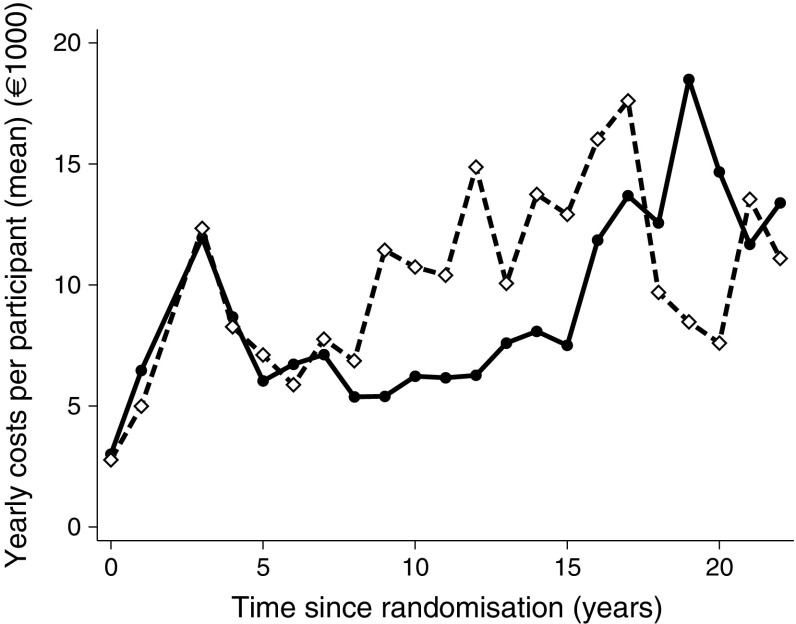
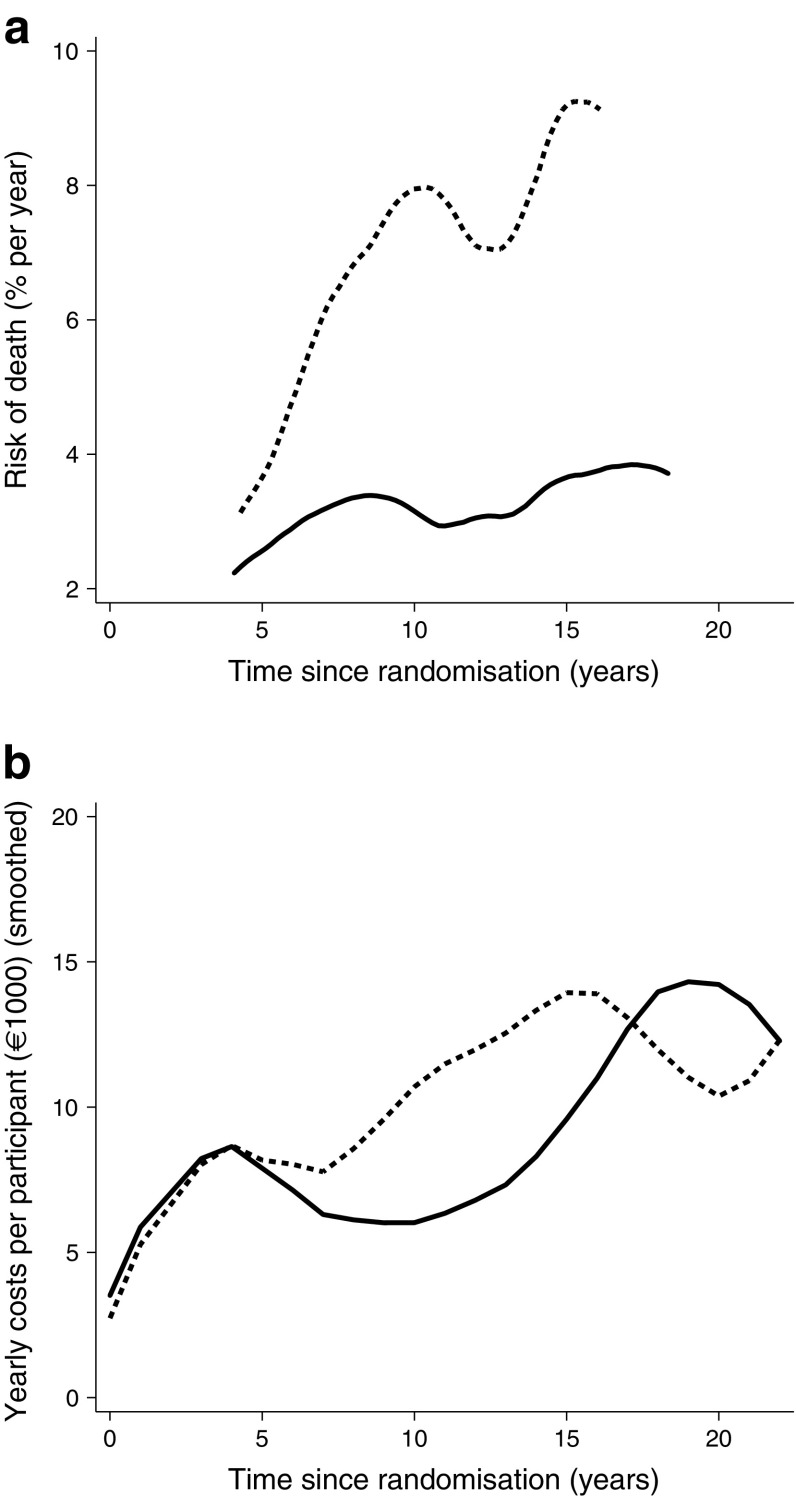
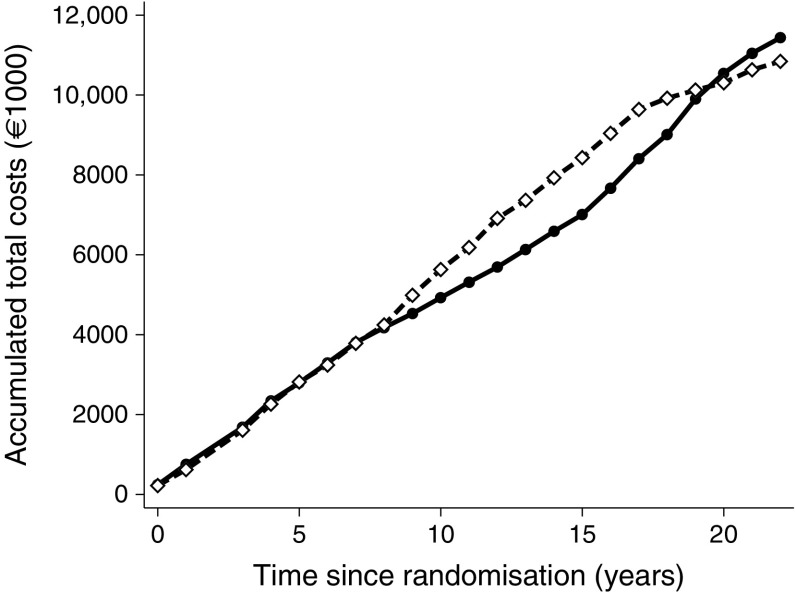
Results: Over 21.2 years of follow-up, there was no difference in total direct medical costs between the intensified treatment group, €12,126,900, and the conventional treatment group, €11,181,700 (p = 0.48). The mean cost per person-year during 1996-2014 was significantly lower in the intensified treatment group (€8725 in the intensive group and €10,091 in the conventional group, p = 0.045). The main driver of this difference was reduced costs associated with inpatient admissions related to cardiovascular disease (p = 0.0024).
Conclusions/interpretation: Over a follow-up period of 21.2 years, we found no difference in total costs and reduced cost per person-year associated with intensified multifactorial treatment for 7.8 years compared with conventional multifactorial treatment. Considering the substantial gain in life-years and health benefits achieved with intensified treatment, we conclude that intensified multifaceted intervention in high-risk individuals with type 2 diabetes seems to be highly feasible when balancing healthcare costs and treatment benefits in a Danish healthcare setting.
Keywords: Health economy; Multifactorial intervention; Organ complications; Type 2 diabetes.
Conflict of interest statement
Since completion of the Steno-2 21.2 year follow-up data acquisition, data management and interpretation, JO has been employed by Novo Nordisk Scandinavia, Denmark. EN is employed by Novo Nordisk A/S, Søborg, Denmark. HHP has equity interest in Merck, and receives consulting honoraria from AbbVie and Novartis. OP has equity interest in Novo Nordisk. All other authors declare that there is no duality of interest associated with their contribution to this manuscript.
Figures

References
Publication types
MeSH terms
LinkOut - more resources
Full Text Sources
Medical
