


Filipinos Fit and Trim - A feasible and efficacious DPP-based intervention trial
- PMID: 30294699
- PMCID: PMC6170935
- DOI: 10.1016/j.conctc.2018.09.004
Filipinos Fit and Trim - A feasible and efficacious DPP-based intervention trial
Abstract
Introduction: Filipino Americans are at higher risk for obesity and related Type 2 diabetes (T2D) compared to other Asian subgroups and non-Hispanic whites. Yet, there are limited research studies to reduce health disparities and improve health outcomes for Filipinos. Weight loss lifestyle intervention trials such as the Diabetes Prevention Program (DPP) can reduce obesity and T2D risks through physical activity and healthy eating.
Methods: Thus, we conducted a pilot Fit&Trim (DPP-based) intervention study - a randomized controlled trial 3-month intervention augmented with mobile technology + 3-month maintenance follow-up with a waitlist control. The objective assessed the intervention feasibility and potential efficacy to reduce T2D risks in Filipino Americans with overweight/obesity. The overall study goal was a mean 5% weight reduction.
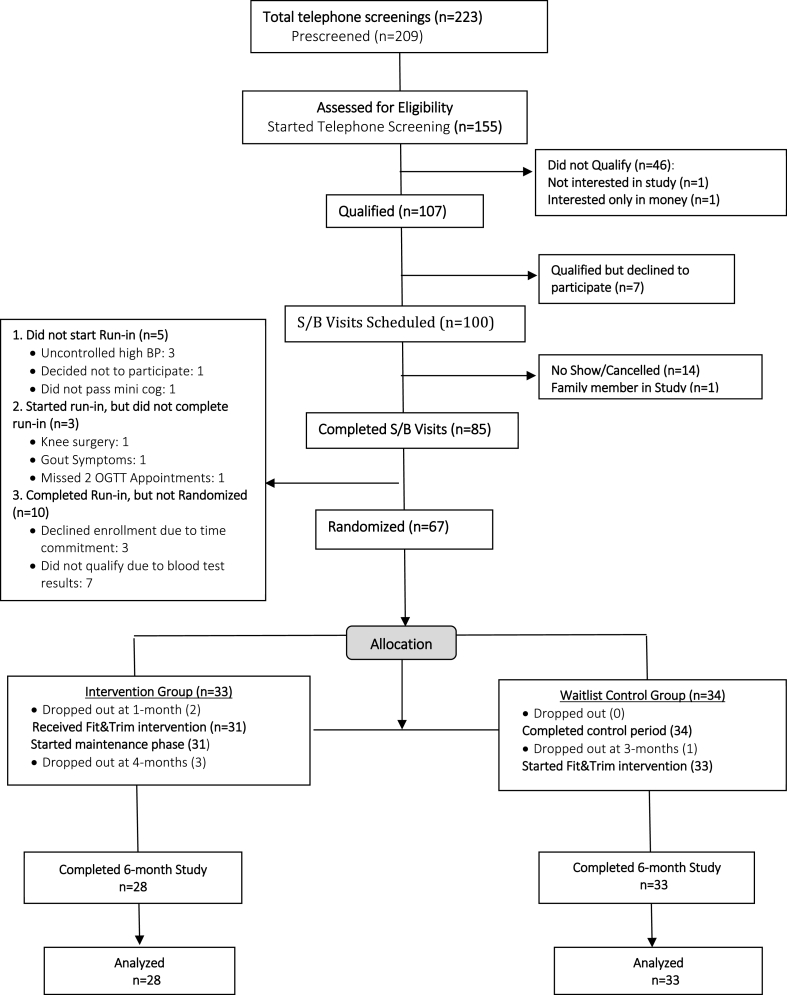
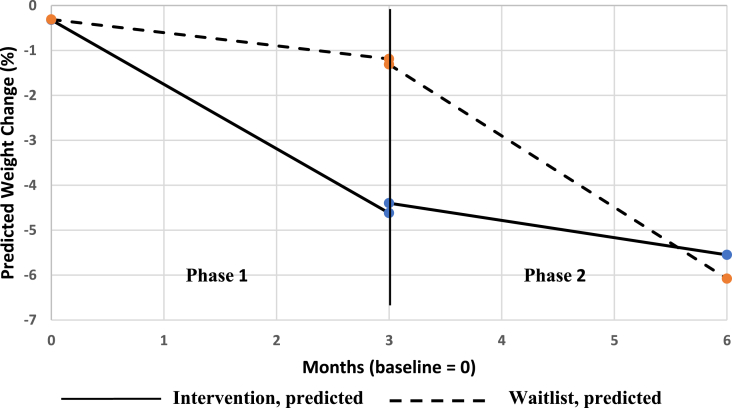
Results: Sixty-seven eligible Filipino men and women were enrolled and randomized to either an intervention or waitlist control group. Participant retention was 91%. In Phase 1 (baseline to 3-months), the intervention group had greater weight reduction compared to the waitlist control (-4.3% vs. -0.88%; cross-level interaction = -0.85 (-1.4, -0.35). In Phase 2 (3- to 6-months), after receiving the Fit&Trim intervention, the waitlist group also had similar significant weight reduction [-4.8% (- 0.75 (-0.92, -0.58)]. A majority of intervention group (57%) also maintained their weight loss. Overall, 41% of study participants achieved a 5% weight loss.
Conclusion: The Fit&Trim intervention demonstrated feasibility and potential efficacy for Filipino Americans. Findings warrant a further larger, longer trial to test the Fit&Trim feasibility and effectiveness in a real-world Filipino community setting.
Clinicaltrialsgov registration number: NCT02278939.
Keywords: A1C, Glycated Hemoglobin; Asian americans; Asians, Asian Americans; CDC, Center for Disease Control and Prevention; COPD, chronic obstructive pulmonary disease; CVD, cardiovascular disease; Culturally adapted; DPP, Diabetes Prevention Program; Filipinos; Filipinos, Filipino Americans; Fit&Trim, a culturally tailored DPP-based mobile Health lifestyle intervention for Filipinos; Healthy nutrition; Lifestyle intervention; Mobile technology; OGTT, oral glucose tolerance test; PA, physical activity; Physical activity; RCT, randomized controlled trial; Randomized trial; SBV, screening baseline visit; SF, San Francisco; SPSS, Statistical Package for Social Sciences; T2D, Type 2 Diabetes; Weight loss.
Figures
References
-
- National Center for Health Statistics . US Department Health and Human Services. Center for Disease Control and Prevention; Atlanta, GA: 2015. Prevalence of obesity among adults and youth: United States, 2011-2014.
-
- A.S.A. American Heart Association . American Heart Association Office of Federal Advocacy; Washington DC: 2017. Cardiovascular Disease: a Costly Burden for American, Projections through 2035.
-
- Center for Disease Control and Prevention . Diabetes 2014 report card. In: N C F C D P A H P. Center for Disease Control and Prevention, editor. Center for Disease Control and Prevention. National Center for Chronic Disease Prevention and Health Promotion; Atlanta, Georgia: 2015.
-
- WHO Expert Consultation Appropriate body-mass index for Asian populations and its implications for policy and intervention strategies. Lancet. 2004;363(9403):157–163. - PubMed
