


Disseminated Intravascular Coagulation: An Update on Pathogenesis, Diagnosis, and Therapeutic Strategies
- PMID: 30296833
- PMCID: PMC6710154
- DOI: 10.1177/1076029618806424
Disseminated Intravascular Coagulation: An Update on Pathogenesis, Diagnosis, and Therapeutic Strategies
Abstract
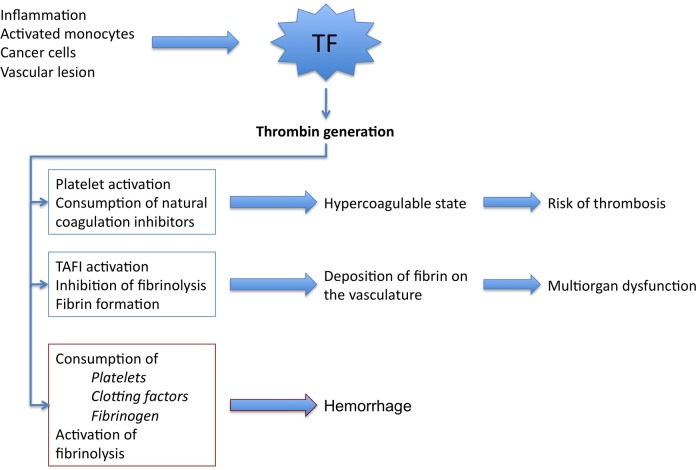
Disseminated intravascular coagulation (DIC) is an acquired clinicobiological syndrome characterized by widespread activation of coagulation leading to fibrin deposition in the vasculature, organ dysfunction, consumption of clotting factors and platelets, and life-threatening hemorrhage. Disseminated intravascular coagulation is provoked by several underlying disorders (sepsis, cancer, trauma, and pregnancy complicated with eclampsia or other calamities). Treatment of the underlying disease and elimination of the trigger mechanism are the cornerstone therapeutic approaches. Therapeutic strategies specific for DIC aim to control activation of blood coagulation and bleeding risk. The clinical trials using DIC as entry criterion are limited. Large randomized, phase III clinical trials have investigated the efficacy of antithrombin (AT), activated protein C (APC), tissue factor pathway inhibitor (TFPI), and thrombomodulin (TM) in patients with sepsis, but the diagnosis of DIC was not part of the inclusion criteria. Treatment with APC reduced 28-day mortality of patients with severe sepsis, including patients retrospectively assigned to a subgroup with sepsis-associated DIC. Treatment with APC did not have any positive effects in other patient groups. The APC treatment increased the bleeding risk in patients with sepsis, which led to the withdrawal of this drug from the market. Treatment with AT failed to reduce 28-day mortality in patients with severe sepsis, but a retrospective subgroup analysis suggested possible efficacy in patients with DIC. Clinical studies with recombinant TFPI or TM have been carried out showing promising results. The efficacy and safety of other anticoagulants (ie, unfractionated heparin, low-molecular-weight heparin) or transfusion of platelet concentrates or clotting factor concentrates have not been objectively assessed.
Keywords: activated protein C; antithrombin; disseminated intravascular coagulation; sepsis; thrombomodulin; tissue factor pathway inhibitor.
Conflict of interest statement
Figures
References
-
- Okabayashi K, Wada H, Ohta S, Shiku H, Nobori T, Maruyama K. Hemostatic markers and the sepsis-related organ failure assessment score in patients with disseminated intravascular coagulation in an intensive care unit. Am J Hematol. 2004;76(3):225–229. - PubMed
-
- Sallah S, Wan JY, Nguyen NP, Hanrahan LR, Sigounas G. Disseminated intravascular coagulation in solid tumors: clinical and pathologic study. Thromb Haemost. 2001;86(3):828–833. - PubMed
-
- Gando S, Saitoh D, Ogura H, et al. ; Japanese Association for Acute Medicine Disseminated Intravascular Coagulation (JAAM DIC) Study Group, Japanese Association for Acute Medicine Disseminated Intravascular Coagulation (JAAM DIC) Study Group. Natural history of disseminated intravascular coagulation diagnosed based on the newly established diagnostic criteria for critically ill patients: results of a multicenter, prospective survey. Crit Care Med. 2008;36(1):145–150. - PubMed
-
- Angstwurm MW, Dempfle CE, Spannagl M. New disseminated intravascular coagulation score: a useful tool to predict mortality in comparison with Acute Physiology and Chronic Health Evaluation II and Logistic Organ Dysfunction Scores. Crit Care Med. 2006;34(2):314–320. - PubMed
-
- Toh CH, Downey C. Performance and prognostic importance of a new clinical and laboratory scoring system for identifying non-overt disseminated intravascular coagulation. Blood Coagul Fibrin. 2005;16(1):69–74. - PubMed
MeSH terms
Substances
Grants and funding
LinkOut - more resources
Full Text Sources
Other Literature Sources
Medical
Miscellaneous
