


The Lactobacillus casei Group: History and Health Related Applications
- PMID: 30298055
- PMCID: PMC6160870
- DOI: 10.3389/fmicb.2018.02107
The Lactobacillus casei Group: History and Health Related Applications
Abstract
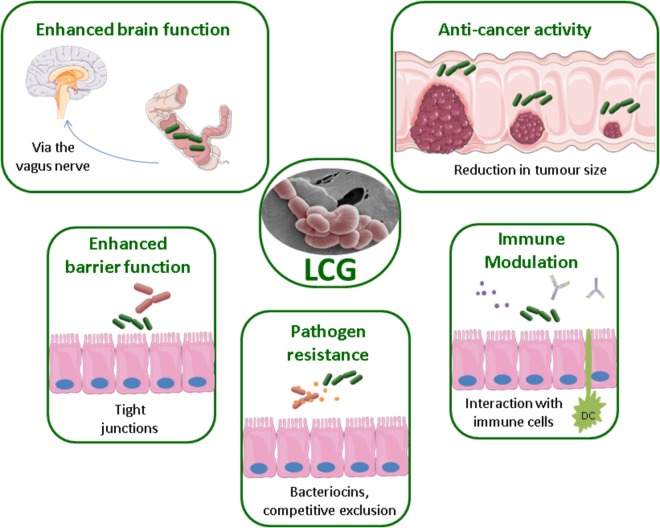
The Lactobacillus casei group (LCG), composed of the closely related Lactobacillus casei, Lactobacillus paracasei, and Lactobacillus rhamnosus are some of the most widely researched and applied probiotic species of lactobacilli. The three species have been extensively studied, classified and reclassified due to their health promoting properties. Differentiation is often difficult by conventional phenotypic and genotypic methods and therefore new methods are being continually developed to distinguish the three closely related species. The group remain of interest as probiotics, and their use is widespread in industry. Much research has focused in recent years on their application for health promotion in treatment or prevention of a number of diseases and disorders. The LCG have the potential to be used prophylactically or therapeutically in diseases associated with a disturbance to the gut microbiota. The group have been extensively researched with regard to stress responses, which are crucial for their survival and therefore application as probiotics.
Keywords: casei; health; lactobacillus; paracasei; rhamnosus; stress; taxonomy.
Figures
References
-
- Balzaretti S., Taverniti V., Guglielmetti S., Fiore W., Minuzzo M., Ngo H. N., et al. (2017). A novel rhamnose-rich hetero-exopolysaccharide isolated from Lactobacillus paracasei Dg activates Thp-1 human monocytic cells. Appl. Environ. Microbiol. 83:e02702-16. 10.1128/AEM.02702-16 - DOI - PMC - PubMed
Publication types
LinkOut - more resources
Full Text Sources
