


Immune cells in the tumour: new routes of retinoids for chemoprevention and chemotherapeutics
- PMID: 30298911
- PMCID: PMC6240126
- DOI: 10.1111/bph.14511
Immune cells in the tumour: new routes of retinoids for chemoprevention and chemotherapeutics
Abstract
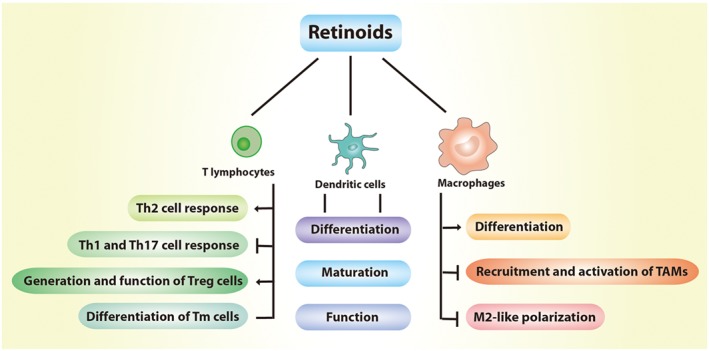
Retinoids, vitamin A and its natural and synthetic analogues have various functions, including being involved in cell proliferation and differentiation and participating in the formation of vertebrate morphology. In addition, they may activate certain tumour suppressor genes that then act as tumour inhibitors. In the past decades, retinoids have been regarded as promising chemotherapeutic and chemopreventive agents; however, their mechanisms are still not fully understood. Immune cells that participate in or are associated with the immune response play vital roles in the initiation and development of many cancers. Interestingly, recent studies have demonstrated that retinoids can also exert various effects on immune cells including macrophages, T cells and dendritic cells in tumour tissues to execute anti-tumour actions, providing new insights into chemoprevention and chemotherapeutics. In this review, we focus on the effects of retinoids on immune cells in the tumour, which may provide new approaches for antineoplastic strategies.
© 2018 The British Pharmacological Society.
Figures


References
-
- Alizadeh F, Bolhassani A, Khavari A, Bathaie SZ, Naji T, Bidgoli SA (2014). Retinoids and their biological effects against cancer. Int Immunopharmacol 18: 43–49. - PubMed
-
- Anguille S, Smits EL, Lion E, van Tendeloo VF, Berneman ZN (2014). Clinical use of dendritic cells for cancer therapy. Lancet Oncol 15: E257–E267. - PubMed
Publication types
MeSH terms
Substances
LinkOut - more resources
Full Text Sources
Miscellaneous
