


Circadian rhythms and psychiatric profiles in young adults with unipolar depressive disorders
- PMID: 30301878
- PMCID: PMC6177460
- DOI: 10.1038/s41398-018-0255-y
Circadian rhythms and psychiatric profiles in young adults with unipolar depressive disorders
Abstract
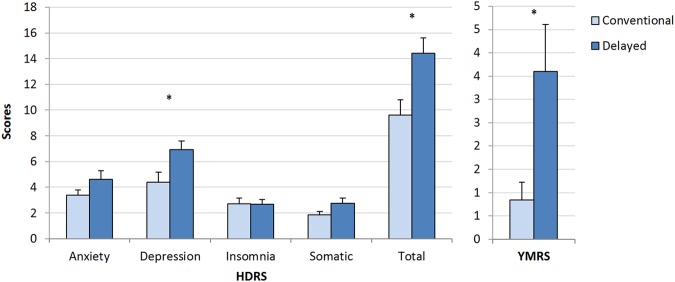
Abnormalities in circadian rhythms have been reported in people with mood disorders, but these abnormalities are marked by considerable inter-individual variability. This study aimed to identify pathophysiological subgroups on the basis of circadian markers and evaluate how these subgroups relate to psychiatric profiles. Thirty-five young adults (18-31 years old) receiving clinical care for unipolar depressive disorders and 15 healthy controls took part to this study. The Hamilton Rating Scale for Depression and the Young Mania rating scale were used to evaluate the severity of mood symptoms in participants with depressive disorders. All participant underwent ambulatory sleep monitoring with actigraphy for about 12 days before attending a laboratory-based chronobiological assessment which included repeated salivary samples to determine dim light melatonin onset (DLMO) and continuous core body temperature (CBT) monitoring using an ingestible temperature sensor. Cluster analyses were conducted across all participants to identify subgroups with consistent circadian timing profiles based on DLMO and the nocturnal minima of CBT. Two clusters were identified: 'delayed' and 'conventional timing' circadian phase. Descriptive analyses showed that the delayed cluster was characterised by abnormal time relationships between circadian phase markers and the sleep-wake cycle. Importantly, individuals from the delayed cluster had worse depression severity (t(28) = -2.7, p = 0.011) and hypomanic symptoms (Z = -2.2, p = 0.041) than their peers with conventional circadian timing. These findings suggest that delayed and disorganised circadian rhythms may be linked to worse psychiatric profiles in young people with depressive disorders.
Conflict of interest statement
D.F.H. has received honoraria for educational seminars from Janssen-Cilag and Eli Lilly. E.M.S. is the (unpaid) Clinical Director of Headspace Services at the BMC, the (unpaid) Coordinator of the Youth Mental Health Research Programme at the BMC, and Deputy Director of St. Vincent’s Private Hospital Young Adult Mental Health Unit. E.M.S. has received honoraria for educational seminars related to the clinical management of depressive disorders supported by Servier and Eli Lilly pharmaceuticals. She has participated in a national advisory board for the antidepressant compound Pristiq, manufactured by Pfizer. I.B.H. has led depression and other mental health research projects that have been supported by a variety of pharmaceutical partners. Investigator‐initiated studies have been supported by Servier and Pfizer. He has received honoraria for his contributions to professional educational seminars supported by the pharmaceutical industry (including Servier, Pfizer, AstraZeneca, and Eli Lilly). The remaining authors declare that they have no conflict of interest.
Figures
References
-
- Wirz-Justice A. Biological rhythm disturbances in mood disorders. Int. Clin. Psychopharmacol. 2006;21:S11–S15. doi: 10.1097/01.yic.0000195660.37267.cf. - DOI - PubMed
Publication types
MeSH terms
Substances
LinkOut - more resources
Full Text Sources
Molecular Biology Databases
