


Metabolic Engineered Biocatalyst: A Solution for PLA Based Problems
- PMID: 30302092
- PMCID: PMC6158955
- DOI: 10.1155/2018/1963024
Metabolic Engineered Biocatalyst: A Solution for PLA Based Problems
Abstract
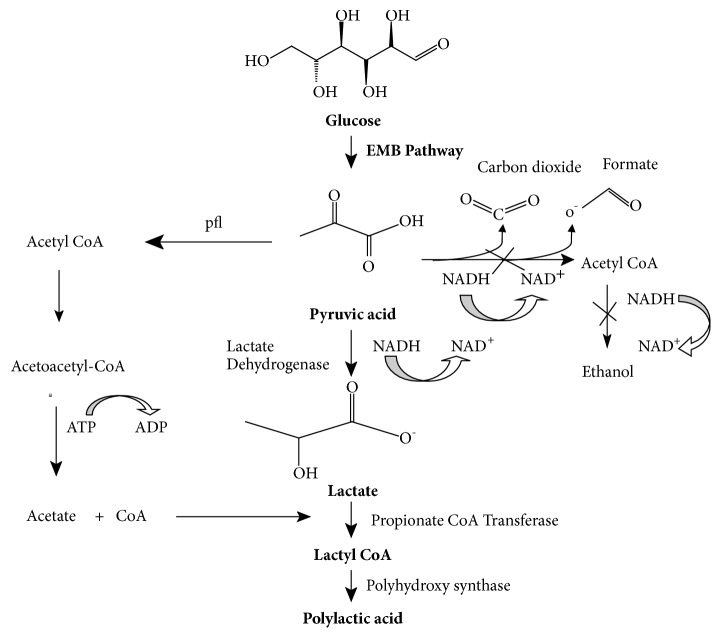
Polylactic acid (PLA) is a biodegradable thermoplastic polyester. In 2010, PLA became the second highest consumed bioplastic in the world due to its wide application. Conventionally, PLA is produced by direct condensation of lactic acid monomer and ring opening polymerization of lactide, resulting in lower molecular weight and lesser strength of polymer. Furthermore, conventional methods of PLA production require a catalyst which makes it inappropriate for biomedical applications. Newer method utilizes metabolic engineering of microorganism for direct production of PLA through fermentation which produces good quality and high molecular weight and yield as compared to conventional methods. PLA is used as decomposing packaging material, sheet casting, medical implants in the form of screw, plate, and rod pin, etc. The main focus of the review is to highlight the synthesis of PLA by various polymerization methods that mainly include metabolic engineering fermentation as well as salient biomedical applications of PLA.
Figures
References
-
- Henton D. E., Gruber P., Lunt J., Randall J. Polylactic acid technology. Natural Fibers, Biopolymers, and Biocomposites. 2005;16:527–577.
-
- Wee Y.-J., Kim J.-N., Ryu H.-W. Biotechnological production of lactic acid and its recent applications. Food Technology and Biotechnology. 2006;44(2):163–172.
-
- Taskila S., Ojamo H. Lactic Acid Bacteria-R & D for Food, Health And Livestock Purposes. InTech; 2013. The current status and future expectations in industrial production of lactic acid by lactic acid bacteria.
Publication types
LinkOut - more resources
Full Text Sources
Molecular Biology Databases
