Partnership with African Countries: European Society of Gastrointestinal Endoscopy (ESGE) - Position Statement
- PMID: 30302382
- PMCID: PMC6175688
- DOI: 10.1055/a-0677-2026
Partnership with African Countries: European Society of Gastrointestinal Endoscopy (ESGE) - Position Statement
Abstract
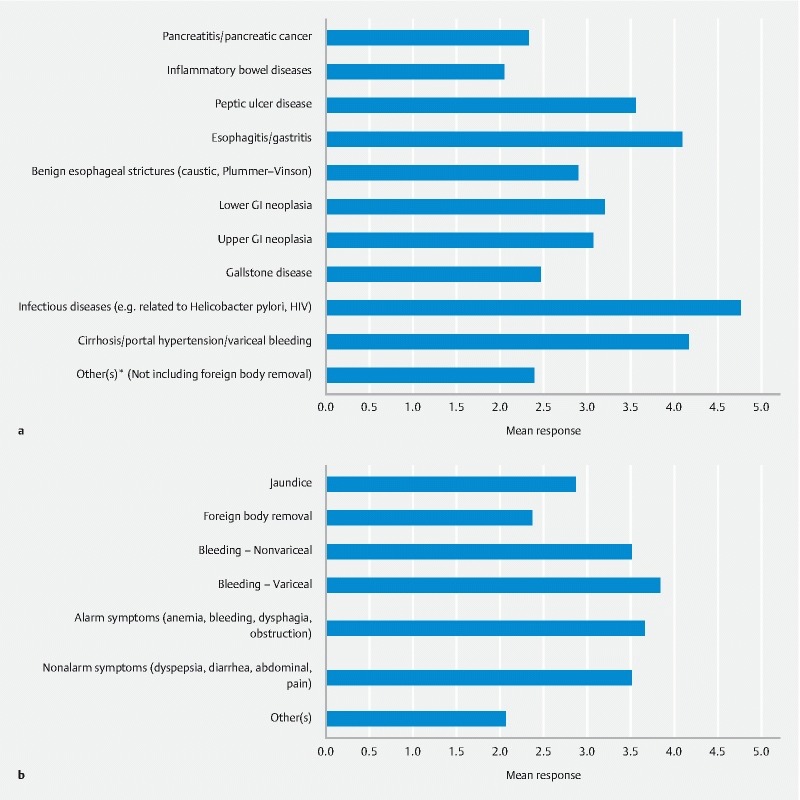
A new objective for the European Society of Gastrointestinal Endoscopy (ESGE) is to develop long-term partnerships with African countries. For this, an International Affairs Working Group (IAWG) was formed. In conjunction with the World Endoscopy Organization (WEO), ESGE conducted a survey of gastrointestinal (GI) endoscopy in Africa. Survey results showed that many African countries have few GI endoscopy centers with adequate resources. Barriers to the development of endoscopy services include a shortage of endoscopists who have undergone advanced endoscopy training, and a lack of equipment and basic infrastructure. Diseases related to infectious etiology are more prevalent than neoplastic diseases in Africa. Any development of endoscopy services needs to consider the local prevalence of diseases for which GI endoscopy is required, as well as the availability of resources. The IAWG will initiate a cascade approach to identify and adapt ESGE guidelines for local use. The guidelines will consider the level of resources available for each intervention, as well as cost, infrastructure, and training, and will be approved by consensus of local experts who are representative of different African areas. Suitable centers in African countries will be identified, and in future will be developed into WEO/ESGE training centers, to provide local training in both basic and advanced endoscopy according to the needs of the area.
Conflict of interest statement
Figures
References
-
- Everhart J E, Ruhl C E. Burden of digestive diseases in the United States part I: overall and upper gastrointestinal diseases. Gastroenterology. 2009;136:376–386. - PubMed
-
- Chuks N S.Challenges of gastrointestinal endoscopy in resource-poor countries London: InTechOpen; 2011. ISBN978-953-307-385-9
LinkOut - more resources
Full Text Sources