


A Pre-Pregnancy Biomarker Risk Score Improves Prediction of Future Gestational Diabetes
- PMID: 30302420
- PMCID: PMC6169465
- DOI: 10.1210/js.2018-00200
A Pre-Pregnancy Biomarker Risk Score Improves Prediction of Future Gestational Diabetes
Abstract
Context: Previous studies have not examined the ability of multiple preconception biomarkers, considered together, to improve prediction of gestational diabetes mellitus (GDM).
Objective: To develop a preconception biomarker risk score and assess its association with subsequent GDM.
Design: A nested case-control study among a cohort of women with serum collected as part of a health examination (1984 to 1996) and subsequent pregnancy (1984 to 2009). Biomarkers associated with GDM were dichotomized into high/low risk.
Setting: Integrated health care system.
Participants: Two controls were matched to each GDM case (n = 256 cases) on year and age at examination, age at pregnancy, and number of pregnancies between examination and index pregnancy.
Main outcome measure: GDM.
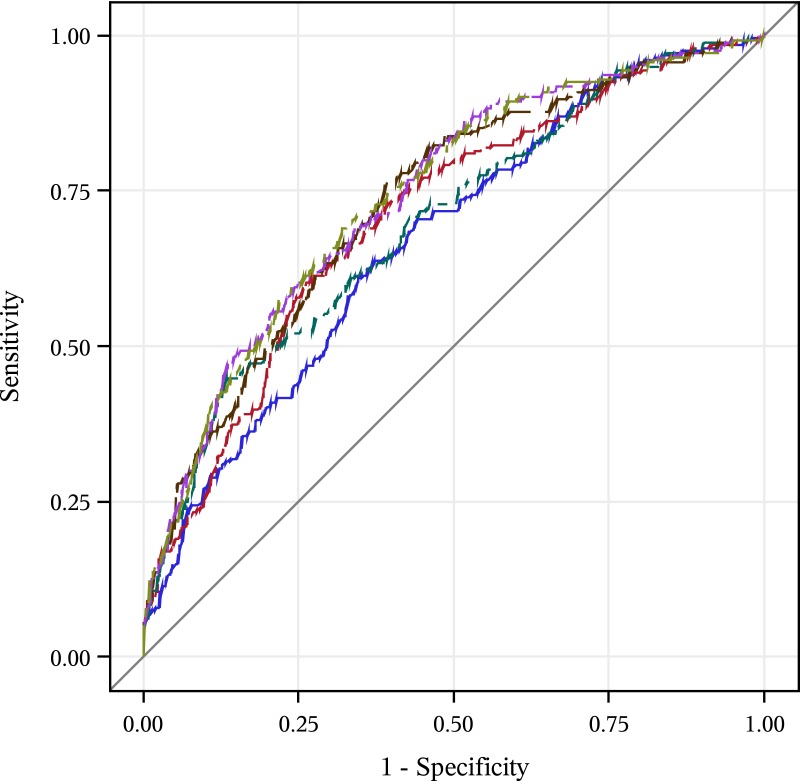
Results: High-risk levels of sex hormone-binding globulin (SHBG; <44.2 nM), glucose (>90 mg/dL), total adiponectin (<7.2 μg/mL), and homeostasis model assessment-estimated insulin resistance (>3.9) were independently associated with 2.34 [95% confidence interval (CI): 1.50, 3.63], 2.03 (95% CI: 1.29, 3.19), 1.83 (95% CI: 1.16, 2.90), and 1.67 (95% CI: 1.07, 2.62) times the odds of GDM and included in the biomarker risk score. For each unit increase in the biomarker risk score, odds of GDM were 1.94 times greater (95% CI: 1.59, 2.36). A biomarker risk score including only SHBG and glucose was sufficient to improve prediction beyond established risk factors (age, race/ethnicity, body mass index, family history of diabetes, previous GDM; area under the curve = 0.73 vs 0.67, P = 0.002).
Conclusions: The improved, predictive ability of the biomarker risk score beyond established risk factors suggests clinical use of the biomarker risk score in identifying women at risk for GDM before conception for targeted prevention strategies.
Keywords: biomarker; gestational diabetes; pre-pregnancy; preconception; risk score.
Figures
References
-
- Ovesen PG, Jensen DM, Damm P, Rasmussen S, Kesmodel US. Maternal and neonatal outcomes in pregnancies complicated by gestational diabetes. A nation-wide study. J Matern Fetal Neonatal Med. 2015;28(14):1720–1724. - PubMed
-
- Bellamy L, Casas JP, Hingorani AD, Williams D. Type 2 diabetes mellitus after gestational diabetes: a systematic review and meta-analysis. Lancet. 2009;373(9677):1773–1779. - PubMed
Grants and funding
LinkOut - more resources
Full Text Sources
Miscellaneous