


Microbial forensics: new breakthroughs and future prospects
- PMID: 30302518
- PMCID: PMC7080133
- DOI: 10.1007/s00253-018-9414-6
Microbial forensics: new breakthroughs and future prospects
Abstract
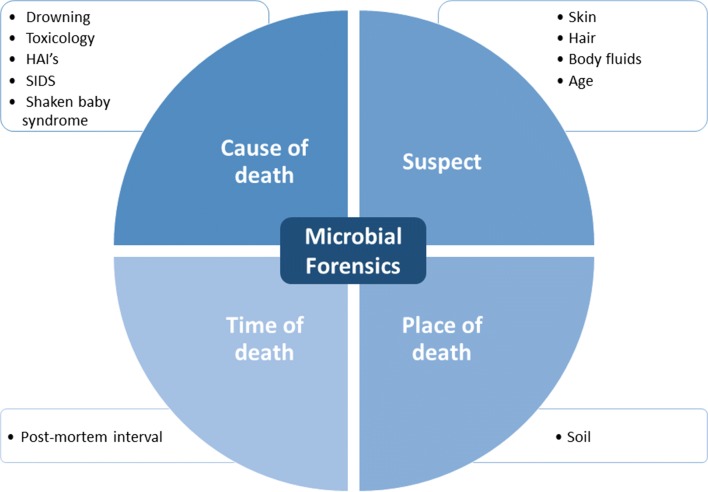
Recent advances in genetic data generation, through massive parallel sequencing (MPS), storage and analysis have fostered significant progresses in microbial forensics (or forensic microbiology). Initial applications in circumstances of biocrime, bioterrorism and epidemiology are now accompanied by the prospect of using microorganisms (i) as ancillary evidence in criminal cases; (ii) to clarify causes of death (e.g., drownings, toxicology, hospital-acquired infections, sudden infant death and shaken baby syndromes); (iii) to assist human identification (skin, hair and body fluid microbiomes); (iv) for geolocation (soil microbiome); and (v) to estimate postmortem interval (thanatomicrobiome and epinecrotic microbial community). When compared with classical microbiological methods, MPS offers a diverse range of advantages and alternative possibilities. However, prior to its implementation in the forensic context, critical efforts concerning the elaboration of standards and guidelines consolidated by the creation of robust and comprehensive reference databases must be undertaken.
Keywords: Criminal investigation; Genetics; Massive parallel sequencing; Microbial forensics; Microbiome.
Conflict of interest statement
The authors declare that they have no conflict of interest.
Figures
References
-
- Akehurst C (1998) Outbreak of hepatitis C associated with two hospitals in Spain. Weekly releases (1997–2007) 2(20):1217
-
- Allard MW, Wilson M, Brown EW. Genetic and genomic methods of microbial taxonomic assignment. In: Amorim A, Budowle B, editors. Handbook of forensic genetics: biodiversity and heredity in civil and criminal investigation. New Jersey: World Sci; 2017. pp. 535–560.
-
- Amorim A. Introduction to the special issue on forensic genetics: non-human DNA. Open Forensic Sci J. 2010;3:6–8. doi: 10.2174/1874402801003010006. - DOI
Publication types
MeSH terms
LinkOut - more resources
Full Text Sources
