First detection and genetic characterization of porcine parvovirus 7 from Korean domestic pig farms
- PMID: 30304892
- PMCID: PMC6265574
- DOI: 10.4142/jvs.2018.19.6.855
First detection and genetic characterization of porcine parvovirus 7 from Korean domestic pig farms
Abstract
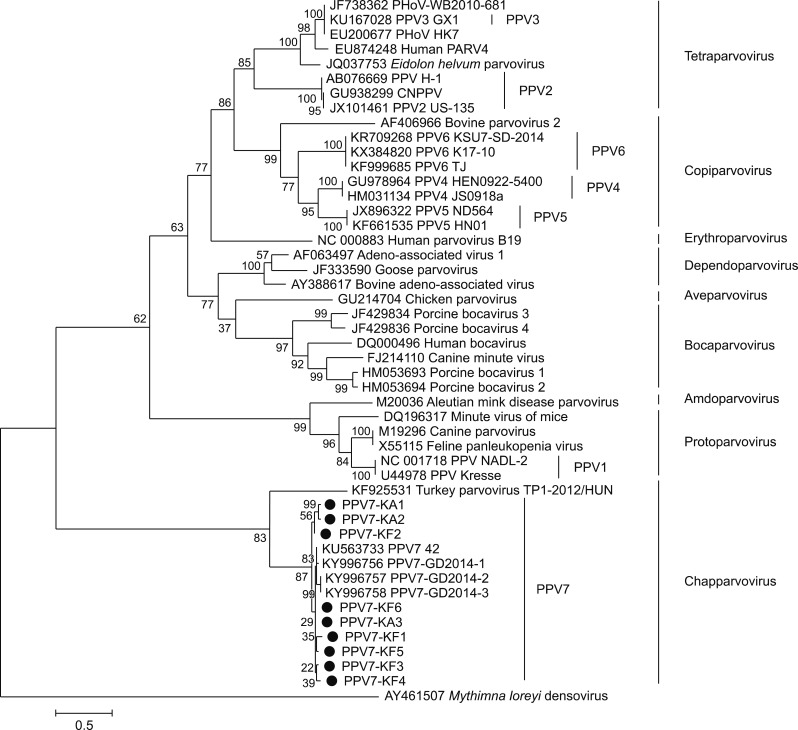
Porcine parvovirus 7 (PPV7) was first detected in Korean pig farms in 2017. The detection rate of PPV7 DNA was 24.0% (30/125) in aborted pig fetuses and 74.9% (262/350) in finishing pigs, suggesting that PPV7 has circulated among Korean domestic pig farms. Phylogenetic analysis based on capsid protein amino acid sequences demonstrated that the nine isolated Korean strains (PPV-KA1-3 and PPV-KF1-6) were closely related to the previously reported USA and Chinese PPV7 strains. In addition, the Korean strains exhibit genetic diversity with both insertion and deletion mutations. This study contributes to the understanding of the molecular epidemiology of PPV7 in Korea.
Keywords: Korea; aborted fetus; detection; pig farm; porcine parvovirus 7.
Conflict of interest statement
Figures
References
-
- Le SQ, Gascuel O. An improved general amino acid replacement matrix. Mol Biol Evol. 2008;25:1307–1320. - PubMed
-
- Palinski RM, Mitra N, Hause BM. Discovery of a novel Parvovirinae virus, porcine parvovirus 7, by metagenomic sequencing of porcine rectal swabs. Virus Genes. 2016;52:564–567. - PubMed
-
- Streck AF, Canal CW, Truyen U. Molecular epidemiology and evolution of porcine parvoviruses. Infect Genet Evol. 2015;36:300–306. - PubMed
MeSH terms
Substances
LinkOut - more resources
Full Text Sources