


Establishing the international prevalence of self-reported child maltreatment: a systematic review by maltreatment type and gender
- PMID: 30305071
- PMCID: PMC6180456
- DOI: 10.1186/s12889-018-6044-y
Establishing the international prevalence of self-reported child maltreatment: a systematic review by maltreatment type and gender
Abstract
Background: Estimating the prevalence of child maltreatment is challenging due to the absence of a clear 'gold standard' as to what constitutes maltreatment. This systematic review aims to review studies using self-report maltreatment to capture prevalence rates worldwide.
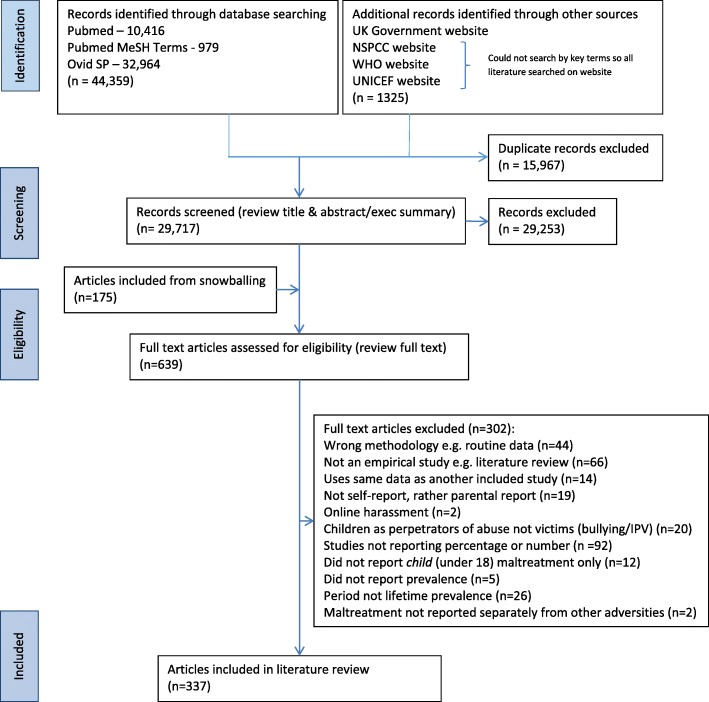
Methods: PubMed, Ovid SP and grey literature from the NSPCC, UNICEF, The UK Government, and WHO from 2000 to 2017 were searched. The literature review focused on the variation found in self-reported lifetime prevalence for each type of maltreatment between studies by continent and gender, and how methodological differences may explain differences found.
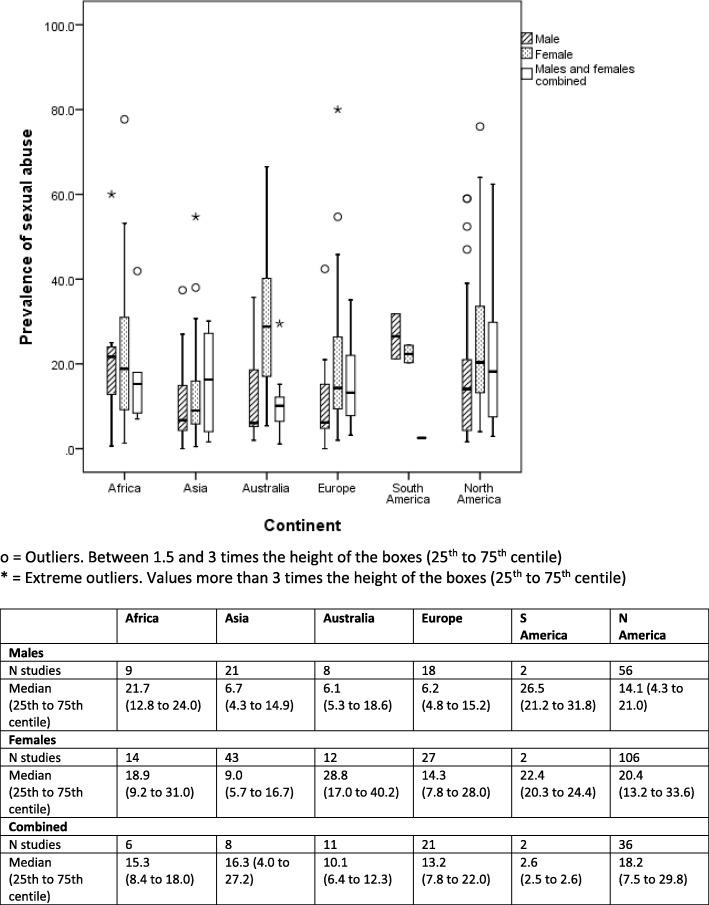
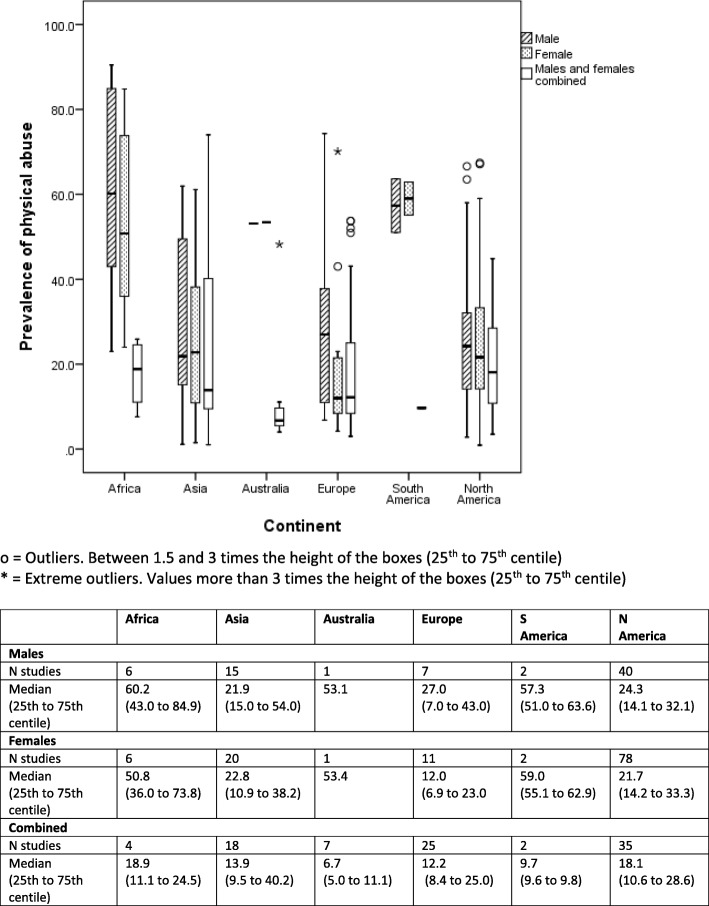
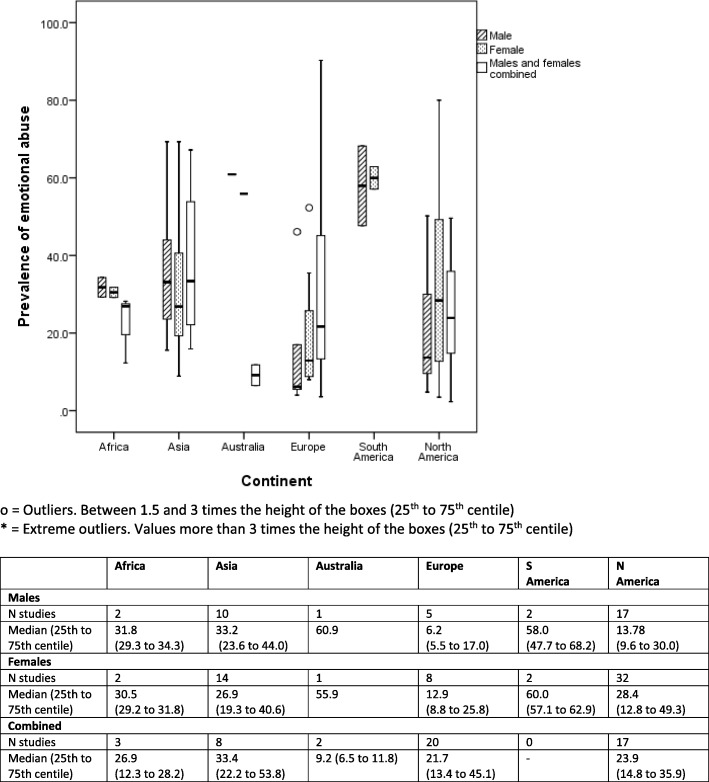
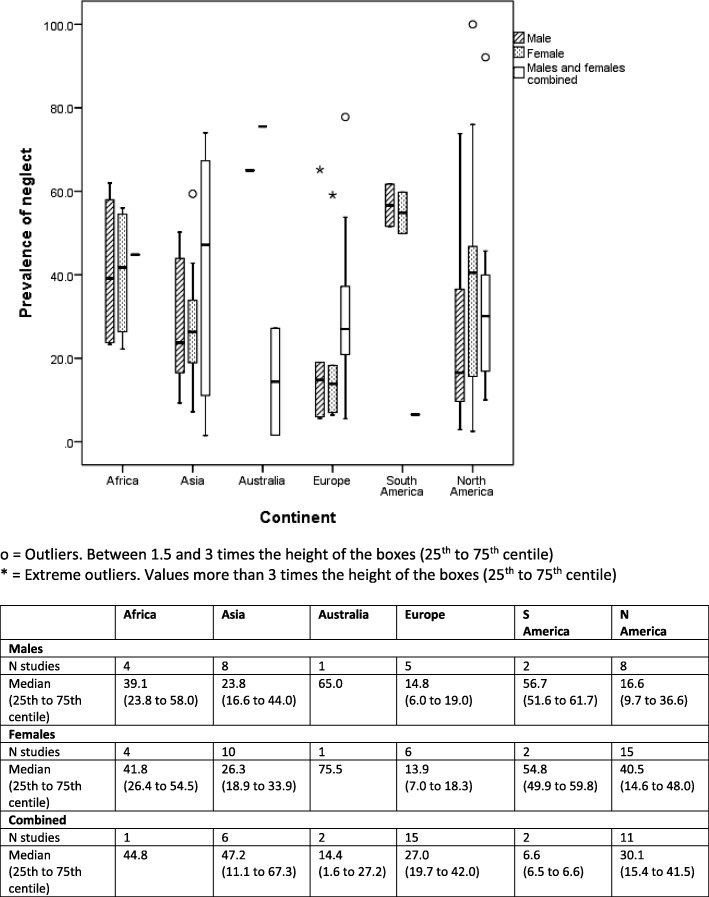
Results: Sexual abuse is the most commonly studied form of maltreatment across the world with median (25th to 75th centile) prevalence of 20.4% (13.2% to 33.6%) and 28.8% (17.0% to 40.2%) in North American and Australian girls respectively, with lower rates generally for boys. Rates of physical abuse were more similar across genders apart from in Europe, which were 12.0% (6.9% to 23.0%) and 27.0% (7.0% to 43.0%) for girls and boys respectively, and often very high in some continents, for example, 50.8% (36.0% to 73.8%) and 60.2% (43.0% to 84.9%) for girls and boys respectively in Africa. Median rates of emotional abuse were nearly double for girls than boys in North America (28.4% vs 13.8% respectively) and Europe (12.9% vs 6.2% respectively) but more similar across genders groups elsewhere. Median rates of neglect were highest in Africa (girls: 41.8%, boys: 39.1%) and South America (girls: 54.8%, boys: 56.7%) but were based on few studies in total, whereas in the two continents with the highest number of studies, median rates differed between girls (40.5%) and boys (16.6%) in North America but were similar in Asia (girls: 26.3%, boys: 23.8%).
Conclusions: Median prevalence rates differ substantially by maltreatment category, gender and by continent. The number of studies and available data also varies and relatively little is known about prevalence for some forms of maltreatment, particularly outside of the North American context. Prevalence rates require caution in interpretation as some variation will reflect methodological differences, including the data collection methods, and how the maltreatment is defined.
Keywords: Child maltreatment; Prevalence; Self-report; Systematic review.
Conflict of interest statement
Ethics approval and consent to participate
Not applicable.
Consent for publication
Not Applicable.
Competing interests
The authors declare that they have no competing interests.
Publisher’s Note
Springer Nature remains neutral with regard to jurisdictional claims in published maps and institutional affiliations.
Figures
References
-
- Butchart A, Harvey AP. Preventing child maltreatment: a guide to taking action and generating evidence. World Health Organization and International Society for Prevention of child abuse and neglect. Geneva: WHO and International Society for the Prevention of Child Abuse and Neglect; 2006.
-
- World Health Organization . Report of the consultation on child abuse prevention. Geneva: WHO; 1999. pp. 29–31.
Publication types
MeSH terms
LinkOut - more resources
Full Text Sources
Medical
