


Improved simplified clinical algorithm for identifying patients eligible for immediate initiation of antiretroviral therapy for HIV (SLATE II): protocol for a randomized evaluation
- PMID: 30305142
- PMCID: PMC6180640
- DOI: 10.1186/s13063-018-2928-5
Improved simplified clinical algorithm for identifying patients eligible for immediate initiation of antiretroviral therapy for HIV (SLATE II): protocol for a randomized evaluation
Abstract
Background: The World Health Organization recommends rapid (≤ 7 days) or same-day initiation of antiretroviral treatment (ART) for HIV-positive patients. South Africa adopted this recommendation in 2017, but multiple clinic visits, long waiting times, and delays for laboratory tests remain common. Streamlined approaches to same-day initiation that allow the majority of patients to start ART immediately, while ensuring that patients who do require additional services receive them, are needed to achieve national and international treatment program goals.
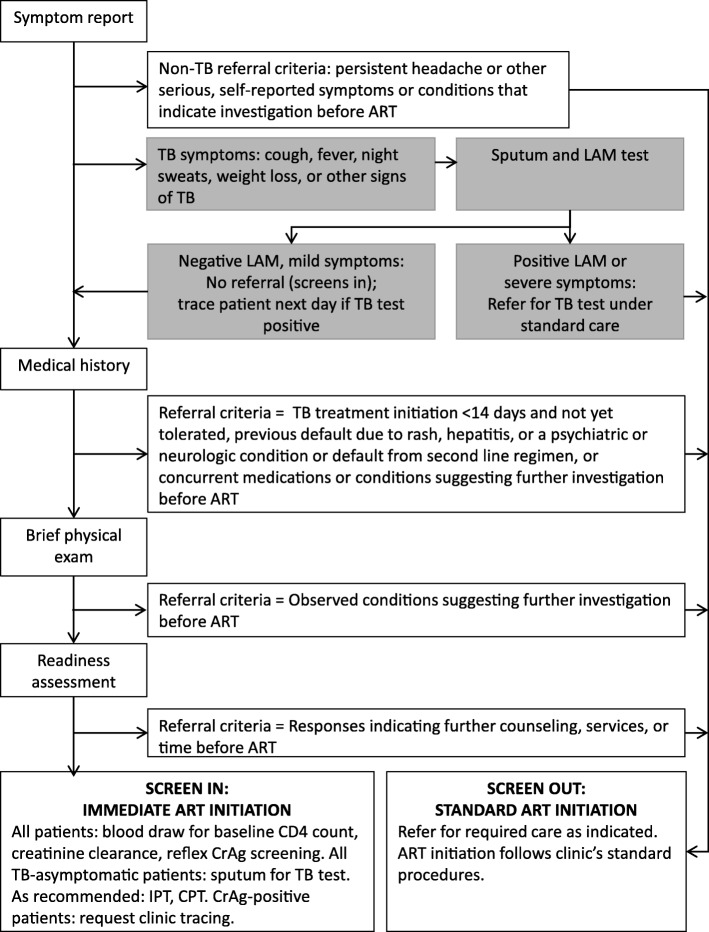
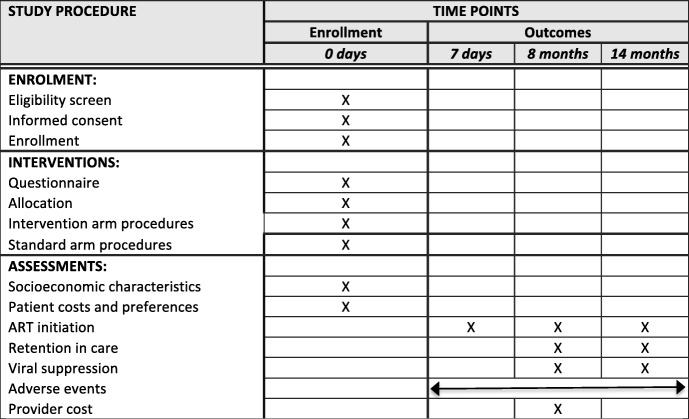
Methods/design: The SLATE II (Simplified Algorithm for Treatment Eligibility) study is an individually randomized evaluation of a clinical algorithm to reliably determine a patient's eligibility for immediate ART initiation without waiting for laboratory results or additional clinic visits. It differs from the earlier SLATE I study in management of patients with symptoms of tuberculosis (under SLATE II these patients may be started on ART immediately) and other criteria for immediate initiation. SLATE II will randomize (1:1) 600 adult, HIV-positive patients who present for HIV testing or care and are not yet on ART in South Africa. Patients randomized to the standard arm will receive standard-of-care ART initiation from clinic staff. Patients randomized to the intervention arm will be administered a symptom report, medical history, brief physical exam, and readiness assessment. Symptomatic patients will also have a tuberculosis (TB) module with lipoarabinomannan antigen of mycobacteria test. Patients who have satisfactory results for all four components will be dispensed antiretrovirals (ARVs) immediately, at the same clinic visit. Patients who have any negative results will be referred for further investigation, care, counseling, tests, or other services prior to being dispensed ARVs. Follow-up will be by passive medical record review. The primary outcomes will be ART initiation in ≤ 7 days and retention in care 8 months after study enrollment.
Discussion: SLATE II improves upon the SLATE I study by reducing the number of reasons for delaying ART initiation and allowing more patients with TB symptoms to start ART on the day of diagnosis. If successful, SLATE II will provide a simple and streamlined approach that can readily be adopted in other settings without investment in additional technology.
Trial registration: ClinicalTrials.gov, NCT03315013 . Registered on 19 October 2017.
Keywords: Africa; Antiretroviral therapy; Protocol; Randomized trial; Same-day; South Africa; Treatment initiation.
Conflict of interest statement
Ethics approval and consent to participate
The SLATE II study protocol has been approved by the Boston University Institutional Review Board (H-37010) and the University of the Witwatersrand Human Research Ethics Committee (Medical) (171011). Written informed consent was obtained from all study subjects prior to enrollment.
Consent for publication
Not applicable.
Competing interests
PDE is an employee of the Bill & Melinda Gates Foundation, which is funding this work. WDFV sits on antiretroviral initiation guideline committees, both South African and international. WDFV has accepted speaking honoraria from multiple manufacturers of antiretrovirals and is on several of their advisory boards. The remaining authors declare that they have no competing interests.
Publisher’s Note
Springer Nature remains neutral with regard to jurisdictional claims in published maps and institutional affiliations.
Figures
References
-
- World Health Organization . Guidelines For managing advanced HIV disease and rapid initiation of antiretroviral therapy. Geneva: World Health Organization; 2017. - PubMed
-
- Pillay Y. Same-day antiretroviral therapy (ART) initiation for HIV positive patients. Pretoria: National Department of Health; 2017.
-
- Zambia Ministry of Health . Zambia consolidated guidelines for prevention and treatment of HIV infection 2018. Lusaka: Ministry of Health; 2018.
-
- Ministry of Health National AIDS & STI Control Programme . Guidelines on use of antiretroviral drugs for treating and preventing HIV infection in Kenya 2016. Nairobi: Ministry of Health; 2016.
Publication types
MeSH terms
Substances
Associated data
Grants and funding
LinkOut - more resources
Full Text Sources
Medical
