Genetic and Modifiable Risk Factors Contributing to Cisplatin-induced Toxicities
- PMID: 30305294
- PMCID: PMC6377815
- DOI: 10.1158/1078-0432.CCR-18-2244
Genetic and Modifiable Risk Factors Contributing to Cisplatin-induced Toxicities
Abstract
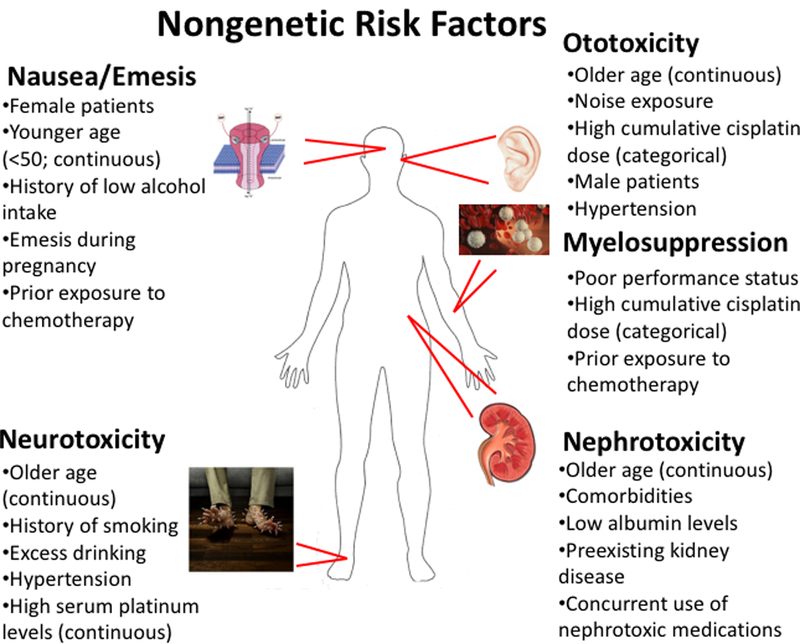
Effective administration of traditional cytotoxic chemotherapy is often limited by off-target toxicities. This clinical dilemma is epitomized by cisplatin, a platinating agent, which has potent antineoplastic activity due to its affinity for DNA and other intracellular nucleophiles. Despite its efficacy against many adult-onset and pediatric malignancies, cisplatin elicits multiple off-target toxicities that can not only severely impact a patient's quality of life but also lead to dose reductions or the selection of alternative therapies that can ultimately affect outcomes. Without an effective therapeutic measure by which to successfully mitigate many of these symptoms, there have been attempts to identify a priori those individuals who are more susceptible to developing these sequelae through studies of genetic and nongenetic risk factors. Older age is associated with cisplatin-induced ototoxicity, neurotoxicity, and nephrotoxicity. Traditional genome-wide association studies have identified single-nucleotide polymorphisms in ACYP2 and WFS1 associated with cisplatin-induced hearing loss. However, validating associations between specific genotypes and cisplatin-induced toxicities with enough stringency to warrant clinical application remains challenging. This review summarizes the current state of knowledge with regard to specific adverse sequelae following cisplatin-based therapy, with a focus on ototoxicity, neurotoxicity, nephrotoxicity, myelosuppression, and nausea/emesis. We discuss variables (genetic and nongenetic) contributing to these detrimental toxicities and currently available means to prevent or treat their occurrence.
©2018 American Association for Cancer Research.
Conflict of interest statement
Figures
References
-
- Hartmann JT, Lipp HP. Toxicity of platinum compounds. Expert Opin Pharmacother. 2003;4:889–901. - PubMed
-
- Ruggiero A, Trombatore G, Triarico S, Arena R, Ferrara P, Scalzone M, et al. Platinum compounds in children with cancer: toxicity and clinical management. Anticancer Drugs. 2013;24:1007–19. - PubMed
-
- Rybak LP. Mechanisms of cisplatin ototoxicity and progress in otoprotection. Curr Opin Otolaryngol Head Neck Surg. 2007;15:364–9. - PubMed
Publication types
MeSH terms
Substances
Grants and funding
LinkOut - more resources
Full Text Sources
Medical
Miscellaneous