Clinical manifestations and basic mechanisms of myocardial ischemia/reperfusion injury
- PMID: 30305783
- PMCID: PMC6172894
- DOI: 10.4103/tcmj.tcmj_33_18
Clinical manifestations and basic mechanisms of myocardial ischemia/reperfusion injury
Abstract
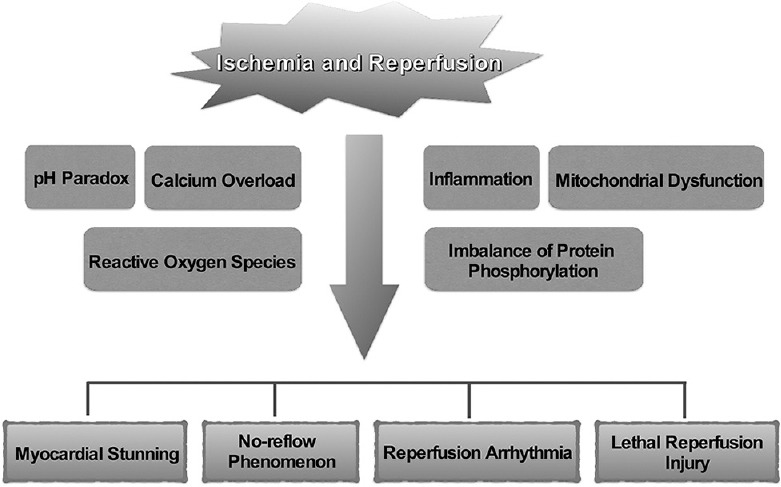
Acute myocardial ischemia/reperfusion (I/R) injury is a significant, unsolved clinical puzzle. In the disease context of acute myocardial infarction, reperfusion remains the only effective strategy to salvage ischemic myocardium, but it also causes additional damage. Myocardial I/R injury is composed of four types of damage, and these events attenuate the benefits of reperfusion therapy. Thus, inventing new strategies to conquer I/R injury is an unmet clinical need. A variety of pathological processes and mediators, including changes in the pH, generation of reactive oxygen radicals, and intracellular calcium overload, are proposed to be crucial in I/R-related cell injury. Among the intracellular events that occur during I/R, we stress the importance of protein phosphorylation signaling and elaborate its regulation. A variety of protein kinase pathways could be activated in I/R, including reperfusion injury salvage kinase and survivor-activating factor enhancement pathways, which are critical to cardiomyocyte survival. In addition to serine/threonine phosphorylation signaling, protein tyrosine phosphorylation is also critical in multiple cell functions and survival. However, the roles of protein kinases and phosphatases in I/R have not been extensively studied yet. By better understanding the mechanisms of I/R injury, we may have a better chance to develop new strategies for I/R injury and apply them in the clinical patient care.
Keywords: Acute myocardial infarction; Ischemia/reperfusion injury; Protein phosphorylation.
Conflict of interest statement
There are no conflicts of interest.
Figures
References
-
- Pfeffer MA. Left ventricular remodeling after acute myocardial infarction. Annu Rev Med. 1995;46:455–66. - PubMed
-
- Takii T, Yasuda S, Takahashi J, Ito K, Shiba N, Shirato K, et al. Trends in acute myocardial infarction incidence and mortality over 30 years in Japan: Report from the MIYAGI-AMI registry study. Circ J. 2010;74:93–100. - PubMed
-
- Yellon DM, Hausenloy DJ. Myocardial reperfusion injury. N Engl J Med. 2007;357:1121–35. - PubMed
-
- Jennings RB, Sommers HM, Smyth GA, Flack HA, Linn H. Myocardial necrosis induced by temporary occlusion of a coronary artery in the dog. Arch Pathol. 1960;70:68–78. - PubMed
-
- Bolli R, Marbán E. Molecular and cellular mechanisms of myocardial stunning. Physiol Rev. 1999;79:609–34. - PubMed