


Diacetyl control during brewery fermentation via adaptive laboratory engineering of the lager yeast Saccharomyces pastorianus
- PMID: 30306366
- PMCID: PMC6267509
- DOI: 10.1007/s10295-018-2087-4
Diacetyl control during brewery fermentation via adaptive laboratory engineering of the lager yeast Saccharomyces pastorianus
Abstract
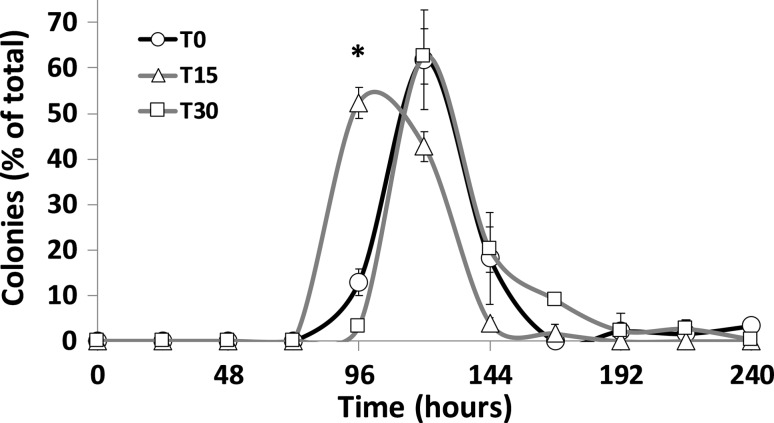
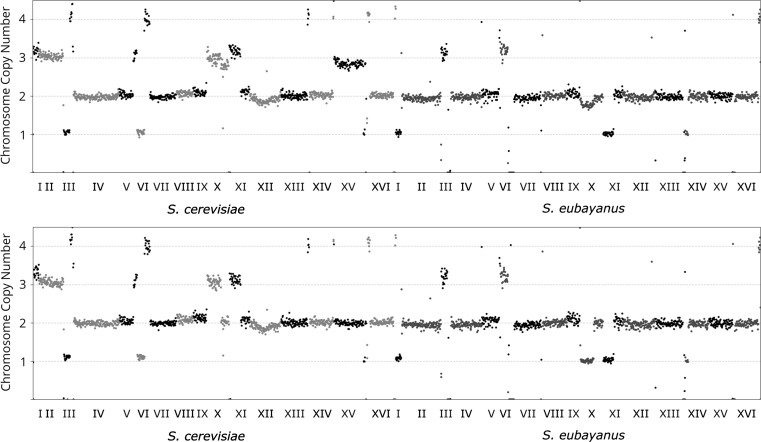
Diacetyl contributes to the flavor profile of many fermented products. Its typical buttery flavor is considered as an off flavor in lager-style beers, and its removal has a major impact on time and energy expenditure in breweries. Here, we investigated the possibility of lowering beer diacetyl levels through evolutionary engineering of lager yeast for altered synthesis of α-acetolactate, the precursor of diacetyl. Cells were exposed repeatedly to a sub-lethal level of chlorsulfuron, which inhibits the acetohydroxy acid synthase responsible for α-acetolactate production. Initial screening of 7 adapted isolates showed a lower level of diacetyl during wort fermentation and no apparent negative influence on fermentation rate or alcohol yield. Pilot-scale fermentation was carried out with one isolate and results confirmed the positive effect of chlorsulfuron adaptation. Diacetyl levels were over 60% lower at the end of primary fermentation relative to the non-adapted lager yeast and no significant change in fermentation performance or volatile flavor profile was observed due to the adaptation. Whole-genome sequencing revealed a non-synonymous SNP in the ILV2 gene of the adapted isolate. This mutation is known to confer general tolerance to sulfonylurea compounds, and is the most likely cause of the improved tolerance. Adaptive laboratory evolution appears to be a natural, simple and cost-effective strategy for diacetyl control in brewing.
Keywords: Beer; Chlorsulfuron; Diacetyl; Saccharomyces pastorianus; α-Acetolactate.
Conflict of interest statement
The authors declare that there is no conflict of interest.
Figures


References
-
- Akita O, Tetsuro I, Obata T, Hara S. Mutants of Saccharomyces cerevisiae producing a large quantity of β-phenylethyl alcohol and β-phenylethyl acetate. J Ferment Bioeng. 1990;69:125–128. doi: 10.1016/0922-338X(90)90200-G. - DOI
-
- Ashida S, Ichikawa E, Suginami K, Imayasu S. Isolation and application of mutants producing sufficient isoamyl acetate, a sake flavor component. Agric Biol Chem. 1987;51:2061–2065.
-
- Andrews S (2010) FastQC: a quality control tool for high throughput sequence data. http://www.bioinformatics.babraham.ac.uk/projects/fastqc/. Accecced 20 June 2018
-
- Blieck L, Toye G, Dumortier F, Verstrepen KJ, Delvaux FR, Thevelein JM, Van Dijck P. Isolation and characterization of brewer’s yeast variants with improved fermentation performance under high gravity conditions. Appl Environ Microbiol. 2007;73:815–824. doi: 10.1128/AEM.02109-06. - DOI - PMC - PubMed
MeSH terms
Substances
Grants and funding
LinkOut - more resources
Full Text Sources
Molecular Biology Databases
