


Behavioral impact of return of genetic test results for complex disease: Systematic review and meta-analysis
- PMID: 30307272
- PMCID: PMC6263735
- DOI: 10.1037/hea0000683
Behavioral impact of return of genetic test results for complex disease: Systematic review and meta-analysis
Abstract
Objective: Advances in genomewide association studies have made possible the return of genetic risk results for complex diseases. Two concerns about these results are (a) negative psychological consequences and (b) viewing probabilistic results as deterministic, leading to misinterpretation and inappropriate decisions. The present study evaluates these concerns through a meta-analytic review of existing literature.
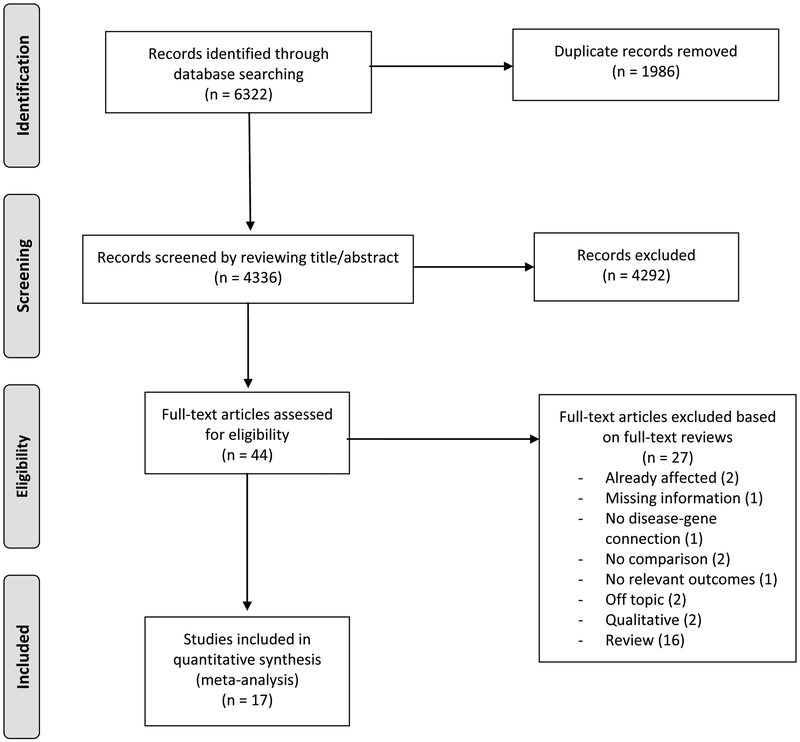
Method: Seventeen genetic testing studies of complex disease, including 1,171 participants and reporting 195 effects, 104 of which were unadjusted for covariates, were meta-analyzed under a random effects model. Diseases included Alzheimer's, cardiovascular and coronary heart disease, lung cancer, melanoma, thrombophilia, and type II diabetes. Six domains of behavioral-psychological reactions were examined.
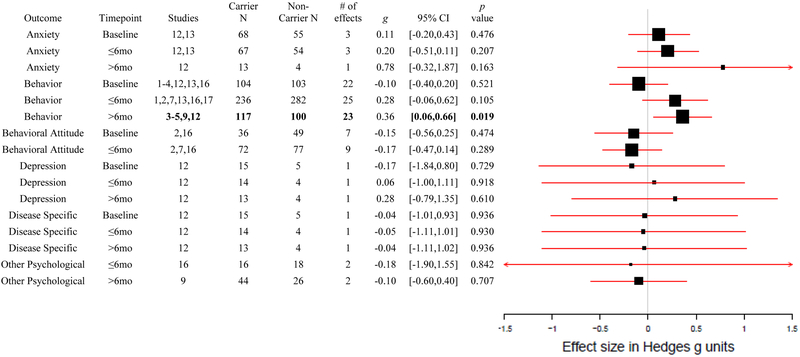
Results: Carriers showed significantly increased self-reported behavior change compared to noncarriers when assessed 6 months or later after results return (Hedges's g = .36, p = .019).
Conclusions: Return of genetic testing results for complex disease does not strongly impact self-reported negative behavior or psychological function of at-risk individuals. Return of results does appear to moderately increase self-reported healthy behavior in carriers, although research on objectively observed behavior change is needed. This is a growing area of research, with preliminary results suggesting potential positive implications of genetic testing for complex disease on behavior change. (PsycINFO Database Record (c) 2018 APA, all rights reserved).
Figures
References
-
- Accreditation Council for Genetic Counseling. (2016). Accredited Programs. Retrieved from http://gceducation.org/Pages/Accredited-Programs.aspx
-
- Aspinwall LG, Leaf SL, Dola ER, Kohlmann W, & Leachman SA (2008). CDKN2A/p16 genetic test reporting improves early detection intentions and practices in high-risk melanoma families. Cancer Epidemiology Biomarkers & Prevention, 17(6), 1510–1519. doi:10.1158/1055-9965.epi-08-0010 - DOI - PubMed
-
- Aspinwall LG, Leaf SL, Kohlmann W, Dola ER, & Leachman SA (2009). Patterns of photoprotection following CDKN2A/p16 genetic test reporting and counseling. J Am Acad Dermatol, 60(5), 745–757. doi:10.1016/j.jaad.2008.12.034 - DOI - PubMed
-
- Aspinwall LG, Taber JM, Kohlmann W, Leaf SL, & Leachman SA (2014). Unaffected family members report improvements in daily routine sun protection 2 years following melanoma genetic testing. Genetics in Medicine, 16(11), 846–853. doi:10.1038/gim.2014.37 - DOI - PMC - PubMed
-
- Aspinwall LG, Taber JM, Leaf SL, Kohlmann W, & Leachman SA (2013). Melanoma Genetic Counseling and Test Reporting Improve Screening Adherence Among Unaffected Carriers 2 Years Later. Cancer Epidemiology Biomarkers & Prevention, 22(10), 1687–1697. doi:10.1158/1055-9965.epi-13-0422 - DOI - PMC - PubMed
