


Enterovirus infection and type 1 diabetes: unraveling the crime scene
- PMID: 30307605
- PMCID: PMC6300647
- DOI: 10.1111/cei.13223
Enterovirus infection and type 1 diabetes: unraveling the crime scene
Abstract
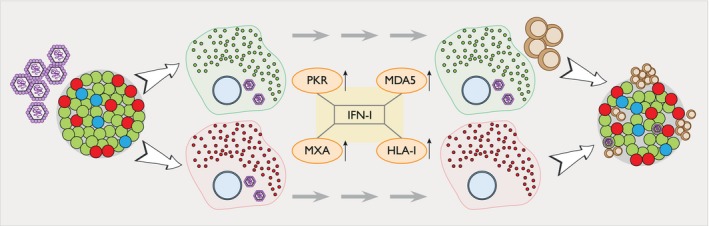
Enteroviruses (EV) have been historically associated to type 1 diabetes. Definitive proof for their implication in disease development is lacking, but growing evidence suggests that they could be involved in beta cell destruction either directly by killing beta cells or indirectly by creating an exacerbated inflammatory response in the islets, capable of attracting autoreactive T cells to the 'scene of the crime'. Epidemiological and serological studies have been associated with the appearance of islet autoimmunity and EV RNA has been detected in prospective studies. In addition, the EV capsid protein has been detected in the islets of recent-onset type 1 diabetic donors, suggesting the existence of a low-grade EV infection that could become persistent. Increasing evidence in the field shows that a 'viral signature' exists in type 1 diabetes and involves interferon responses that could be sustained during prolonged periods. These include the up-regulation of markers such as protein kinase R (PKR), melanoma differentiation-associated protein 5 (MDA5), retinoic acid inducible gene I (RIG-I), myxovirus resistance protein (MxA) and human leukocyte antigen-I (HLA-I) and the release of chemokines able to attract immune cells to the islets leading to insulitis. In this scenario, the hyperexpression of HLA-I molecules would promote antigen presentation to autoreactive T cells, favoring beta cell recognition and, ultimately, destruction. In this review, an overview is provided of the standing evidence that implicates EVs in beta cell 'murder', the time-line of events is investigated from EV entry in the cell to beta cell death and possible accomplices are highlighted that might be involved in beta cell demise.
Keywords: beta cell destruction; interferon response; type 1 diabetes; virus infection.
© 2018 British Society for Immunology.
Figures
References
-
- Zell R. Picornaviridae – the ever‐growing virus family. Arch Virol 2018;163:299–317. - PubMed
-
- Racaniello VR. Picornaviridae: the viruses and their replicationIn Knipe DM, Howley PM, eds. Fields virology, vol. 1, 5th edn. Philadelphia, PA: Lippincott Williams & Wilkins; 2007, 795–838.
Publication types
MeSH terms
Substances
LinkOut - more resources
Full Text Sources
Medical
Research Materials
