


The pharmacokinetics of gabapentin in cats
- PMID: 30307652
- PMCID: PMC6271300
- DOI: 10.1111/jvim.15313
The pharmacokinetics of gabapentin in cats
Abstract
Background: Gabapentin is the most commonly prescribed medication for the treatment of chronic musculoskeletal pain in cats. Despite this common and chronic usage, clinically relevant pharmacokinetic data is lacking.
Objectives: To evaluate the pharmacokinetics of clinically relevant dosing regimens of gabapentin in cats.
Animals: Eight research-purpose mixed-breed cats.
Methods: Cats were enrolled in a serial order, non-randomized pharmacokinetic study. Gabapentin was administered as an IV bolus (5 mg/kg), orally (10 mg/kg) as a single dose or twice daily for 2 weeks, or as a transdermal gel (10 mg/kg) in serial order. Serial blood samples were collected up to 48 hours. Plasma concentrations were determined using Ultra Performance Liquid Chromatography-Mass Spectrometry. Compartmental analysis was used to generate gabapentin time-concentration models.
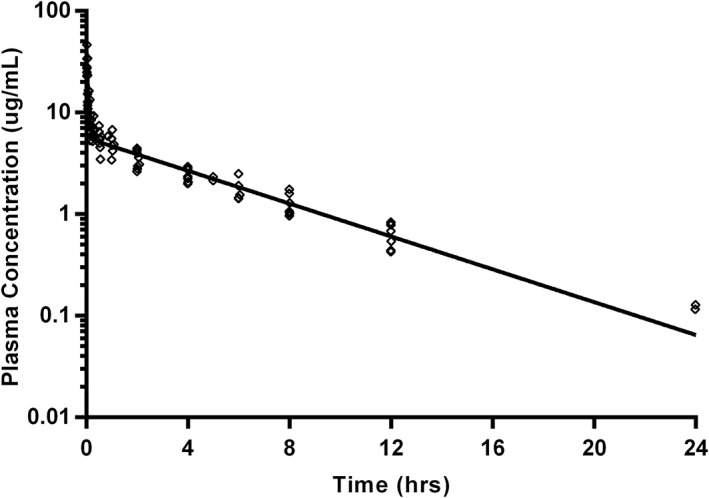
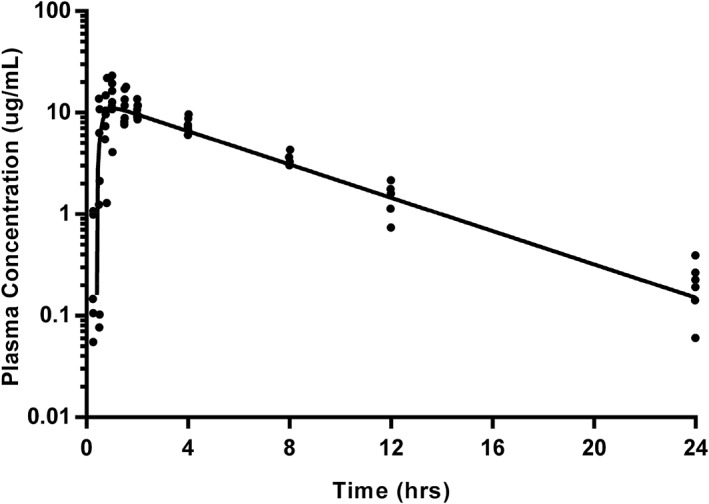
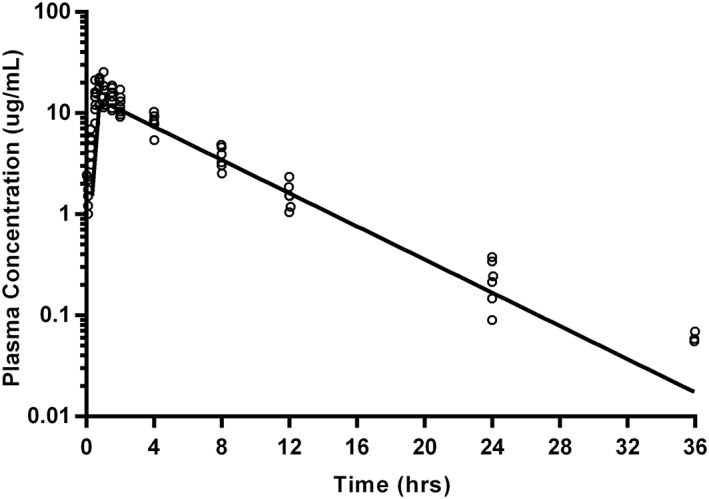
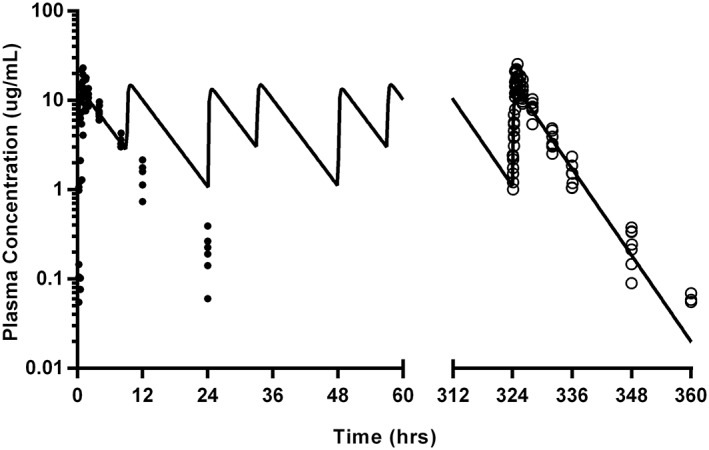
Results: After IV administration CL (median (range)) and terminal half-life were 160.67 mL/kg*hr (119.63-199.11) and 3.78 hours (3.12-4.47), respectively. The oral terminal half-life was 3.63 hours (2.96-4.77), and 3.72 hours (3.12-4.51) for single and repeated dosing. TMAX and CMAX , as predicted by the model were 1.05 hours (0.74-2.11), and 12.42 μg/mL (8.31-18.35) after single oral dosing, and 0.77 hours (0.58-1.64), and 14.78 μg/mL (9.70-18.41) after repeated oral dosing. Bioavailability after a single oral dose was 94.77% (82.46-122.83).
Importance: Repeated oral dosing of gabapentin did not alter the drug's pharmacokinetics, making dose adjustments unnecessary with long-term treatment. As prepared, the transdermal route is an inappropriate choice for drug administration. These relevant data are important for future studies evaluating potential efficacy of the medication for treating chronic pain states in cats.
Keywords: compounded; feline; pain; transdermal.
© 2018 The Authors. Journal of Veterinary Internal Medicine published by Wiley Periodicals, Inc. on behalf of the American College of Veterinary Internal Medicine.
Figures
References
-
- Lascelles BDX, DePuy V, Thomson A, et al. Evaluation of a therapeutic diet for feline degenerative joint disease. J Vet Intern Med. 2010;24:487‐495. - PubMed
-
- Guedes AGP, Meadows JM, Pypendop BH, et al. Evaluation of tramadol for treatment of osteoarthritis in geriatric cats. J Am Vet Med Assoc 2018;252:565‐571. - PubMed
MeSH terms
Substances
Grants and funding
LinkOut - more resources
Full Text Sources
Research Materials
Miscellaneous
