


Kaempferol Attenuates ROS-Induced Hemolysis and the Molecular Mechanism of Its Induction of Apoptosis on Bladder Cancer
- PMID: 30309003
- PMCID: PMC6222750
- DOI: 10.3390/molecules23102592
Kaempferol Attenuates ROS-Induced Hemolysis and the Molecular Mechanism of Its Induction of Apoptosis on Bladder Cancer
Abstract
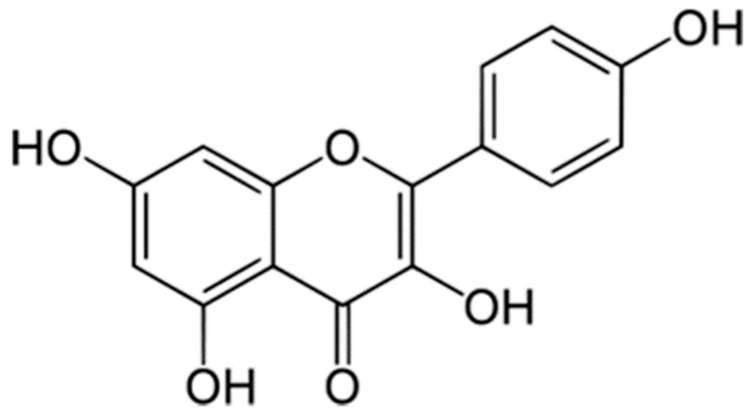
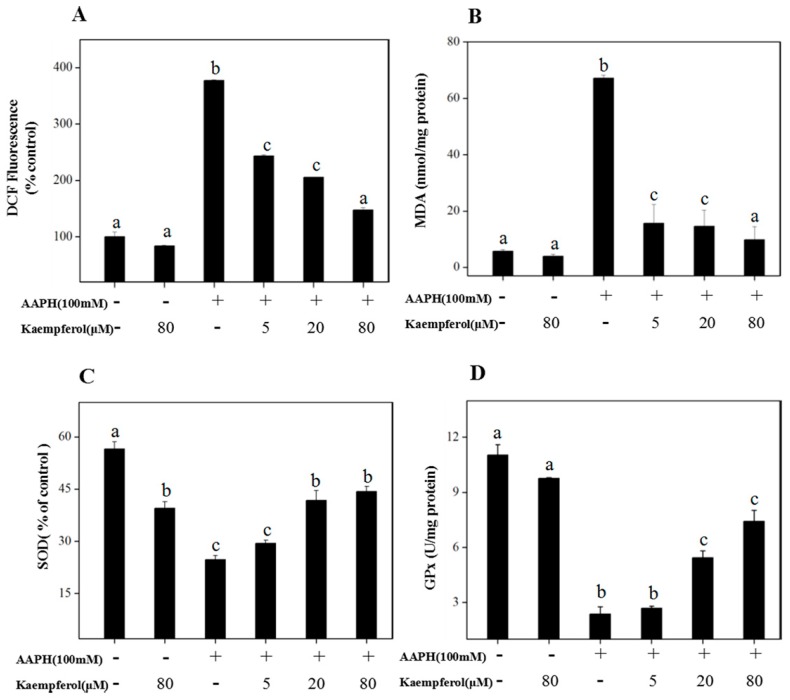
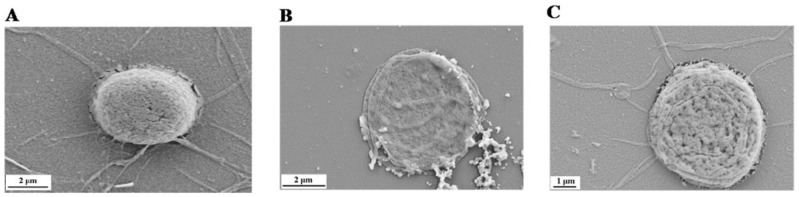
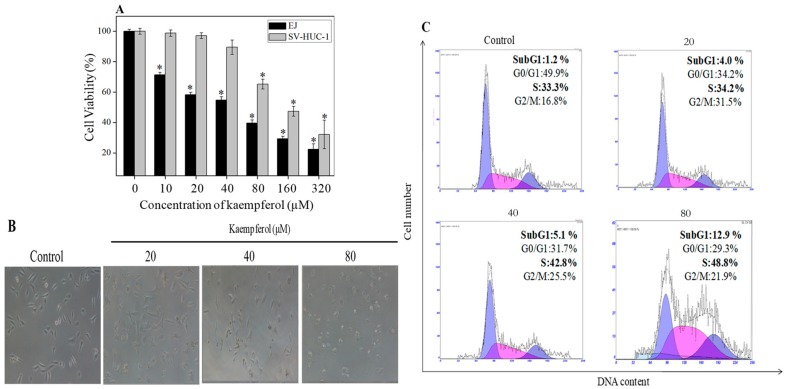
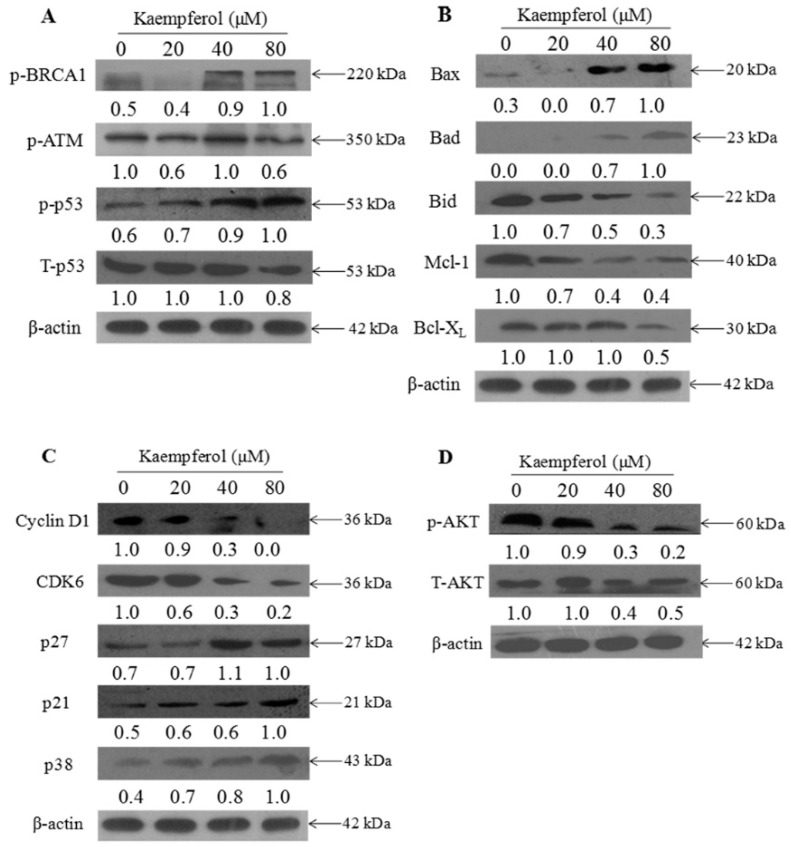
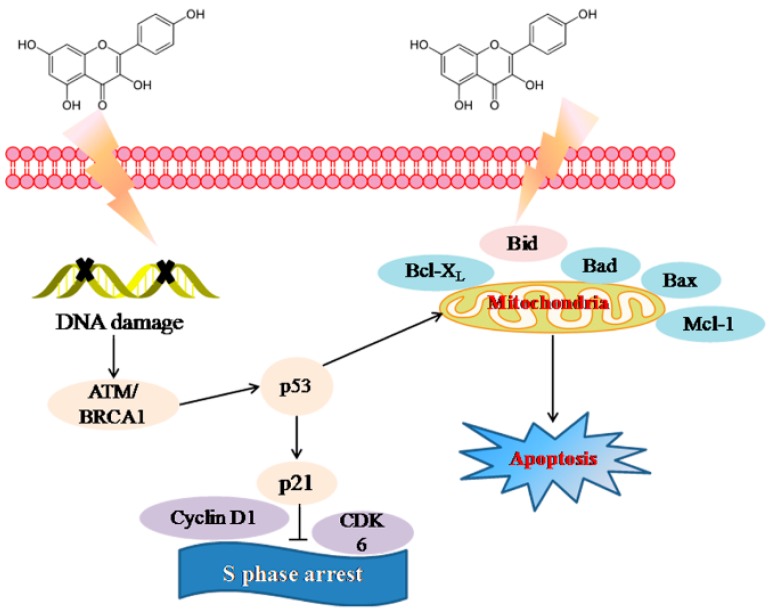
Bladder cancer has become the most common malignant urinary carcinoma. Studies have shown that significant antioxidant and bladder cancer-fighting properties of several plant-based diets like Psidium guajava, ginger and amomum, are associated with their high kaempferol content. In this paper, we evaluated the antioxidant and anticancer activities of kaempferol and its mechanism of induction to apoptosis on bladder cancer cells. Our findings demonstrated that kaempferol showed an obvious radical scavenging activity in erythrocytes damaged by oxygen. Kaempferol promoted antioxidant enzymes, inhibited ROS generation and lipid peroxidation and finally prevented the occurrence of hemolysis. Additionally, kaempferol exhibited a strong inhibitory effect on bladder cancer cells and high safety on normal bladder cells. At the molecular level, kaempferol suppressed EJ bladder cancer cell proliferation by inhibiting the function of phosphorylated AKT (p-AKT), CyclinD1, CDK4, Bid, Mcl-1 and Bcl-xL, and promoting p-BRCA1, p-ATM, p53, p21, p38, Bax and Bid expression, and finally triggering apoptosis and S phase arrest. We found that Kaempferol exhibited strong anti-oxidant activity on erythrocyte and inhibitory effects on the growth of cancerous bladder cells through inducing apoptosis and S phase arrest. These findings suggested that kaempferol might be regarded as a bioactive food ingredient to prevent oxidative damage and treat bladder cancer.
Keywords: anti-bladder cancer cell activity; antioxidant activity; apoptosis; kaempferol; p53 pathway.
Conflict of interest statement
The authors declare no conflict of interest.
Figures
References
MeSH terms
Substances
Grants and funding
- 31401660/National Natural Science Foundation of China
- 51472089/National Natural Science Foundation of China
- 2017YFD0601303/National Key Research and Development Program of China
- 201312H05/Yang Fan Innovative & Entrepreneurial Research Team Project
- 2010A011200019/Science and Technology Planning Project of Guangdong province
- 2016A040402032/Science and Technology Planning Project of Guangdong province
- 2016A010105020/Science and Technology Planning Project of Guangdong province
- 2016A040402016/Science and Technology Planning Project of Guangdong province
- 201707010129/Science and Technology Program of Guangzhou
- 2017ZD084/Fundamental Research Funds for the Central Universities
- B17018/the 111 Project
LinkOut - more resources
Full Text Sources
Medical
Research Materials
Miscellaneous
