


Modifying Robusta coffee aroma by green bean chemical pre-treatment
- PMID: 30309540
- PMCID: PMC6191532
- DOI: 10.1016/j.foodchem.2018.07.226
Modifying Robusta coffee aroma by green bean chemical pre-treatment
Abstract
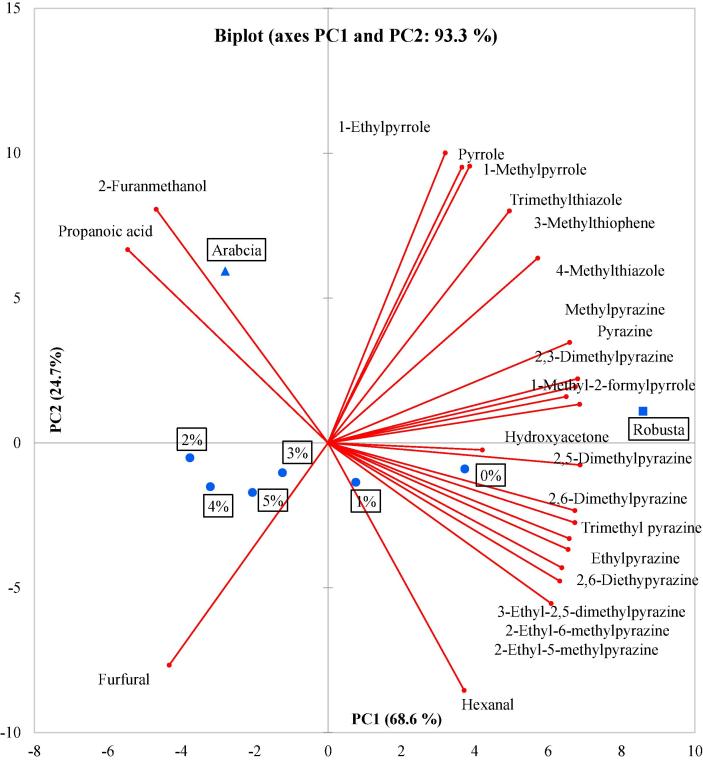
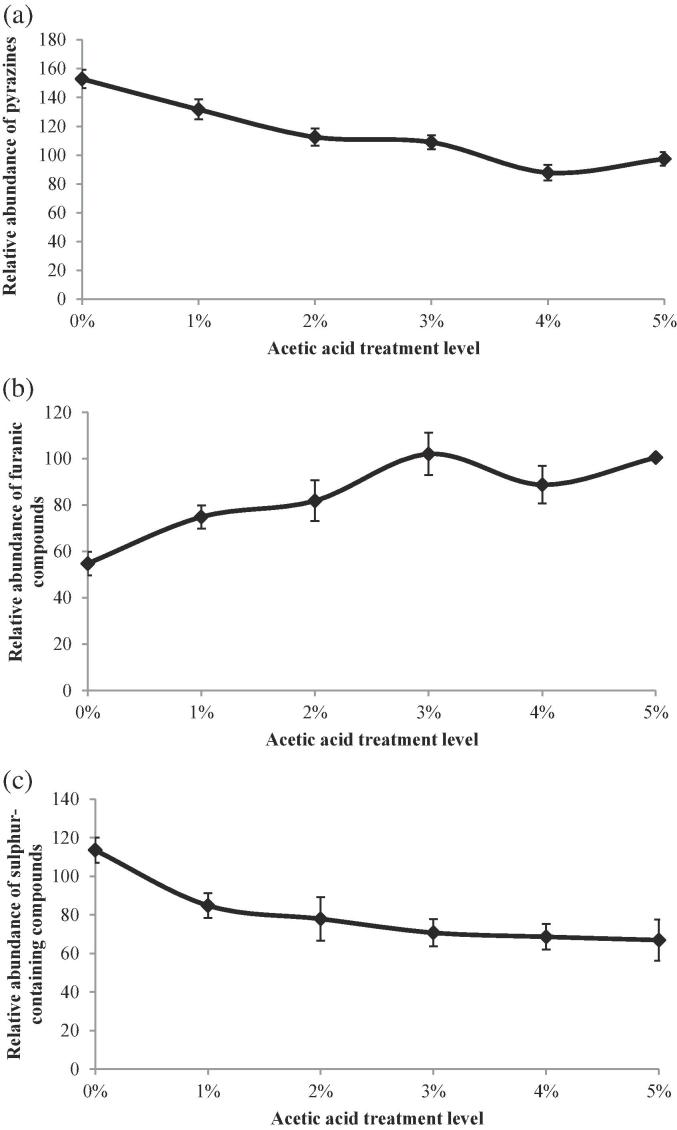
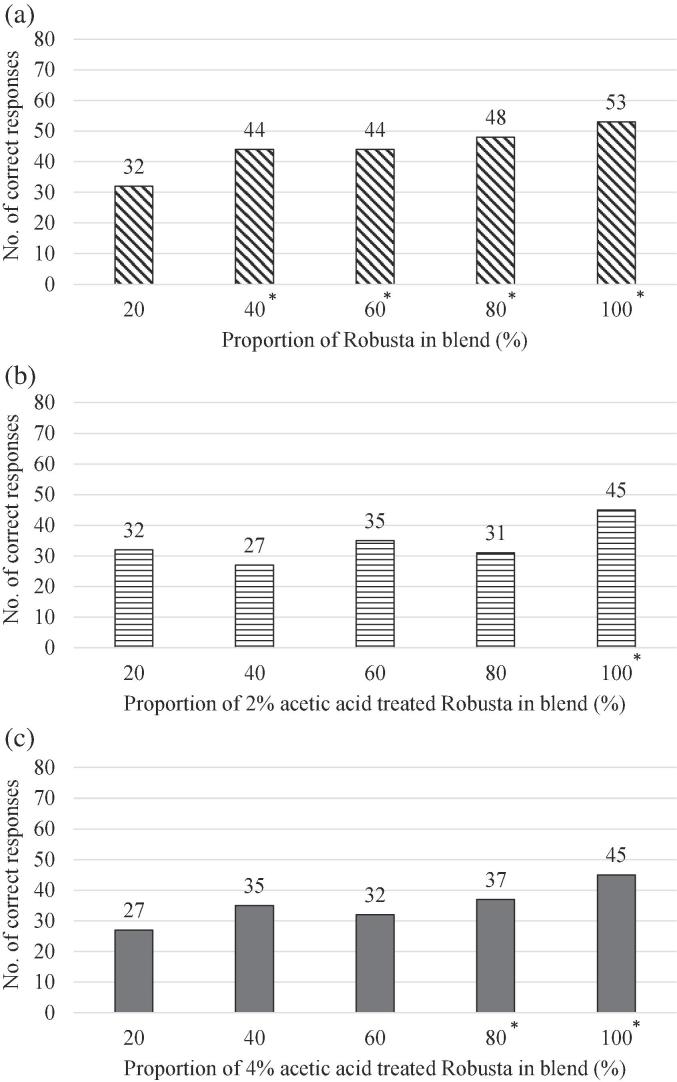
Green Robusta beans were subjected to pre-treatment with the aim of reducing the perceived aroma difference between Arabica and Robusta coffee. Treatment was a short soaking procedure with varying concentrations of acetic acid (up to 5%). Samples were subjected to thermal treatment (roasted) and ground to a standardised particle size distribution. Aroma compounds were evaluated by headspace analysis using solid-phase microextraction and gas chromatography-mass spectrometry. Pre-treatment significantly affected aroma formation during roasting and resulted in a modified level of pyrazines, furanic compounds and sulfur-containing compounds (p < 0.05). Principal component analysis illustrated that the aroma profile of the pre-treated Robusta coffee was closer to the target Arabica coffee after roasting. Sensory results confirmed that the aroma of the 2% acetic acid pre-treated Robusta brew was similar to Arabica; the maximum inclusion level of Robusta coffee in a blend could be increased from 20% to 80%.
Keywords: Acetic acid; Aroma chemistry; Coffee; GC-MS; Pre-treatment; Sensory analysis.
Copyright © 2018 The Authors. Published by Elsevier Ltd.. All rights reserved.
Figures
References
-
- Ameyu M. Influence of harvesting and postharvest processing methods on the quality of Arabica coffee (Coffea arabica L.) in Eastern Ethiopia. Journal of Food and Agriculture Science. 2017;7:1–9.
-
- Belitz H.-D., Grosch W., Schieberle P. Coffee, tea, cocoa. Food Chemistry. 2009:938–970.
-
- Bhumiratana N., Adhikari K., Chambers Iv E. Evolution of sensory aroma attributes from coffee beans to brewed coffee. LWT – Food Science and Technology. 2011;44:2185–2192.
-
- Boothroyd E., Linforth R.S.T., Jack F., Cook D.J. Origins of the perceived nutty character of new-make malt whisky spirit. Journal of the Institute of Brewing. 2014;120:16–22.
-
- Clarke R., Vitzthum O.G. Blackwell Science; London: 2001. Coffee: recent developments. (Chapter 1 and 7)
MeSH terms
Substances
LinkOut - more resources
Full Text Sources
Miscellaneous
