


The UMBRELLA SIOP-RTSG 2016 Wilms tumour pathology and molecular biology protocol
- PMID: 30310143
- PMCID: PMC7136175
- DOI: 10.1038/s41585-018-0100-3
The UMBRELLA SIOP-RTSG 2016 Wilms tumour pathology and molecular biology protocol
Erratum in
-
Publisher Correction: The UMBRELLA SIOP-RTSG 2016 Wilms tumour pathology and molecular biology protocol.Nat Rev Urol. 2019 Sep;16(9):563. doi: 10.1038/s41585-019-0191-5. Nat Rev Urol. 2019. PMID: 31043716 Free PMC article.
Abstract
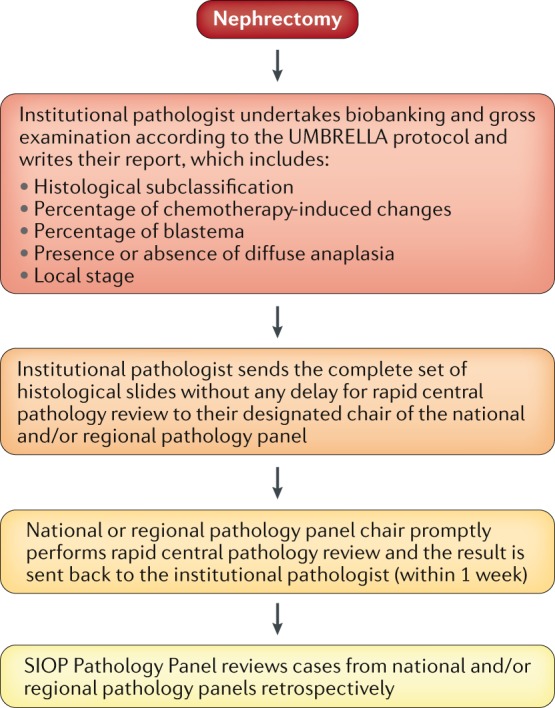
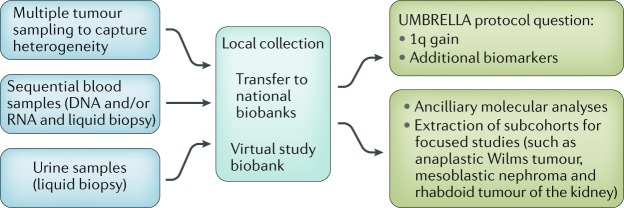
On the basis of the results of previous national and international trials and studies, the Renal Tumour Study Group of the International Society of Paediatric Oncology (SIOP-RTSG) has developed a new study protocol for paediatric renal tumours: the UMBRELLA SIOP-RTSG 2016 protocol (the UMBRELLA protocol). Currently, the overall outcomes of patients with Wilms tumour are excellent, but subgroups with poor prognosis and increased relapse rates still exist. The identification of these subgroups is of utmost importance to improve treatment stratification, which might lead to reduction of the direct and late effects of chemotherapy. The UMBRELLA protocol aims to validate new prognostic factors, such as blastemal tumour volume and molecular markers, to further improve outcome. To achieve this aim, large, international, high-quality databases are needed, which dictate optimization and international harmonization of specimen handling and comprehensive sampling of biological material, refine definitions and improve logistics for expert review. To promote broad implementation of the UMBRELLA protocol, the updated SIOP-RTSG pathology and molecular biology protocol for Wilms tumours has been outlined, which is a consensus from the SIOP-RTSG pathology panel.
Conflict of interest statement
The authors declare no competing interests.
Figures
References
-
- Cancer Research UK. A study looking at improving treatment for children with kidney cancer (IMPORT). Cancer Research UKhttps://www.cancerresearchuk.org/about-cancer/find-a-clinical-trial/stud... (2013).
Publication types
MeSH terms
Substances
Grants and funding
LinkOut - more resources
Full Text Sources
Medical
