Comparison of effectiveness for fluoroscopic cervical interlaminar epidural injections with or without steroid in cervical post-surgery syndrome
- PMID: 30310553
- PMCID: PMC6177539
- DOI: 10.3344/kjp.2018.31.4.277
Comparison of effectiveness for fluoroscopic cervical interlaminar epidural injections with or without steroid in cervical post-surgery syndrome
Abstract
Background: Neck and back pain are leading sources of disability placing substantial burden on health care systems. Surgical interventions in managing chronic neck pain secondary to various disorders continue to increase. Even though surgical interventions are effective, a significant proportion of patients continue to have symptomatology and develop cervical post-surgery syndrome. This study was performed to know the effectiveness of cervical interlaminar epidural injections with or without steroids.
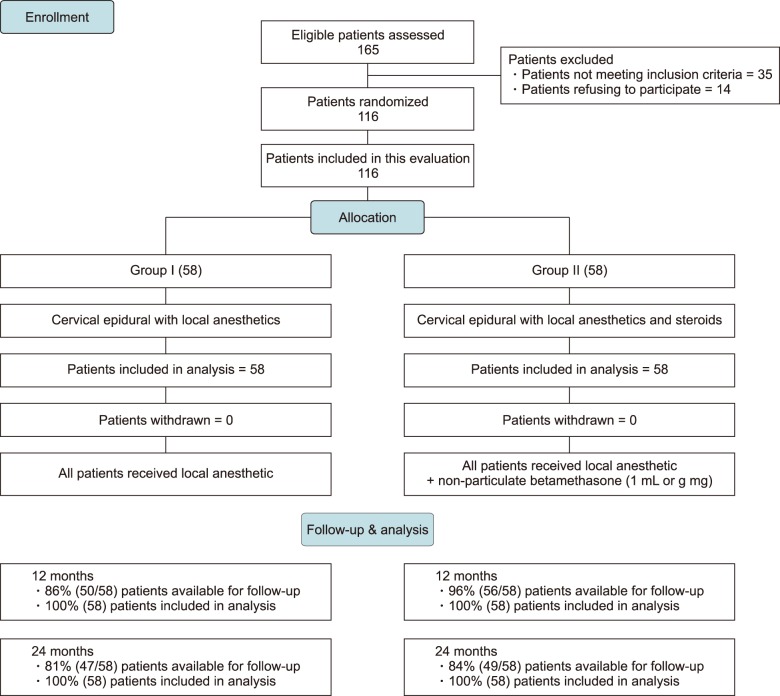
Methods: The effectiveness of fluoroscopic cervical interlaminar epidural injections in post-surgery syndrome was evaluated in a randomized, active controlled trial. The study population included 116 patients assigned to 2 groups. Group 1 received cervical interlaminar epidural injections with local anesthetic alone and Group 2 received injection with local anesthetic and steroids. The main outcomes were defined as significant improvement (greater than 50%) of pain relief using the numeric rating scale and/or functional status improvement using the Neck Disability Index (NDI).
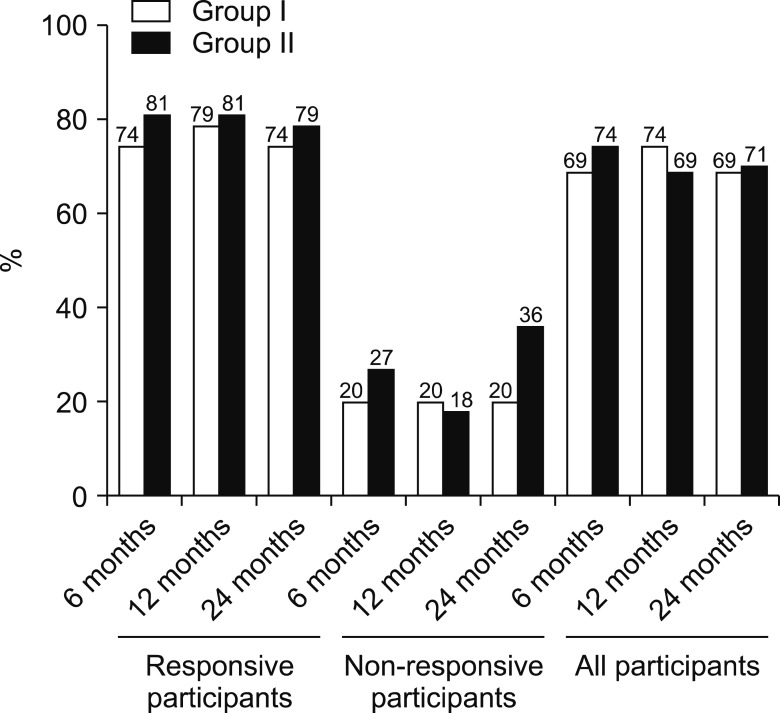
Results: Both groups had similar results with significant improvement (≥ 50% pain relief and functional status improvement) in 69% of the patients in Group I, whereas, in Group II, 71% of the patients showed significant improvement at the end of 2 years. During a 2-year period, the average number of procedures was 5 to 6, with an average of approximately 12 weeks of significant improvement per procedure.
Conclusions: Fluoroscopic cervical interlaminar epidural injections administered in cervical post-surgery syndrome using local anesthetic, regardless of the use of steroids, may be effective in approximately 70% of the patients at 2-year follow-up.
Keywords: Back pain; Cervical vertebrae; Chronic pain; Epidural injections; Follow-up studies; Local anesthetics; Neck pain; Postoperative complications; Reoperation; Steroids.
Figures
References
-
- Nordin M, Randhawa K, Torres P, Yu H, Haldeman S, Brady O, et al. The global spine care initiative: a systematic review for the assessment of spine-related complaints in populations with limited resources and in low- and middle-income communities. Eur Spine J. 2018 [in press] - PubMed
LinkOut - more resources
Full Text Sources