


Thrombocytopenia Impairs Host Defense Against Burkholderia pseudomallei (Melioidosis)
- PMID: 30312422
- PMCID: PMC6350952
- DOI: 10.1093/infdis/jiy541
Thrombocytopenia Impairs Host Defense Against Burkholderia pseudomallei (Melioidosis)
Abstract
Background: Infection with the gram-negative bacillus Burkholderia pseudomallei (melioidosis) is an important cause of pneumosepsis in Southeast Asia and has a mortality of up to 40%. We aimed to assess the role of platelets in the host response against B. pseudomallei infection.
Methods: Association between platelet counts and mortality was determined in 1160 patients with culture-proven melioidosis. Mice treated with (low- or high-dose) platelet-depleting antibody were inoculated intranasally with B. pseudomallei and killed. Additional studies using functional glycoprotein Ibα-deficient mice were conducted.
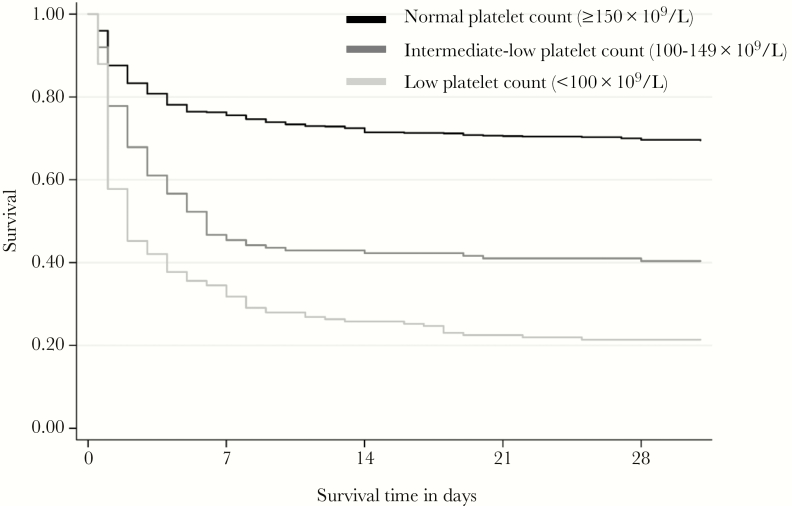
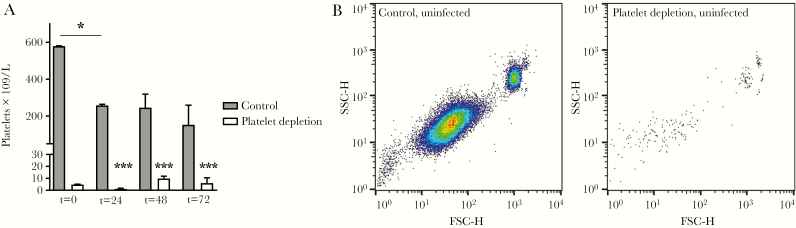
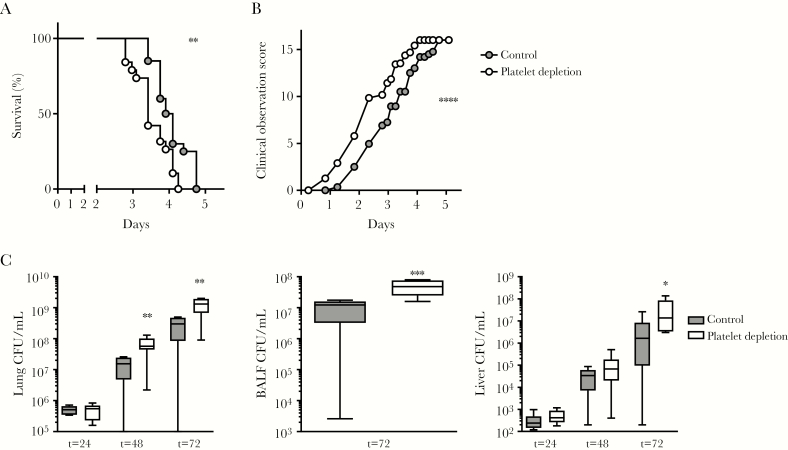
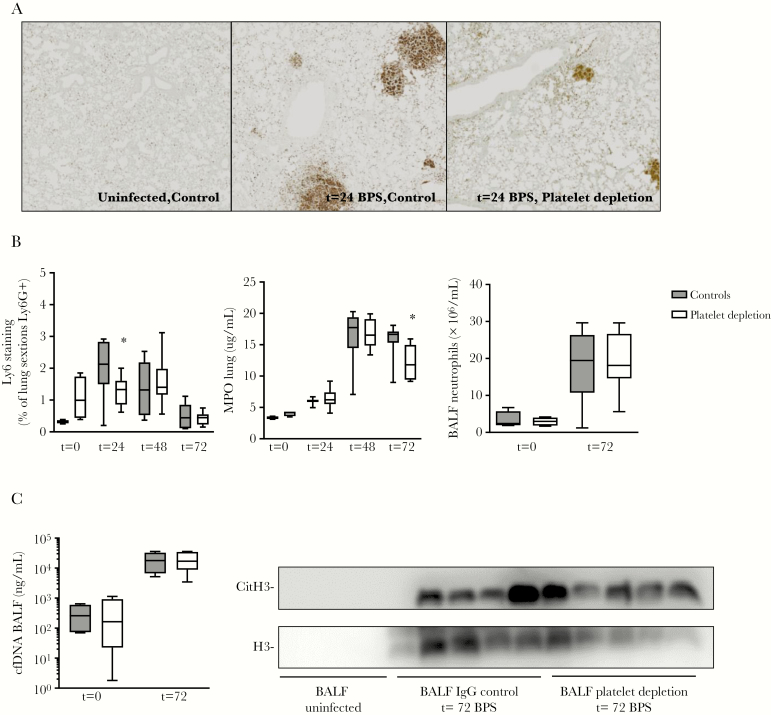
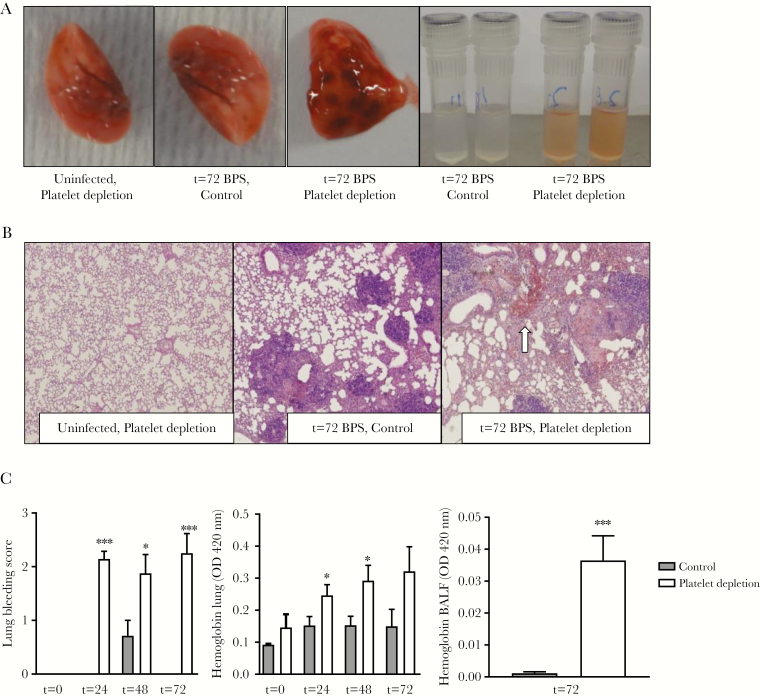
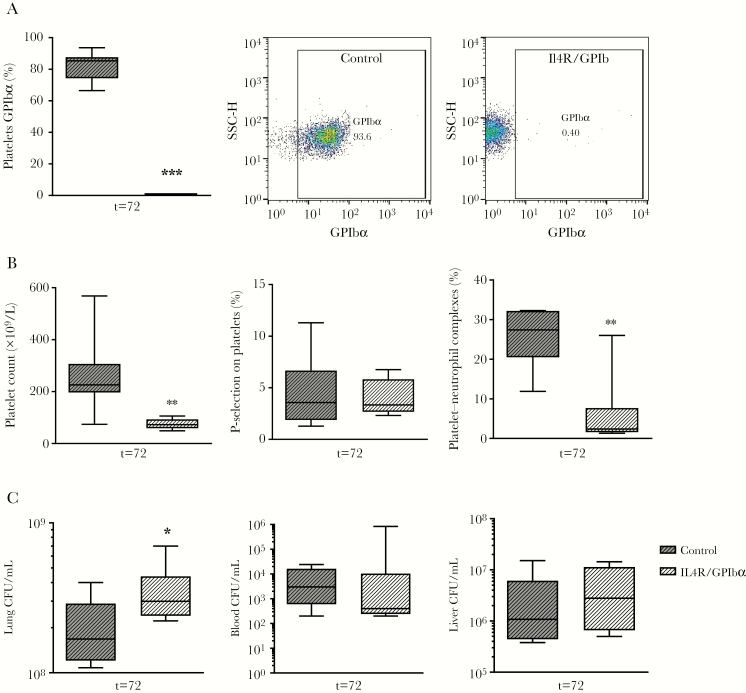
Results: Thrombocytopenia was present in 31% of patients at admission and predicted mortality in melioidosis patients even after adjustment for confounders. In our murine-melioidosis model, platelet counts decreased, and mice treated with a platelet-depleting antibody showed enhanced mortality and higher bacterial loads compared to mice with normal platelet counts. Low platelet counts had a modest impact on early-pulmonary neutrophil influx. Reminiscent of their role in hemostasis, platelet depletion impaired vascular integrity, resulting in early lung bleeding. Glycoprotein Ibα-deficient mice had reduced platelet counts during B. pseudomallei infection together with an impaired local host defense in the lung.
Conclusions: Thrombocytopenia predicts mortality in melioidosis patients and, during experimental melioidosis, platelets play a protective role in both innate immunity and vascular integrity.
Figures
References
-
- Wiersinga WJ, Currie BJ, Peacock SJ. Melioidosis. N Engl J Med 2012; 367:1035–44. - PubMed
-
- Simpson AJ. Melioidosis: a clinical model for gram-negative sepsis. J Med Microbiol 2001; 50:657–8. - PubMed
-
- Wiersinga WJ. Current insights in sepsis: from pathogenesis to new treatment targets. Curr Opin Crit Care 2011; 17:480–6. - PubMed
