Review
. 2019 Jan-Feb;37(1):1-20.
doi: 10.1016/j.biotechadv.2018.10.003. Epub 2018 Oct 9.

Streptomycetes: Surrogate hosts for the genetic manipulation of biosynthetic gene clusters and production of natural products

Affiliations
Review

Streptomycetes: Surrogate hosts for the genetic manipulation of biosynthetic gene clusters and production of natural products

Keshav K Nepal et al. Biotechnol Adv. 2019 Jan-Feb.

Abstract

Due to the worldwide prevalence of multidrug-resistant pathogens and high incidence of diseases such as cancer, there is an urgent need for the discovery and development of new drugs. Nearly half of the FDA-approved drugs are derived from natural products that are produced by living organisms, mainly bacteria, fungi, and plants. Commercial development is often limited by the low yield of the desired compounds expressed by the native producers. In addition, recent advances in whole genome sequencing and bioinformatics have revealed an abundance of cryptic biosynthetic gene clusters within microbial genomes. Genetic manipulation of clusters in the native host is commonly used to awaken poorly expressed or silent gene clusters, however, the lack of feasible genetic manipulation systems in many strains often hinders our ability to engineer the native producers. The transfer of gene clusters into heterologous hosts for expression of partial or entire biosynthetic pathways is an approach that can be used to overcome this limitation. Heterologous expression also facilitates the chimeric fusion of different biosynthetic pathways, leading to the generation of "unnatural" natural products. The genus Streptomyces is especially known to be a prolific source of drugs/antibiotics, its members are often used as heterologous expression hosts. In this review, we summarize recent applications of Streptomyces species, S. coelicolor, S. lividans, S. albus, S. venezuelae and S. avermitilis, as heterologous expression systems.

Keywords: Biosynthetic gene clusters; Combinatorial biosynthesis; Heterologous expression; Natural products; Streptomyces.


Figures

Figure 1.
Figure 1.
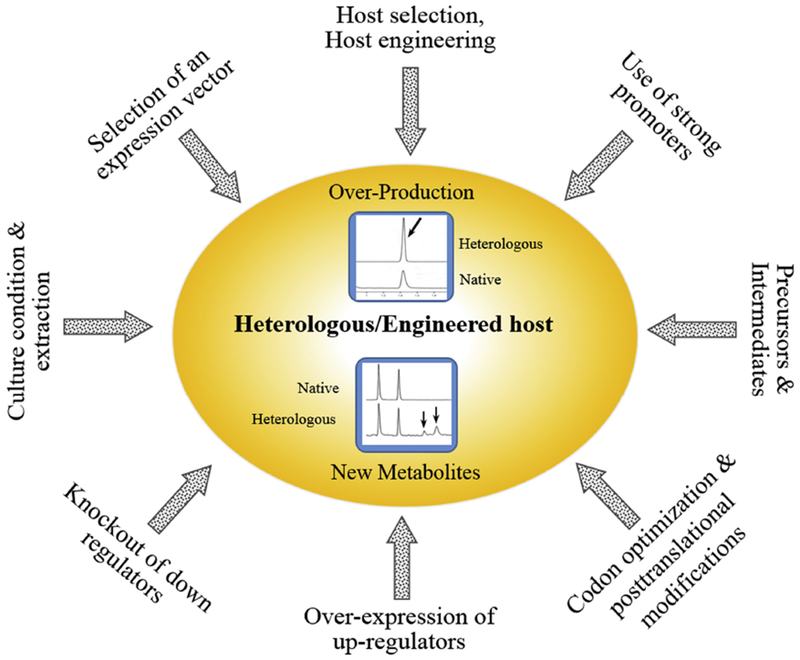
Major strategies and factors to be considered for better heterologous production of natural products or unnatural natural products via combinatorial biosynthesis.
Figure 2.
Figure 2.
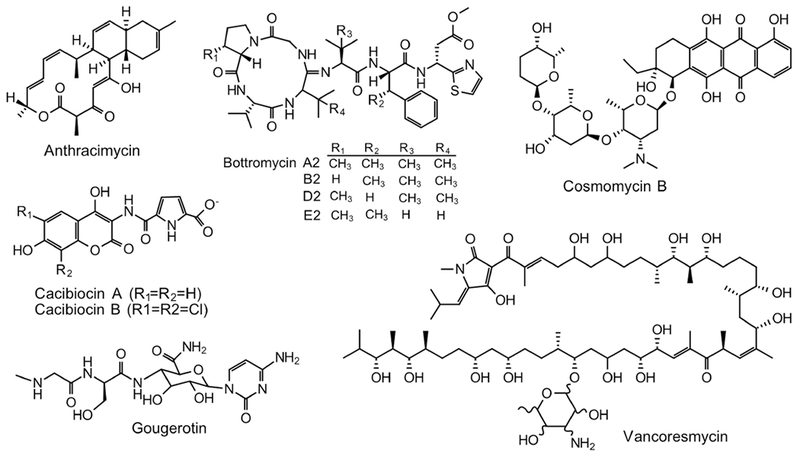
Chemical structures of representative natural products generated in the heterologous host S. coelicolor. Anthracimycin; Bottromycins; Cacibiocins; Cosmomycin B; Gougerotin; and Vancoresmycin.
Figure 3.
Figure 3.
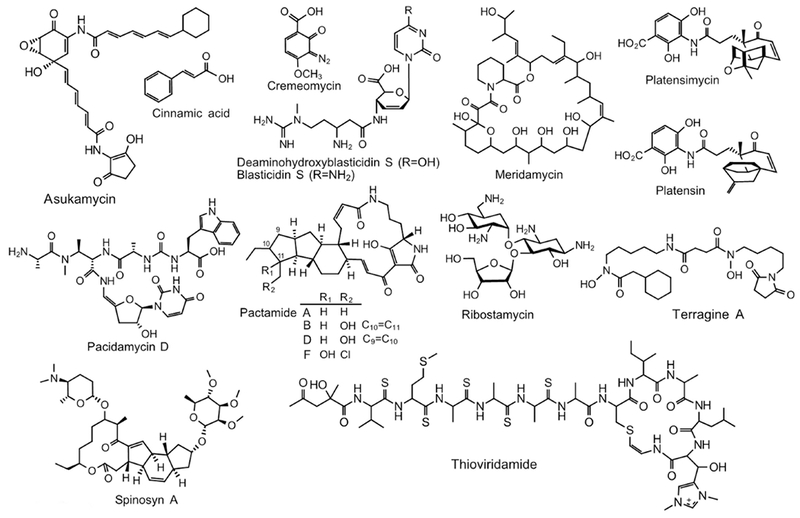
Chemical structures of representative natural products generated in the heterologous host S. lividans. Asukamycin; Cinnamic acid; Cremeomycin; Deaminohydroxyblasticidin S (blasticidin S is shown as the native compound); Meridamycin; Pacidamycin D; Pactamides; Platensimycin and Platensin; Ribostamycin; Spinosyn A; Terragine A; and Thioviridamide. C9=C10, C10=C11: double bond between the carbons.
Figure 4.
Figure 4.
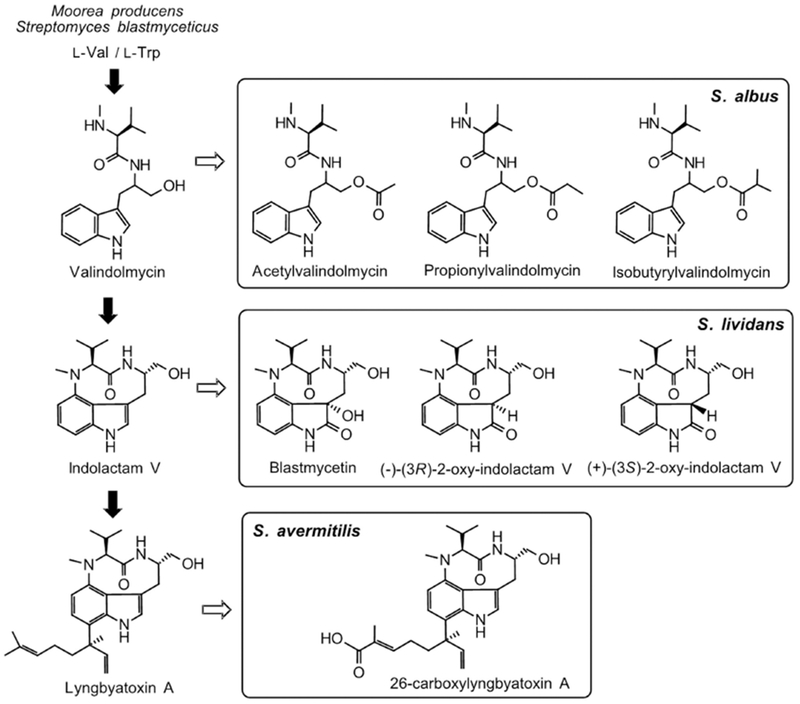
Heterologous generation of lyngbyatoxin A and its derivatives via host-specific interactions. The figure is adapted from Zhang et al., 2016a.
Figure 5.
Figure 5.
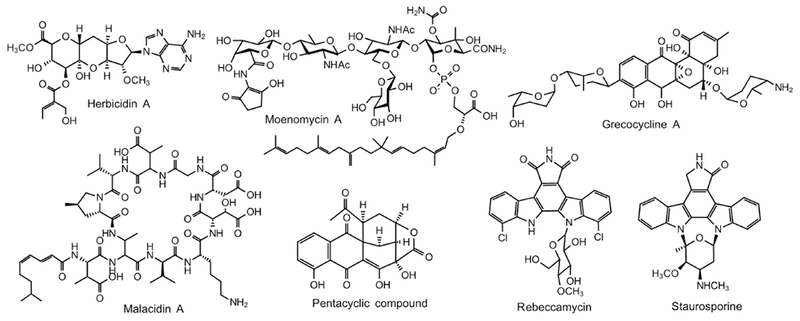
Chemical structures of representative natural products generated in the heterologous host S. albus. Grecocycline A; Herbicidin A; Malacidin A; Moenomycin A; Rebeccamycin and Staurosporine; and the pentacyclic ring compound with a new scaffold.
Figure 6.
Figure 6.
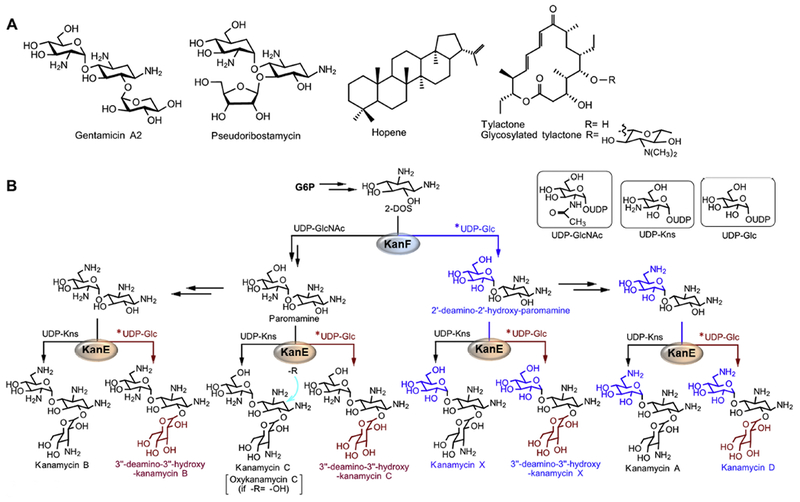
Heterologous production of natural products in the host S. venezuelae. (A) Chemical structures of representative natural products. Gentamicin A2; Hopene; Pseudoribostamycin; and Tylactone and its glycosylated derivative 5-O-mycaminosyl tylactone. (B) New kanamycins generated by the substrate flexibilities of the glycosyltranseferases KanF and KanE. New catalytic route of KanF or KanE is highlighted in blue or orange, respectively; and the corresponding new sugar donor is marked by an asterisk. 2-DOS, 2-deoxystreptamine; G6P, glucose-6-phosphate; UDP-Glc, UDP-d-glucose; UDP-GlcNAc, UDP-N-acetlyglucosamine; UDP-Kns, UDP-d-kanosamine.
Figure 7.
Figure 7.
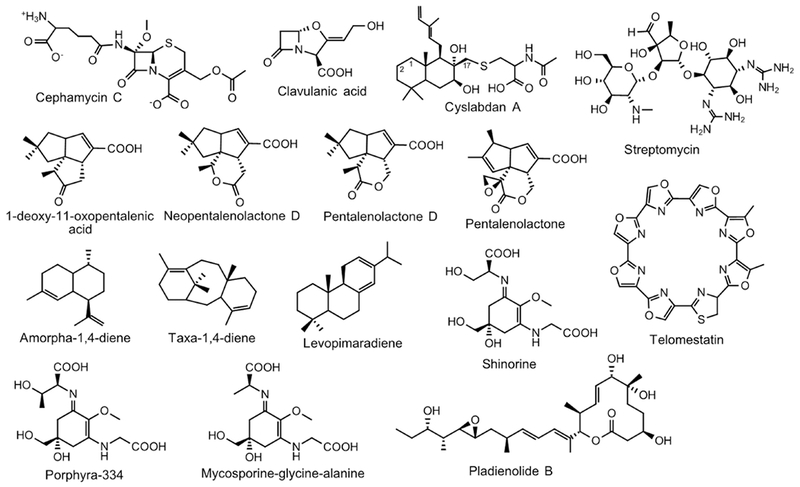
Chemical structures of representative natural products generated in the heterologous host S. avermitilis. 1-deoxy-11-oxopentalenic acid; Amorpha-1,4-diene; Cephamycin C; Clavulanic acid; Cyslabdan A; Levopimaradine; Mycosporine-glycine-alanine; Mycosporine-glycine-serine (Shinorine); Mycosporine-glycine-threonine (Porphyra-334); Neopentalenolactone D; Pentalenolactone D; Pentalenolactone; Pladienolide B; Streptomycin; Taxa-1,4-diene; and Telomestatin.

References

    1. Alexander DC, and Jensen SE, 1998. Investigation of the Streptomyces clavuligerus cephamycin C gene cluster and its regulation by the CcaR protein. J. Bacteriol. 180(16), 4068–4079. - PMC - PubMed
    1. Alt S, and Wilkinson B, 2015. Biosynthesis of the novel macrolide antibiotic anthracimycin. ACS Chem. Biol. 10(11), 2468–2479. - PubMed
    1. Amagai K, Ikeda H, Hashimoto J, Kozone I, Izumikawa M, Kudo F, et al., 2017. Identification of a gene cluster for telomestatin biosynthesis and heterologous expression using a specific promoter in a clean host. Sci. Rep. 7(1), 3382. - PMC - PubMed
    1. Awakawa T, Zhang L, Wakimoto T, Hoshino S, Mori T, Ito T, Ishikawa J, Tanner ME, and Abe I, 2014. A methyltransferase initiates terpene cyclization in teleocidin B biosynthesis. J. Am. Chem. Soc, 136(28), 9910–9913. - PubMed
    1. Balskus EP, and Walsh CT, 2010. The genetic and molecular basis for sunscreen biosynthesis in cyanobacteria. Science 329(5999), 1653–1656. - PMC - PubMed

Publication types

MeSH terms

LinkOut - more resources