


An update on gastrointestinal endoscopy-associated infections and their contributing factors
- PMID: 30314500
- PMCID: PMC6182826
- DOI: 10.1186/s12941-018-0289-2
An update on gastrointestinal endoscopy-associated infections and their contributing factors
Abstract
Introduction: During clinical use, gastrointestinal endoscopes are grossly contaminated with patient's native flora. These endoscopes undergo reprocessing to prevent infectious transmission upon future use. Endoscopy-associated infections and outbreaks have been reported, with a recent focus on the transmission of multi-drug resistant organisms. This review aims to provide an update on endoscopy-associated infections, and the factors contributing to their occurrence.
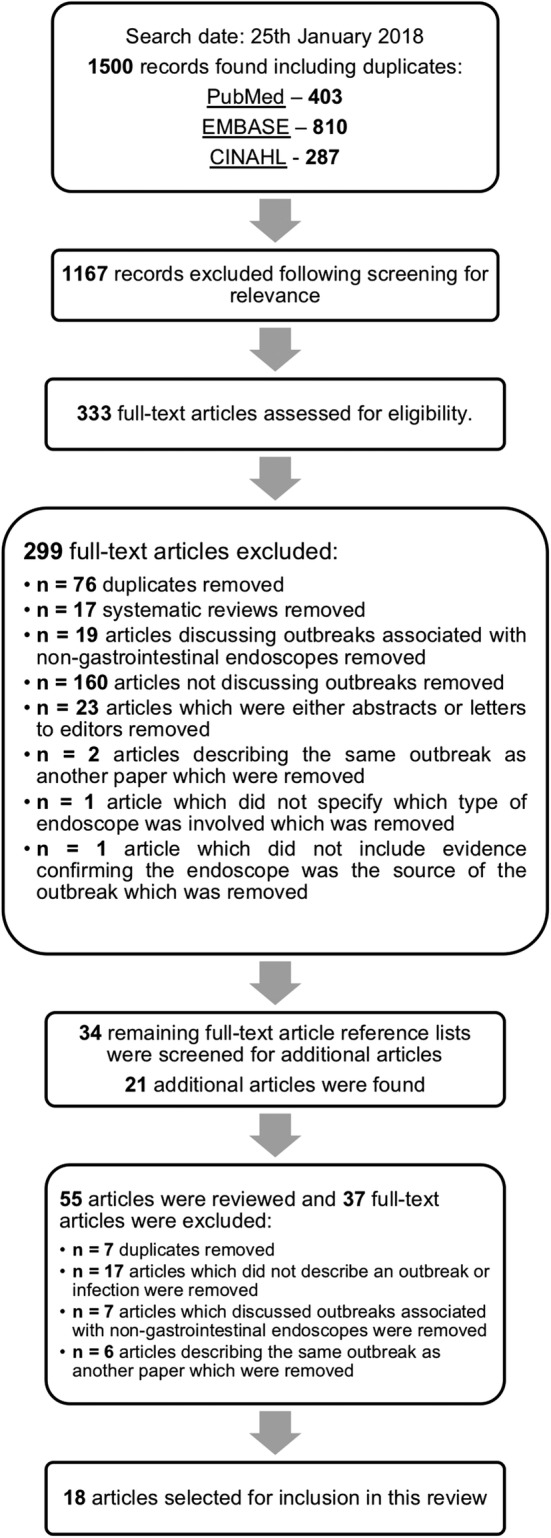
Methods: PubMed, ScienceDirect, and CINAHL were searched for articles describing gastrointestinal endoscopy-associated infections and outbreaks published from 2008 to 2018. Factors contributing to their occurrence, and the outcomes of each outbreak were also examined.
Results: This review found 18 articles, 16 of which described duodenoscope-associated infections, and the remaining two described colonoscope- and gastroscope-associated infection respectively. Outbreaks were reported from the United States, France, China, Germany, the Netherlands and the United Kingdom. The causative organisms reported were Klebsiella pneumoniae, Pseudomonas aeruginosa, Escherichia coli and Salmonella enteritidis.
Conclusions: A number of factors, including lapses in reprocessing, biofilm formation, endoscope design issues and endoscope damage, contribute to gastrointestinal endoscopy associated infection. Methods of improving endoscope reprocessing, screening for contamination and evaluating endoscope damage may be vital to preventing future infections and outbreaks.
Figures
References
-
- Gastroenterological Society of Australia (GESA). Infection control in endoscopy consenus statements. In: Australian gastroenterology week (AGW) 2017, Queensland, Australia; 2017.
Publication types
MeSH terms
LinkOut - more resources
Full Text Sources
Medical
