


Elevated concentrations of urinary triclocarban, phenol and paraben among pregnant women in Northern Puerto Rico: Predictors and trends
- PMID: 30316544
- PMCID: PMC6361519
- DOI: 10.1016/j.envint.2018.08.020
Elevated concentrations of urinary triclocarban, phenol and paraben among pregnant women in Northern Puerto Rico: Predictors and trends
Abstract
Background: Understanding important sources and pathways of exposure to common chemicals known or suspected to impact human health is critical to eliminate or reduce the exposure. This is particularly important in areas such as Puerto Rico, where residents have higher exposures to numerous chemicals, as well as higher rates of many adverse health outcomes, compared to the mainland US.
Objective: The aim of this study was to assess distributions, time trends, and predictors of urinary triclocarban, phenol, and paraben biomarkers measured at multiple times during pregnancy among women living in Northern Puerto Rico.
Methods: We recruited 1003 pregnant women between years 2010 and 2016 from prenatal clinics and collected urine samples and questionnaire data on personal care product use at up to three separate visits, between 16 and 28 weeks gestation. Urine samples were analyzed for triclocarban, seven phenols and four parabens: 2,4-dichlorophenol, 2,5-dichlorophenol, benzophenone-3, bisphenol A (BPA), bisphenol S (BPS), bisphenol F, triclosan, butylparaben, ethylparaben, methylparaben, and propylparaben.
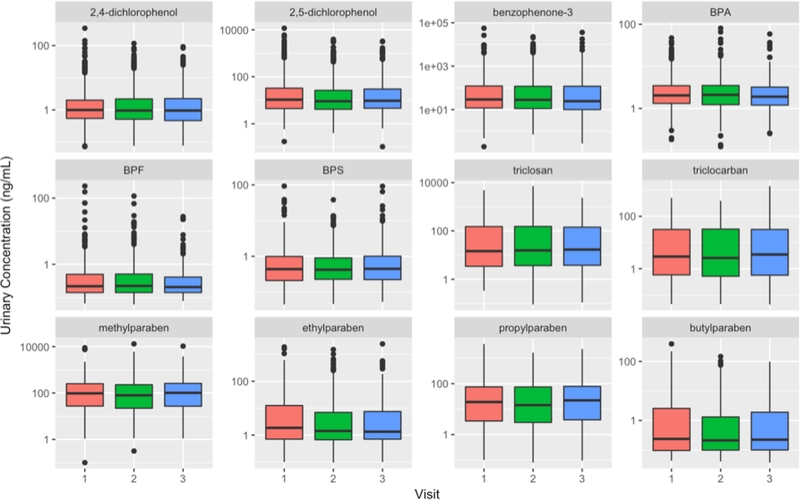
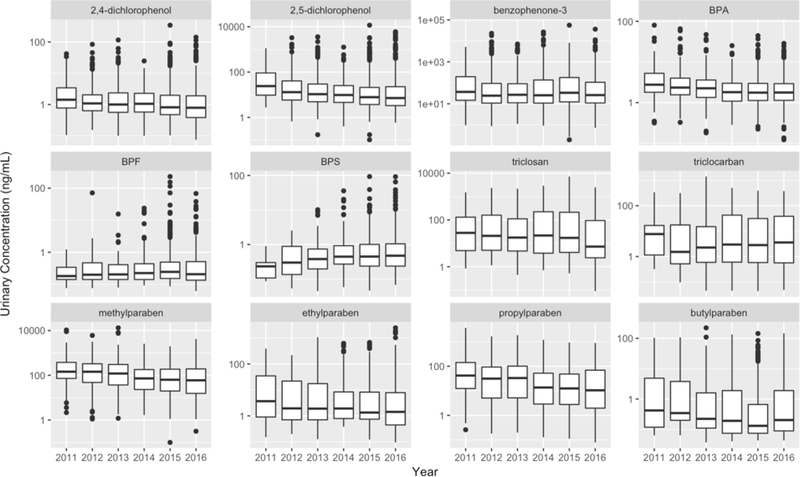
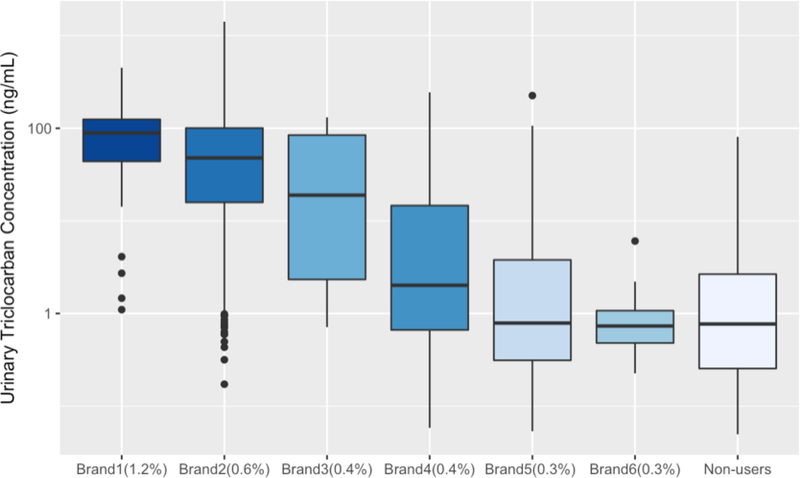
Results: Detectable triclocarban, phenol and paraben concentrations among pregnant women were prevalent and tended to be higher than levels measured in women of reproductive age from the general US population, especially triclocarban, which had a median concentration 37 times higher in Puerto Rico participants (2.6 vs 0.07 ng/mL). A decreasing temporal trend was statistically significant for urine concentrations of BPA during the study period, while the BPA substitute BPS showed an increasing temporal trend. Significant and positive associations were found between biomarker concentrations with the products use in the past 48-h (soap, sunscreen, lotion, cosmetics). There was an increasing trend of triclocarban/triclosan urinary concentrations with increased concentrations of triclocarban/triclosan listed as the active ingredient in the bar soap/liquid soap products reported being used.
Conclusion: Our results suggest several potential exposure sources to triclocarban, phenols, and parabens in this population and may help inform targeted approaches to reduce exposure.
Keywords: Antimicrobials; Endocrine disruptors; Exposure assessment; Human biomonitoring; Personal care products; Pregnancy.
Copyright © 2018. Published by Elsevier Ltd.
Figures
References
-
- Allmyr M, Adolfsson-Erici M, McLachlan MS, Sandborgh-Englund G. 2006. Triclosan in plasma and milk from Swedish nursing mothers and their exposure via personal care products. Sci Total Environ 372:87–93. - PubMed
-
- Bhargava HN, Leonard PA. 1996. Triclosan: Applications and safety. Am J Infect Control 24:209–218. - PubMed
Publication types
MeSH terms
Substances
Grants and funding
LinkOut - more resources
Full Text Sources
Medical
Miscellaneous
