. 2018 Oct 13;23(10):2630.
doi: 10.3390/molecules23102630.

Structure-Based Identification of Potent Natural Product Chemotypes as Cannabinoid Receptor 1 Inverse Agonists

Affiliations

Structure-Based Identification of Potent Natural Product Chemotypes as Cannabinoid Receptor 1 Inverse Agonists

Pankaj Pandey et al. Molecules. .

Abstract

Natural products are an abundant source of potential drugs, and their diversity makes them a rich and viable prospective source of bioactive cannabinoid ligands. Cannabinoid receptor 1 (CB1) antagonists are clinically established and well documented as potential therapeutics for treating obesity, obesity-related cardiometabolic disorders, pain, and drug/substance abuse, but their associated CNS-mediated adverse effects hinder the development of potential new drugs and no such drug is currently on the market. This limitation amplifies the need for new agents with reduced or no CNS-mediated side effects. We are interested in the discovery of new natural product chemotypes as CB1 antagonists, which may serve as good starting points for further optimization towards the development of CB1 therapeutics. In search of new chemotypes as CB1 antagonists, we screened the in silico purchasable natural products subset of the ZINC12 database against our reported CB1 receptor model using the structure-based virtual screening (SBVS) approach. A total of 18 out of 192 top-scoring virtual hits, selected based on structural diversity and key protein⁻ligand interactions, were purchased and subjected to in vitro screening in competitive radioligand binding assays. The in vitro screening yielded seven compounds exhibiting >50% displacement at 10 μM concentration, and further binding affinity (Ki and IC50) and functional data revealed compound 16 as a potent and selective CB1 inverse agonist (Ki = 121 nM and EC50 = 128 nM) while three other compounds-2, 12, and 18-were potent but nonselective CB1 ligands with low micromolar binding affinity (Ki). In order to explore the structure⁻activity relationship for compound 16, we further purchased compounds with >80% similarity to compound 16, screened them for CB1 and CB2 activities, and found two potent compounds with sub-micromolar activities. Most importantly, these bioactive compounds represent structurally new natural product chemotypes in the area of cannabinoid research and could be considered for further structural optimization as CB1 ligands.

Keywords: cannabinoid receptors; docking; radioligand binding assay; structure-based virtual screening; virtual screening.


Conflict of interest statement

The authors declare no conflict of interest. The funders had no role in the design of the study; in the collection, analyses, or interpretation of data; in the writing of the manuscript, or in the decision to publish the results.

Figures
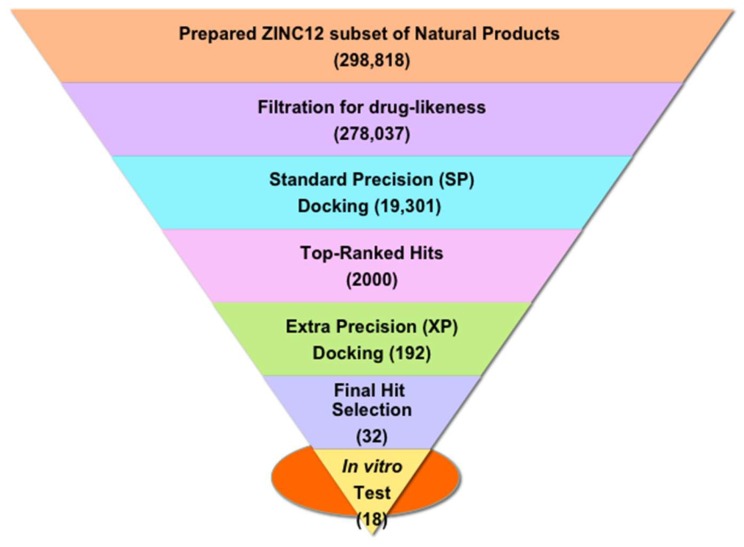
Figure 1
Figure 1
The workflow used for protein structure-based virtual screening in this study. The number of compounds obtained at each step of virtual screening is shown in parentheses.
Figure 2
Figure 2
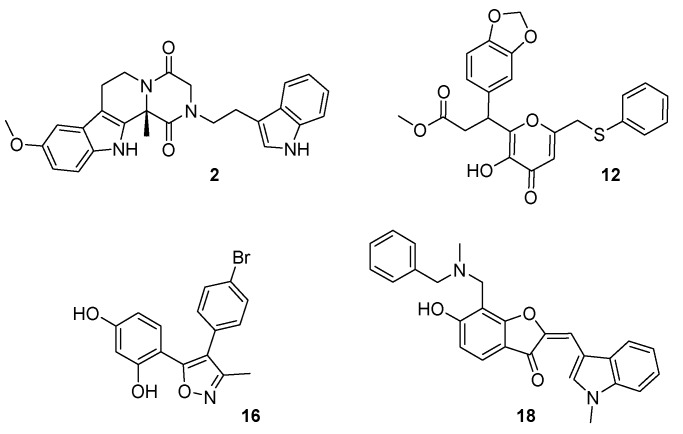
Chemical structures of the four molecules newly identified as cannabinoid (CB) ligands.
Figure 3
Figure 3
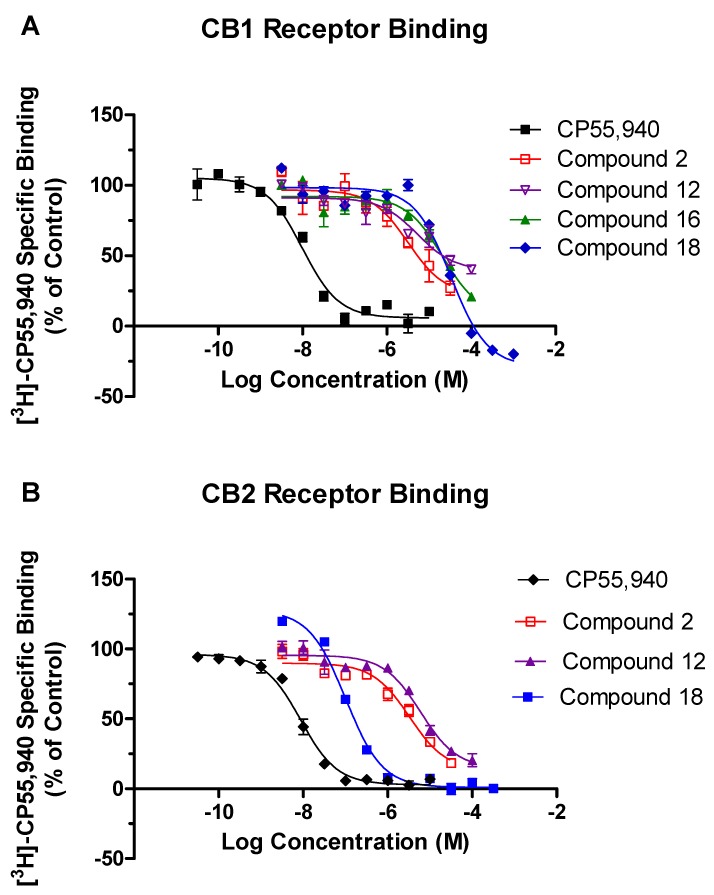
The binding displacement curves obtained for compounds 2, 12, 16, and 18 for the CB1 receptor (A) and CB2 receptor (B) in the cannabinoid radioligand binding assay. CP55,940 was used as a positive control.
Figure 4
Figure 4
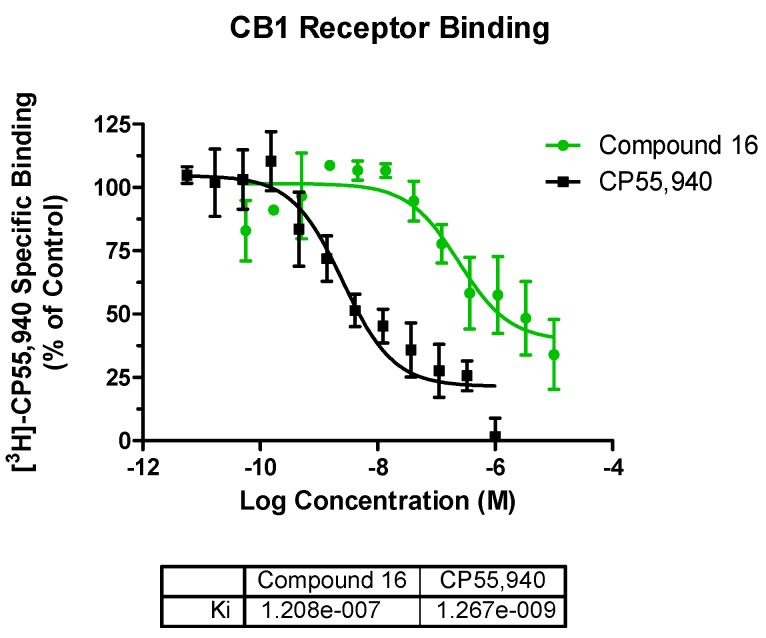
The binding displacement curves obtained when 16 was rescreened in the cannabinoid receptor 1 radioligand binding assay. CP55,940 was used as a positive control.
Figure 5
Figure 5
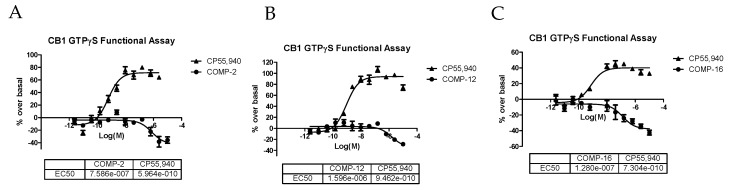
GTPγS functional curves for the CB1 receptor of compounds 2 (A), 12 (B), and 16 (C).
Figure 6
Figure 6
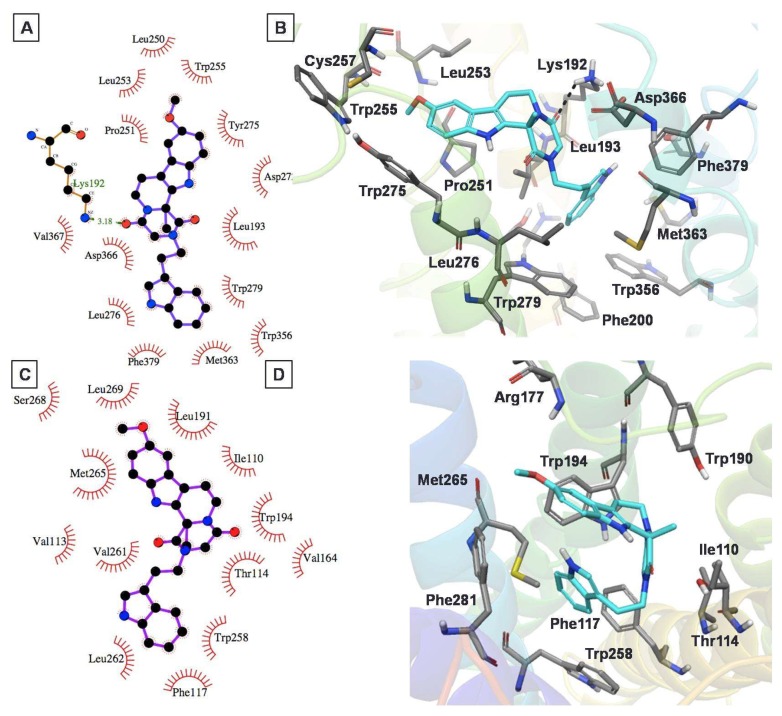
The putative binding mode for compound 2 into the CB1 (A,B) and CB2 (C,D) receptor models. Two-dimensional interaction views are shown on the left, while three-dimensional interaction views are shown on the right (ligand (cyan colored carbons) and protein binding site residues (dark grey colored carbons) are shown as sticks). The nonpolar hydrogens are not shown, for clarity.
Figure 7
Figure 7
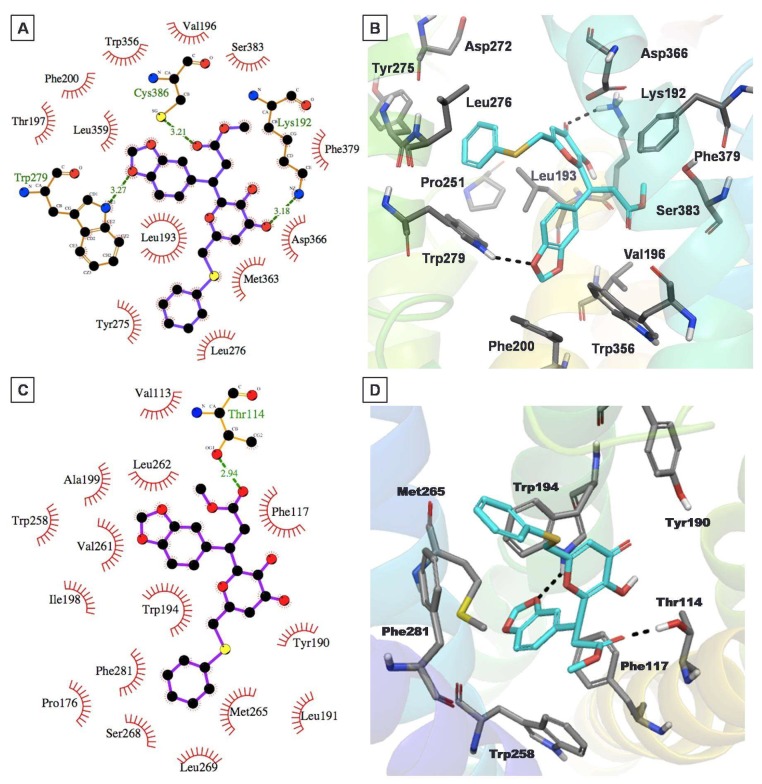
The putative binding mode for compound 12 into the CB1 (A,B) and CB2 (C,D) receptor models. Two-dimensional interaction views are shown on the left, while three-dimensional interaction views are shown on the right (ligand (cyan colored carbons) and protein binding site residues (dark grey colored carbons) are shown as sticks). The nonpolar hydrogens are not shown, for clarity.
Figure 8
Figure 8
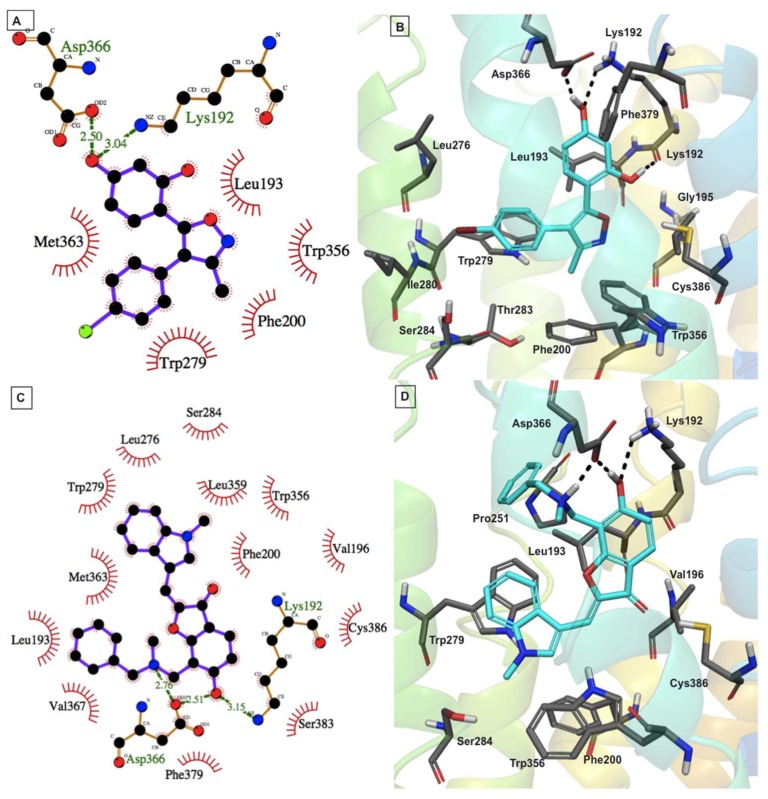
Putative binding mode of compounds 16 (A,B) and 18 (C,D) with the CB1 model. Two-dimensional interaction views are shown on the left, while three-dimensional interaction views are shown on the right (ligand (cyan colored carbons) and protein binding site residues (dark grey colored carbons) are shown as sticks). The nonpolar hydrogens are not shown, for clarity.
Figure 9
Figure 9
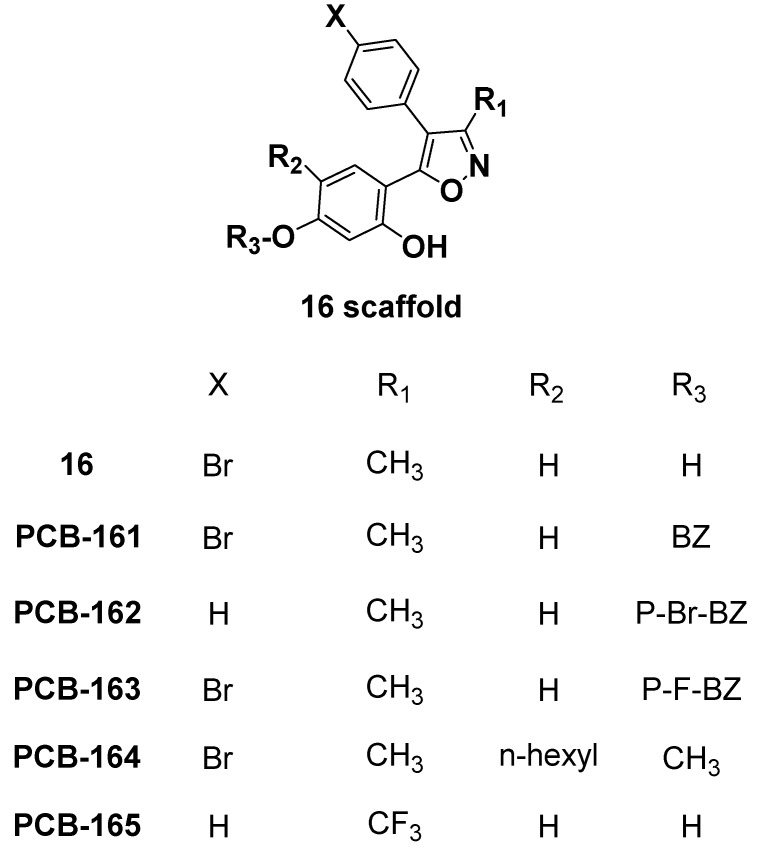
The analogs of compound 16.
Figure 10
Figure 10
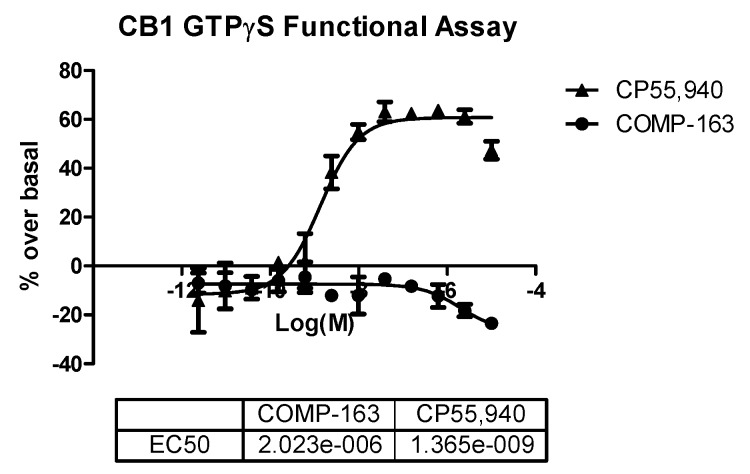
GTPγS functional curves for the CB1 receptor of compound PCB-163 (abbreviated as COMP-163).
Figure 11
Figure 11
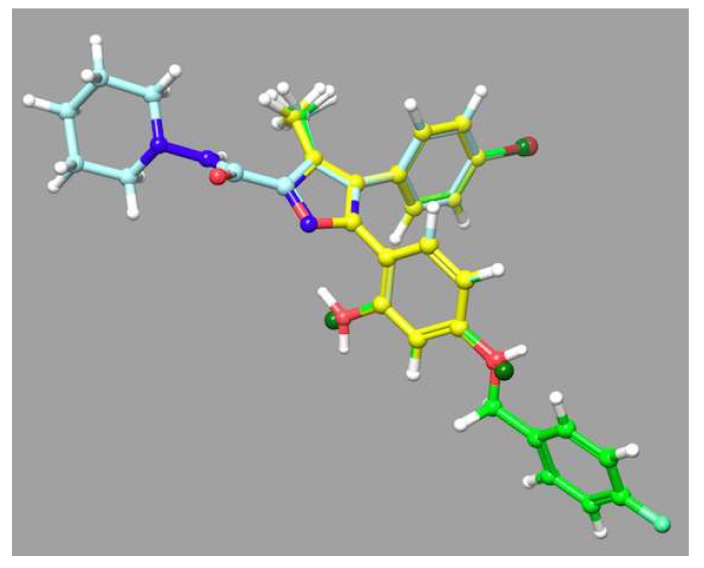
Overlay representation of compounds 16 (carbon in yellow) and PCB-163 (carbon in green) with rimonabant (carbon in light blue).

References

    1. Stevens R.C., Cherezov V., Katritch V., Abagyan R., Kuhn P., Rosen H., Wuthrich K. The GPCR Network: A large-scale collaboration to determine human GPCR structure and function. Nat. Rev. Drug Discov. 2013;12:25–34. doi: 10.1038/nrd3859. - DOI - PMC - PubMed
    1. Hauser A.S., Attwood M.M., Rask-Andersen M., Schiöth H.B., Gloriam D.E. Trends in GPCR drug discovery: New agents, targets and indications. Nat. Rev. Drug Discov. 2017;16:829–842. doi: 10.1038/nrd.2017.178. - DOI - PMC - PubMed
    1. Howlett A.C., Barth F., Bonner T.I., Cabral G., Casellas P., Devane W.A., Felder C.C., Herkenham M., Mackie K., Martin B.R., et al. International Union of Pharmacology. XXVII. Classification of cannabinoid receptors. Pharmacol. Rev. 2002;54:161–202. doi: 10.1124/pr.54.2.161. - DOI - PubMed
    1. Ji T.H., Grossmann M., Ji I. G protein-coupled receptors. I. Diversity of receptor-ligand interactions. J. Biol. Chem. 1998;273:17299–17302. doi: 10.1074/jbc.273.28.17299. - DOI - PubMed
    1. Howlett A.C., Song C., Berglund B.A., Wilken G.H., Pigg J.J. Characterization of CB1 cannabinoid receptors using receptor peptide fragments and site-directed antibodies. Mol. Pharmacol. 1998;53:504–510. doi: 10.1124/mol.53.3.504. - DOI - PubMed

LinkOut - more resources