


Burden of Gastrointestinal Symptoms in the United States: Results of a Nationally Representative Survey of Over 71,000 Americans
- PMID: 30323268
- PMCID: PMC6453579
- DOI: 10.1038/s41395-018-0256-8
Burden of Gastrointestinal Symptoms in the United States: Results of a Nationally Representative Survey of Over 71,000 Americans
Abstract
Objectives: Digestive diseases account for >100 million ambulatory care visits annually in the U.S. Yet, comparatively less is known about the true burden of gastrointestinal (GI) symptoms in the general U.S.
Population: The aim of this study was to use data from the "National GI Survey"-a population-based audit of GI symptoms in >71,000 participants-to determine the prevalence and predictors of GI symptoms in community-dwelling Americans.
Methods: We conducted the National GI Survey using a mobile app called MyGiHealth, which employs a computer algorithm that systematically collects participants' GI symptoms. We recruited a nationally representative sample of Americans to complete the survey, which guided respondents through National Institutes of Health (NIH) GI Patient Reported Outcome Measurement Information System (PROMIS®) scales along with questions about relevant comorbidities and demographics. We measured the prevalence of GI symptoms in the past week and employed logistic regression to adjust for confounding.
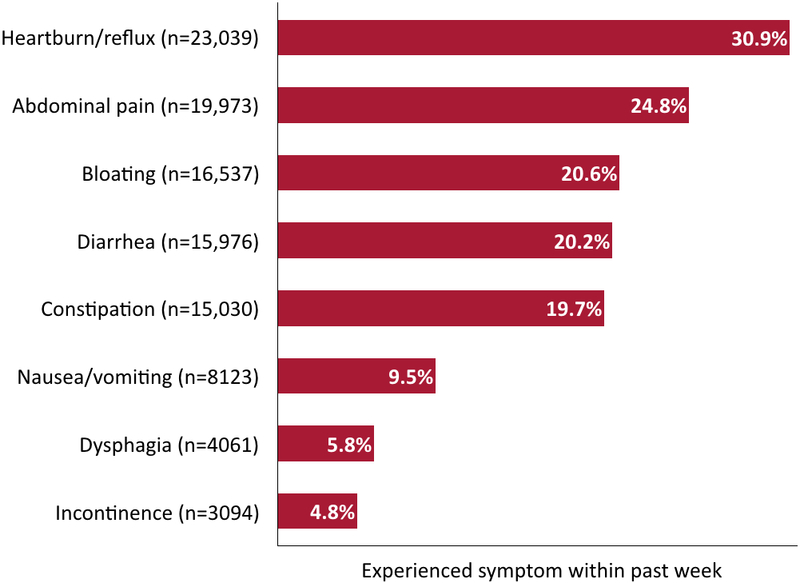
Results: Overall, 71,812 individuals completed the survey, of which 61% reported having had ≥1 GI symptom in the past week. The most commonly reported symptoms were heartburn/reflux (30.9%), abdominal pain (24.8%), bloating (20.6%), diarrhea (20.2%), and constipation (19.7%). Less common symptoms were nausea/vomiting (9.5%), dysphagia (5.8%), and bowel incontinence (4.8%). Females, non-Hispanic whites, and individuals who were younger, highly educated, and had medical comorbidities were more likely to have symptoms (all adjusted p < 0.05).
Conclusions: In this large population-based study that combined digital health technology with NIH PROMIS questionnaires, we found that GI symptoms are highly prevalent, as nearly two thirds of surveyed Americans are burdened by these symptoms.
Figures
References
-
- Everhart JE, Ruhl CE. Burden of digestive diseases in the United States part I: overall and upper gastrointestinal diseases. Gastroenterology 2009;136:376–86. - PubMed
-
- Everhart JE, Ruhl CE. Burden of digestive diseases in the United States part II: lower gastrointestinal diseases. Gastroenterology 2009;136:741–54. - PubMed
-
- Everhart JE, Ruhl CE. Burden of digestive diseases in the United States Part III: liver, biliary tract, and pancreas. Gastroenterology 2009;136:1134–44. - PubMed
Publication types
MeSH terms
Grants and funding
LinkOut - more resources
Full Text Sources
Miscellaneous
