


Economic Burden of Patients Treated for Higher-Risk Myelodysplastic Syndromes (HR-MDS) in Routine Clinical Care in the United States
- PMID: 30324565
- PMCID: PMC6533351
- DOI: 10.1007/s41669-018-0100-5
Economic Burden of Patients Treated for Higher-Risk Myelodysplastic Syndromes (HR-MDS) in Routine Clinical Care in the United States
Abstract
Background and objective: Significant clinical burden is associated with higher-risk myelodysplastic syndromes (HR-MDS); however, the economic burden has not been fully examined. We examined cost of care and healthcare utilization (HCU) in HR-MDS patients engaged in routine care in the United States (US).
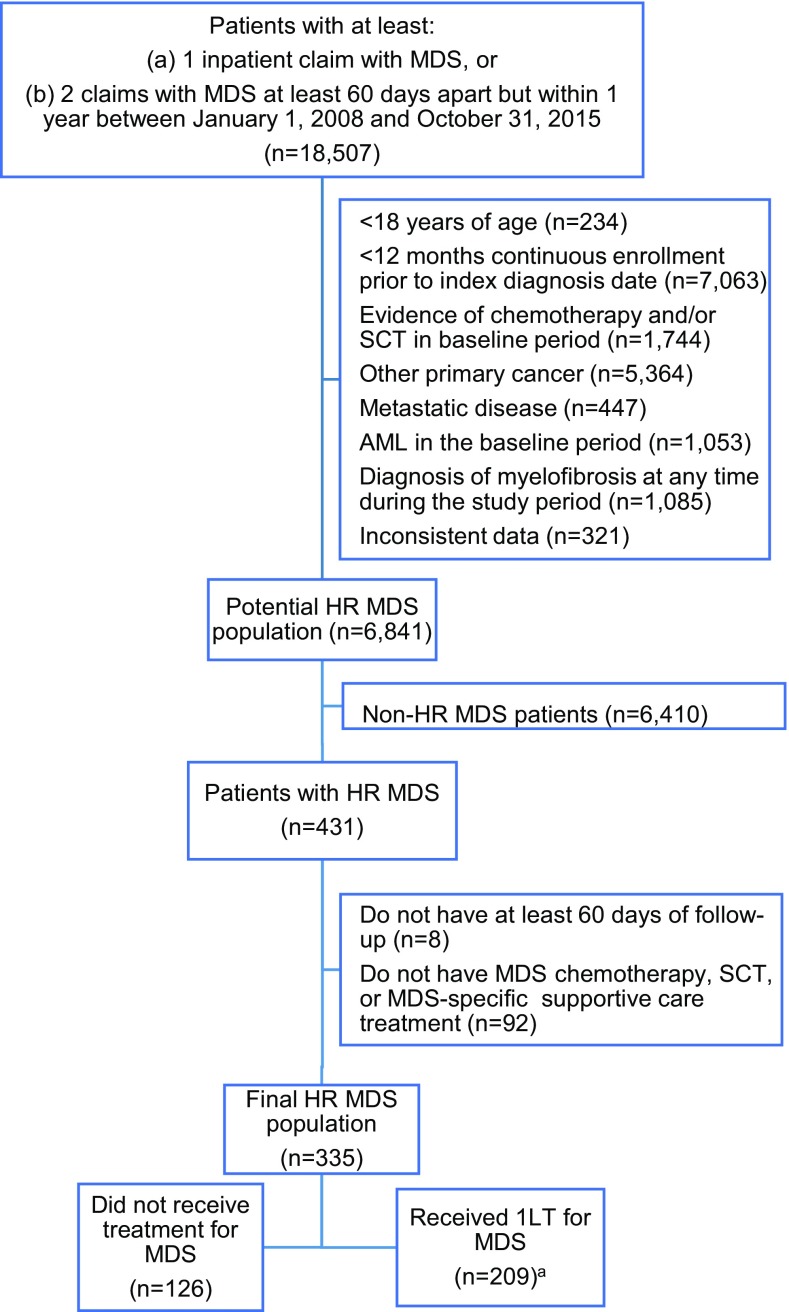
Methods: Adult US patients diagnosed with HR-MDS from 1/1/2008 to 10/31/2015 were identified from the Optum database. Patients were followed until death, progression to acute myeloid leukemia (AML), end of enrollment, or end of study (12/31/2015). Myelodysplastic syndrome (MDS)-related costs/HCU (including medical/pharmacy claims with a primary diagnosis of MDS, MDS-related treatment, or supportive care) and non-MDS-related costs/HCU were evaluated. Costs were calculated as per-patient per-month (PPPM) costs adjusted to 2015 US dollars.
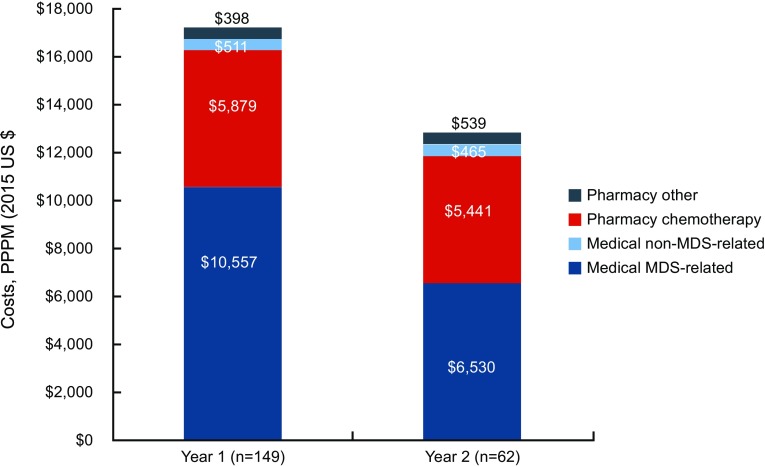
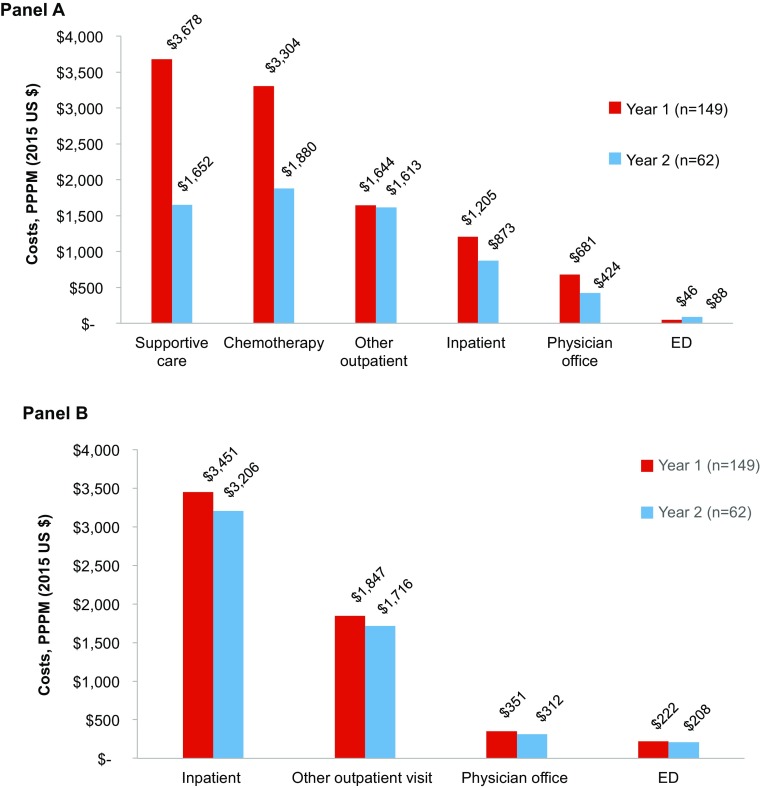
Results: Of the 209 HR-MDS patients included, median follow-up was 9.9 months (interquartile range 4.6-17.9), and 69.4% had at least one inpatient admission, 56.9% had at least one emergency department visit, and nearly all patients had at least one outpatient visit. Average PPPM costs over follow-up were $17,361; year 1 versus year 2 costs were higher ($17,337 vs $12,976) following HR-MDS diagnosis. The majority of costs were for MDS-related medical services ($10,327 PPPM). MDS-related medical PPPM costs decreased from $10,557 (year 1) to $6530 (year 2). The main drivers of MDS-related medical costs and the decrease in year 2 were chemotherapy and supportive care costs.
Conclusions: The economic burden of HR-MDS is considerable, particularly within the first year of diagnosis. Treatment/supportive care costs accounted for a significant portion of MDS-related costs. As HR-MDS treatment evolves, the economic impact and HCU need to be further investigated.
Conflict of interest statement
AG, JB, DF, and RF are employees of Takeda. HS, EF, MB, AO, and ME are employees of Xcenda, which has received research funding from Takeda for the conduct of this study and for the preparation of this manuscript.
Figures
References
-
- National Comprehensive Cancer Network. Myelodysplastic syndromes. V.1.2018. Fort Washington. https://www.nccn.org/professionals/physician_gls/pdf/mds.pdf. Accessed 4 October 2017.
LinkOut - more resources
Full Text Sources
Research Materials
Miscellaneous
