


Introduction and geographic availability of new antibiotics approved between 1999 and 2014
- PMID: 30325963
- PMCID: PMC6191083
- DOI: 10.1371/journal.pone.0205166
Introduction and geographic availability of new antibiotics approved between 1999 and 2014
Abstract
Background: Despite the urgent need for new, effective antibiotics, few antibiotics of value have entered the market during the past decades. Therefore, incentives have been developed to stimulate antibiotic R&D. For these incentives to be effective, geographic availability for recently approved antibiotics needs to be better understood. In this study, we analyze geographic availability and market introduction of antibiotics approved between 1999 and 2014.
Material and method: We identified antibiotics, considered new chemical entities (NCEs) for systemic use approved globally between 1999 and 2014, from national medicine agencies' lists of approved drugs, and data from the WHO Collaborating Center for Drug Statistics. Geographic availability was mapped using sales data from IQVIA, and analyzed with regards to class, indication, safety, and origin.
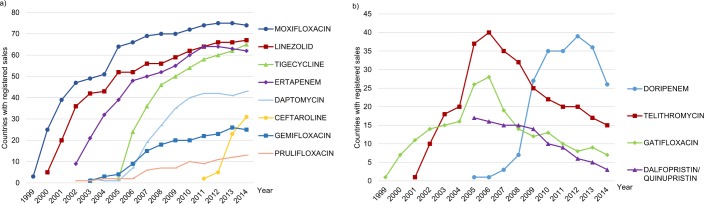
Results: Of the 25 identified NCEs, only 12 had registered sales in more than 10 countries. NCEs with the widest geographic availability had registered sales in more than 70 countries within a ten-year timeframe and 30 countries within a three-year timeframe, spreading across five different geographic regions and three country income classes. Half (52%) of the NCEs had an indication for infections caused by antibiotic- resistant bacteria, little diversity was seen regarding target pathogen and indication. Antibiotics originated from and/or marketed by companies from the US or Europe had greater geographic availability compared to Japanese antibiotics, which seldom reached outside of Asia. For 20 NCEs developers chose to fully or partially sublicense marketing rights to a number of companies of different sizes.
Conclusion: Our findings show great variation in geographic availability of antibiotics, indicating that availability in multiple regions and country income classes is possible, but rarely seen within a few years of market authorization. Sublicensing agreements between multiple companies was common practice. Moreover, differences were seen between countries regarding benefit/risk evaluations and company behavior. These findings could be a potential source of uncertainties, and create barriers to assure that working antibiotics are developed and made available according to public health needs.
Conflict of interest statement
We have the following interests. This research was partly funded by the DRIVE-AB Consortium, which aims to transform the way policymakers stimulate innovation, sustainable use, and equitable availability of antibiotics to meet unmet public health needs. DRIVE-AB is supported by the IMI Joint Undertaking under the DRIVE-AB grant agreement number 115618, the resources of which are composed of financial contribution from the European Union’s 7th Framework Programme and the European Federation of Pharmaceutical Industries and Associations companies’ in-kind contribution. There are no patents, products in development or marketed products to declare. This does not alter our adherence to all the PLOS ONE policies on sharing data and materials, as detailed online in the guide for authors.
Figures
References
-
- World Health Organization (WHO). Global action plan on antimicrobial resistance 2015 [Cited: 04 Oct 2018]. Available from: http://apps.who.int/iris/bitstream/handle/10665/193736/9789241509763_eng.... - PubMed
-
- Renwick MJ, Simpkin V, Mossialos E. Targeting innovation in antibiotic drug discovery and development. Health Policy Series of the European Observatory on Health Systems and Policies. 2016. - PubMed
Publication types
MeSH terms
Substances
Grants and funding
LinkOut - more resources
Full Text Sources
Medical
Miscellaneous
