. 2019 Jan:144:19-28.
doi: 10.1016/j.neuropharm.2018.10.013. Epub 2018 Oct 13.

Mechanisms underlying prelimbic prefrontal cortex mGlu3/mGlu5-dependent plasticity and reversal learning deficits following acute stress

Affiliations

Mechanisms underlying prelimbic prefrontal cortex mGlu3/mGlu5-dependent plasticity and reversal learning deficits following acute stress

Max E Joffe et al. Neuropharmacology. 2019 Jan.

Abstract

Stress can precipitate or worsen symptoms of many psychiatric illnesses. Dysregulation of the prefrontal cortex (PFC) glutamate system may underlie these disruptions and restoring PFC glutamate signaling has emerged as a promising avenue for the treatment of stress disorders. Recently, we demonstrated that activation of metabotropic glutamate receptor subtype 3 (mGlu3) induces a postsynaptic form of long-term depression (LTD) that is dependent on the activity of another subtype, mGlu5. Stress exposure disrupted this plasticity, but the underlying signaling mechanisms and involvement in higher-order cognition have not yet been investigated. Acute stress was applied by 20-min restraint and early reversal learning was evaluated in an operant-based food-seeking task. We employed whole-cell patch-clamp recordings of layer 5 prelimbic (PL)-PFC pyramidal cells to examine mGlu3-LTD and several mechanistically distinct mGlu5-dependent functions. Acute stress impaired both mGlu3-LTD and early reversal learning. Interestingly, potentiating mGlu5 signaling with the mGlu5 positive allosteric modulator (PAM) VU0409551 rescued stress-induced deficits in both mGlu3-LTD and reversal learning. Other aspects of PL-PFC mGlu5 function were not disrupted following stress; however, signaling downstream of mGlu5-Homer interactions, phosphoinositide-3-kinase (PI3K), Akt, and glycogen synthase kinase 3β was implicated in these phenomena. These findings demonstrate that acute stress disrupts early reversal learning and PL-PFC-dependent synaptic plasticity and that potentiating mGlu5 function can restore these impairments. These findings provide a framework through which modulating coordinated mGlu3/mGlu5 signaling may confer benefits for the treatment of stress-related psychiatric disorders.

Keywords: Prelimbic prefrontal cortex; Reversal learning; Stress; Synaptic plasticity; mGlu(3); mGlu(5).


Figures

Figure 1.
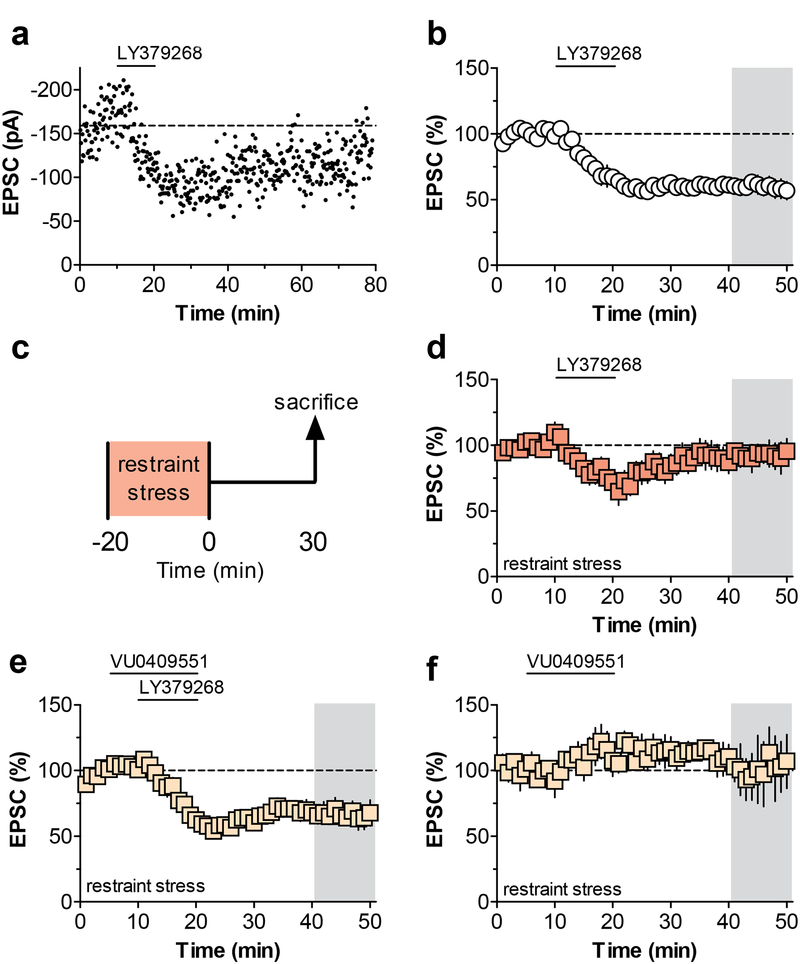
Figure 1.. Potentiating mGlu5 function rescues stress-induced deficits in mGlu3/mGlu5 plasticity.
(a) Representative experiment showing that LY379268, an orthosteric agonist for metabotropic glutamate (mGlu) receptor subtype 3 (mGlu3), induces long-term depression (LTD) of excitatory transmission onto pyramidal cells in the prelimbic prefrontal cortex (PL-PFC). (b) Summary of all control PL-PFC mGlu3-LTD recordings (60.5 ± 4.9% baseline, n/N = 9/8 cells/mice). (c) Schematic, acute restraint stress was applied 30 minutes before mice were sacrificed for electrophysiology. (d) Acute restraint impairs the induction of ex vivo LTD (93.4 ± 8.0% baseline, n/N = 7/6). (e) In slices from stress-exposed mice, application of an mGlu5 positive allosteric modulator, VU0409551, restores the expression of LTD (69.4 ± 5.6% baseline, n/N = 6/5). A one-way ANOVA revealed a main effect of treatment (F1,2 = 8.337; p = 0.0025) and Bonferonni post-tests confirmed the stress-induced impairment and rescue with VU0409551 bath application. (f) VU0409551 does not alter excitatory transmission by itself in slices from stress-exposed mice. (100.6 ± 13.8% baseline, n/N = 5/4). EPSC, excitatory postsynaptic current; LTD, long-term depression; mGlu3 and mGlu5, metabotropic glutamate receptor subtype 3 and 5; PL-PFC, prelimbic prefrontal cortex.
Figure 2.
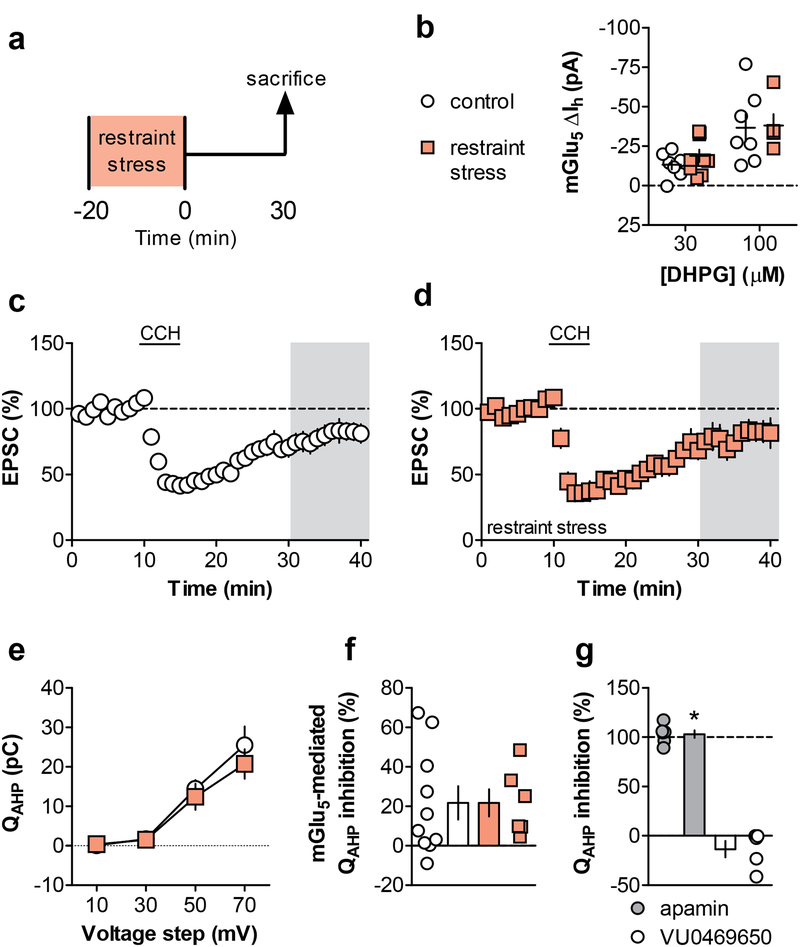
Figure 2.. Several mGlu5-dependent functions remain intact following acute stress.
(a) Schematic displaying acute stress exposure paradigm. Mice underwent 20 minutes of restraint stress and were sacrificed for electrophysiology 30 minutes later. (b) Inward currents induced by a threshold and high concentration of the orthosteric agonist, DHPG, were acquired in the presence of the metabotropic glutamate (mGlu) receptor subtype 1 (mGlu1) negative allosteric modulator VU0469650 and tetrodotoxin. These mGlu5-mediated currents were not different between controls (13.1 ± 3.0, 36.7 ± 8.7 pA, n/N = 7/3 cells/mice) and the restraint stress group (18.8 ± 3.9, 38.0 ± 7.1 pA, n/N = 5/3, 9/5). (c/d) mGlu5-dependent LTD was elicited with the muscarinic agonist carbachol (CCH). CCH-LTD was comparable between control (80.8 ± 6.5% baseline, n/N = 8/5) and restraint stress groups (78.6 ± 7.8% baseline, n/N = 6/3). (e) The charge transfer through small conductance potassium (SK) channels was determined as the charge transfer of the medium afterhyperpolarization (QAHP) following increasing voltage steps (F3,33 = 45.63, p < 0.0001). Baseline SK channel function was not altered following restraint stress (F1,11 = 0.36, n.s.). (f) mGlu5 activation inhibited SK channel function to a similar degree in control (21.7 ± 7.8% inhibition, n/N = 10/4) and restraint stress mice (21.7 ± 6.9% inhibition, n/N = 6/2). (g) Control experiments displaying that the selective SK channel inhibitor apamin completely blocked QAHP (103.1 ± 3.9% inhibition, n/N = 6/3, *: p < 0.0001 one-sample t-test vs. 0% inhibition), while VU0469650 exerted no effect by itself (−13.5 ± 8.2% inhibition, n/N = 5/3). CCH, carbachol; EPSC, excitatory postsynaptic current; LTD, long-term depression; mGlu1 and mGlu5, metabotropic glutamate receptor subtype 1 and 5; SK, small conductance potassium; QAHP, charge transfer of the medium afterhyperpolarization.
Figure 3.
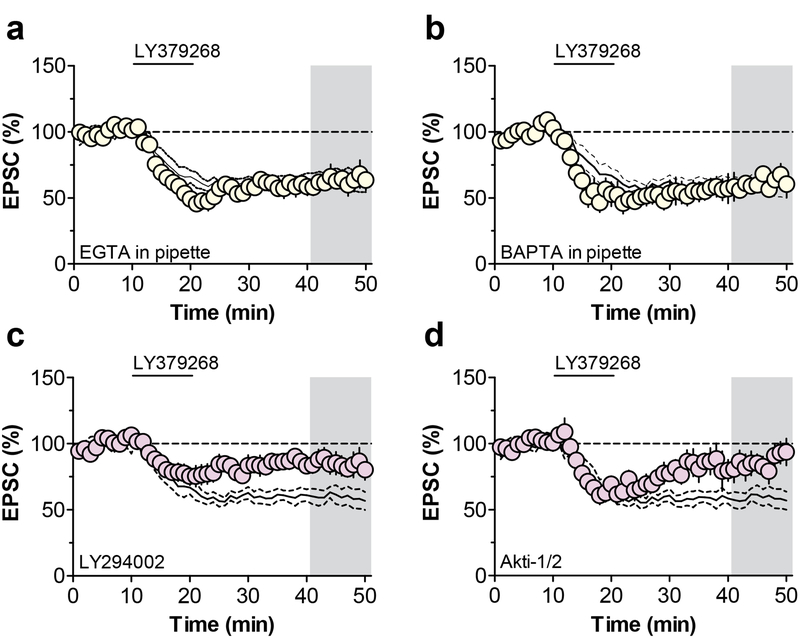
Figure 3.. mGlu3-LTD proceeds through PI3K-Akt signaling pathway.
(a) The divalent ion chelator EGTA was added to the patch pipette to quench Ca2+ signaling in the postsynaptic cell. This manipulation had no effect on the expression of metabotropic glutamate receptor subtype 3 (mGlu3)-dependent long-term depression (LTD) (62.1 ± 6.9% baseline, n/N = 7/4 cells/mice). Black lines in panels 3a-4d represent data from control experiments displayed in panel 1b. (b) The divalent ion chelator BAPTA was added to the patch pipette and did not affect mGlu3-LTD (59.9 ± 4.9% baseline, n/N = 5/3). (c) The phosphoinositide 3-kinase (PI3K) inhibitor LY294002 impaired the expression of mGlu3-LTD (85.7 ± 5.1% baseline, n/N = 8/6). (d) The Akt inhibitor Akti-1/2 blocked mGlu3-LTD (89.6 ± 11% baseline, n/N = 5/4). EPSC, excitatory postsynaptic current; LTD, long-term depression; mGlu3, metabotropic glutamate receptor subtype 3; PI3K, phosphoinositide 3-kinase.
Figure 4.
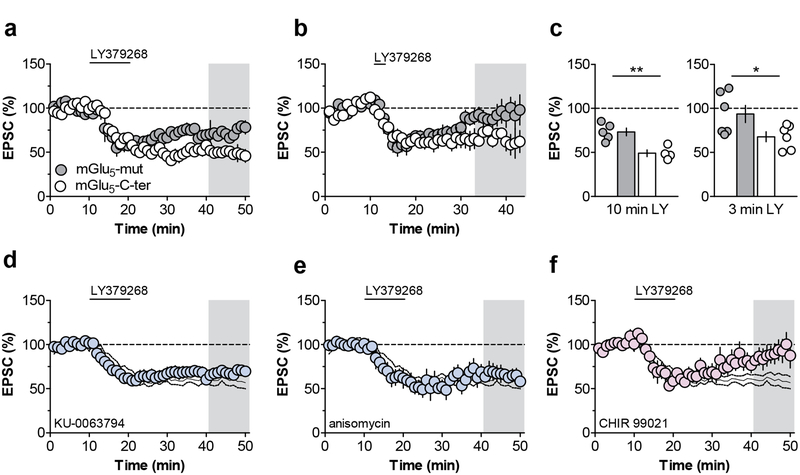
Figure 4.. mGlu3-LTD is modulated by mGlu5-Homer interactions and Glycogen synthase kinase 3.
(a) Inclusion of a peptide that blocks the interaction between metabotropic glutamate receptor subtype 5 (mGlu5) and Homer proteins (mGlu5-C-ter) in the patch pipette enhances mGlu3-LTD (49.0 ± 7.5% baseline, n/N = 4/2 cells/mice) relative to a control peptide (mGlu5-mut) that does not impair the mGlu5-Homer interaction (73.2 ± 4.3% baseline, n/N = 5/4). (b) Whole-cell infusion of mGlu5-C-ter generates LTD following threshold application of LY379268 (67.8 ± 5.6% baseline, n/N = 6/4), whereas inclusion of mGlu5-mut in the pipette has no effect (93.6 ± 9.8% baseline, n/N = 6/4). (c) Summary of the last 10 minutes of the recordings from the timecourse experiments (*: p < 0.05, **: p < 0.01, t-tests). (d) The mechanistic target of rapamycin inhibitor KU-0063794 does not affect mGlu3-LTD (69.2 ± 5.2% baseline, n/N = 7/5). Black lines in panels 4d-5f denote control experiments from figure 1b. (e) Blocking protein translation with anisomycin does not impair mGlu3-LTD (62.7 ± 6.4% baseline, n/N = 6/6). (f) The glycogen synthase kinase 3 inhibitor CHIR 99203 blocks the induction of LTD (89.6 ± 11.0% baseline, n/N = 5/5). EPSC, excitatory postsynaptic current; LTD, long-term depression; mGlu5, metabotropic glutamate receptor subtype 5.
Figure 5.
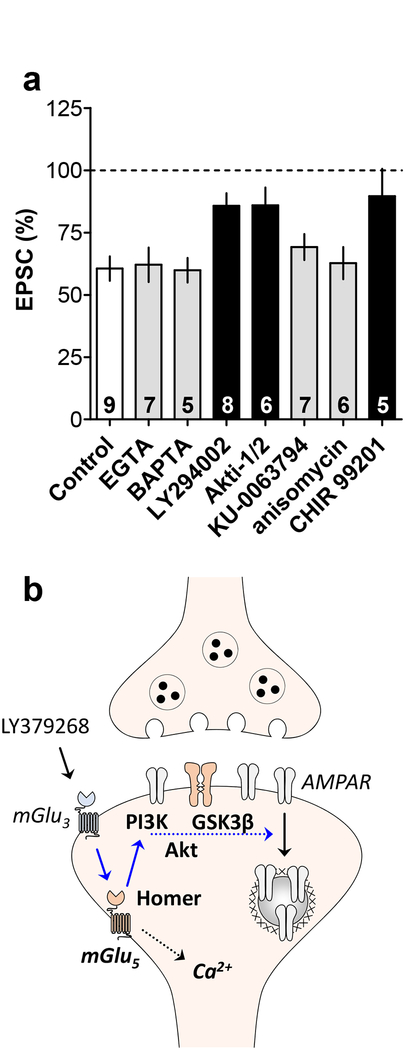
Figure 5.. Mechanisms of mGlu3-LTD in the prelimbic prefrontal cortex.
(a) Long-term depression (LTD) of excitatory transmission in the prelimbic prefrontal cortex (PL-PFC) was induced by bath application of LY379268, an orthosteric agonist at metabotropic glutamate (mGlu) receptor subtype 3 (mGlu3). In previous publications (Di Menna et al, 2018; Joffe et al, 2017), we have demonstrated that this LTD requires the activity of mGlu3 and mGlu5. Here, we demonstrate that PL-PFC mGlu3-LTD is not impaired by manipulations that sequester intracellular Ca2+ (EGTA and BAPTA) or block the mechanistic target of rapamycin and protein translation (KU-0063794 and anisomycin). Instead, PL-PFC mGlu3-LTD is blocked by a Phosphoinositide-3-kinase (PI3K) inhibitor (LY294002), an Akt inhibitor (Akti-1/2), and a Glycogen synthase kinase 3 inhibitor (CHIR 99201). The number in each bar represents the number of cells per experiment. A one-way ANOVA revealed a main effect of treatment (F1,7 = 3.957; p = 0.0019). Grey bars denote no significant difference from Control. Black bars denote p < 0.05, Bonferonni post-test vs. Control. (b) Conclusions drawn from the present studies are displayed in bold and findings from two previous papers are italicized. While activation of mGlu3 potentiates mGlu5-mediated Ca2+ mobilization, the present findings suggest that is not related to LTD. Instead, mGlu3-LTD is modulated by interactions between mGlu5 and Homer proteins and requires signaling through PI3K, Akt, and GSK3. This signaling culminates with the dynamin-dependent internalization of AMPA receptors and a long-term decrease in postsynaptic quantal size and content. EPSC, excitatory postsynaptic current; GSK3β, glycogen synthase kinase 3β LTD, long-term depression; mGlu3 and mGlu5, metabotropic glutamate receptor subtype 3 and 5; PI3K, phosphoinositide 3-kinase; PL-PFC, prelimbic prefrontal cortex.
Figure 6.
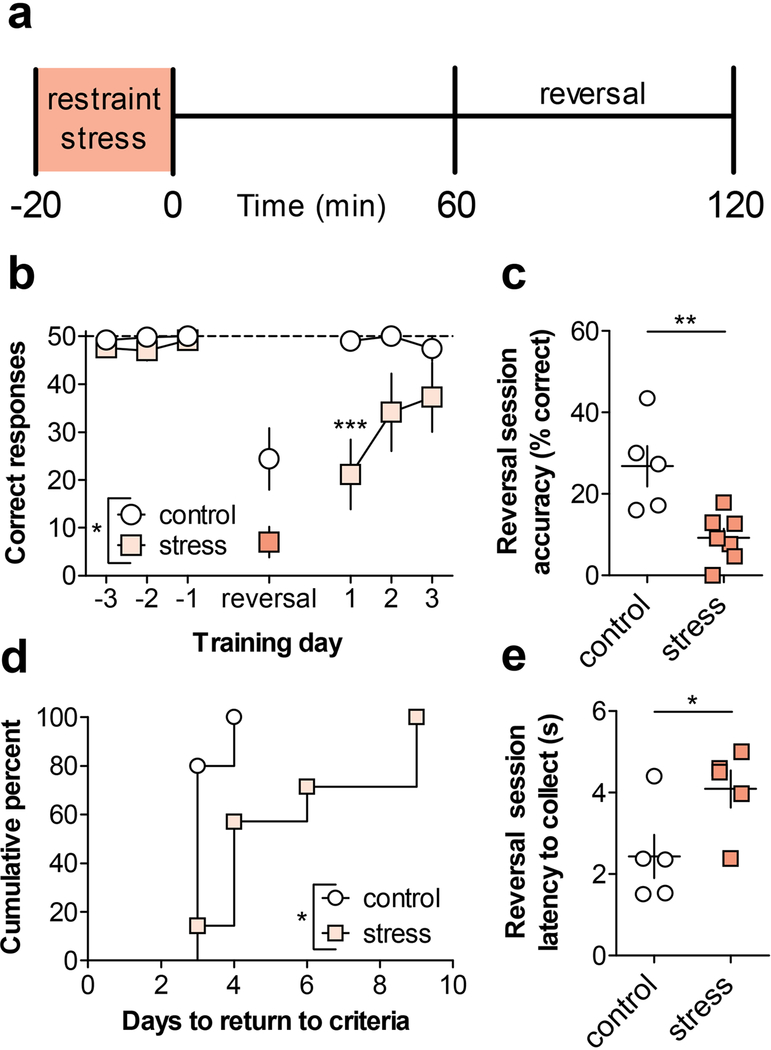
Figure 6.. Acute restraint stress impairs early reversal learning.
(a) Schematic. Mice were trained in an operant conditioning apparatus to holepoke on a continuous schedule of reinforcement for liquid food. On the day of testing only, some mice underwent a 20-minute restraint stress exposure. One hour after the stress terminated, mice underwent an operant test session where the active holepoke designation was reversed. (b) There was a main effect of stress (F1,10 = 7.07, p < 0.03), session (F6,60 = 18.62, p < 0.001), and an interaction (F6,60 = 3.3, p < 0.01) on performance across training, reversal, and follow-up sessions. Post-tests revealed a strong trend towards a decrease in the number of correct holepoke responses on the day of the reversal (7 ± 3 vs. 24 ± 7 holepokes, N = 5–7 mice, 95% confidence interval of difference: [−35.6, 0.8] Bonferonni post-test). In addition, this deficit carried over until the following day, when the mice were not stressed before the initiation of the task (21 ± 7 vs. 49 ± 1 holepokes, ***: p < 0.001, Bonferonni post-test). (c) Stressed mice exhibited decreased accuracy during the reversal session (9.3 ± 2.2% vs. 26.8 ± 5.0% correct holepokes, **: p<0.01, t-test). (d) Stressed mice required more days to reach criteria following the reversal than controls (χ2 = 5.4, df=1, p < 0.02, Mantel-Cox Test). (e) Stressed mice displayed a longer latency to retrieve the food reward than controls during the reversal session (2.4 ± 0.5 vs. 4.1 ± 0.5s, *: p<0.05, t-test).
Figure 7.
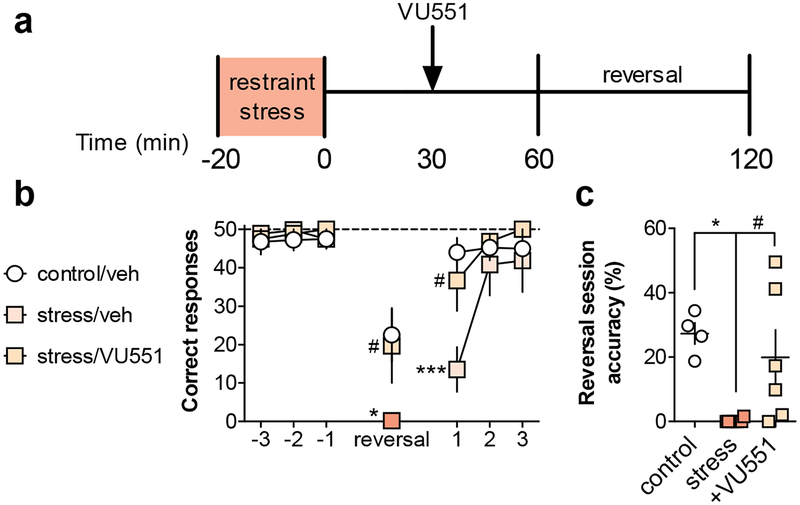
Figure 7.. Potentiating mGlu5 function rescues stress-induced deficit in early reversal learning.
(a) Schematic for behavioral experiments. Mice were trained in an operant conditioning apparatus to holepoke on a continuous schedule of reinforcement for liquid food. On the day of testing only, some mice underwent a 20-minute restraint stress exposure. One hour after the stress terminated, mice underwent an operant test session where the active holepoke designation was reversed. VU0409551 or vehicle was administered 30-minutes after the stress and before the reversal test session. (b) There was a trend effect of treatment (F2,13 = 2.9, p < 0.1), a significant main effect of session (F6,78 = 26.03, p < 0.001), and a significant interaction (F12,78 = 2.5, p < 0.01) on performance across training, reversal, and post-test sessions. Post-tests revealed that mice exposed to acute restraint exhibited a decrease in the number of correct holepoke responses on the day of the holepoke reversal (0 ± 1 vs. 23 ± 7 holepokes, N = 4–6 mice, *: p<0.05, Bonferonni post-test vs. control/veh). In addition, this deficit carried over until the following day, when the mice were not stressed before the initiation of the task (14 ± 6 vs. 44 ± 4 holepokes, ***: p<0.001, Bonferonni post-test vs. control/veh). VU0409551 administration rescued the stress-induced deficit in reversal learning on both the day of reversal and the following day (20 ± 10 holepokes, N = 6, #: p<0.05, Bonferonni post-test vs. stress/veh). (c) Stressed mice exhibited decreased accuracy during the reversal session (0 ± 0.3% vs. 27.4 ± 3.3% correct holepokes, N = 4–6, *: p<0.05, Bonferonni post-test vs. control) that was rescued by pretreatment with VU0409551 (20 ± 8.5% correct holepokes, N = 6, #: p<0.05, Bonferonni post-test vs. stress). mGlu3 and mGlu5, metabotropic glutamate receptor subtype 3 and 5; veh, vehicle; VU551, VU0409551.

References

    1. Ango F, Prezeau L, Muller T, Tu JC, Xiao B, Worley PF, Pin JP, Bockaert J, Fagni L, 2001. Agonist-independent activation of metabotropic glutamate receptors by the intracellular protein Homer. Nature 411, 962–965. - PubMed
    1. Arnsten AFT, Lee D, Pittenger C, 2017. Risky Business: The Circuits that Impact Stress-Induced Decision-Making. Cell 171, 992–993. - PubMed
    1. Balu DT, Li Y, Takagi S, Presti KT, Ramikie TS, Rook JM, Jones CK, Lindsley CW, Conn PJ, Bolshakov VY, Coyle JT, 2016. An mGlu5-Positive Allosteric Modulator Rescues the Neuroplasticity Deficits in a Genetic Model of NMDA Receptor Hypofunction in Schizophrenia. Neuropsychopharmacology 41, 2052–2061. - PMC - PubMed
    1. Bear MF, Malenka RC, 1994. Synaptic plasticity: LTP and LTD. Curr Opin Neurobiol 4, 389–399. - PubMed
    1. Bryce CA, Howland JG, 2015. Stress facilitates late reversal learning using a touchscreen-based visual discrimination procedure in male Long Evans rats. Behav Brain Res 278, 21–28. - PMC - PubMed

Publication types

MeSH terms

Substances